
Film Review
Anatomy of a Fall
Sandra Hüller · Swann Arlaud · Milo Machado-Graner
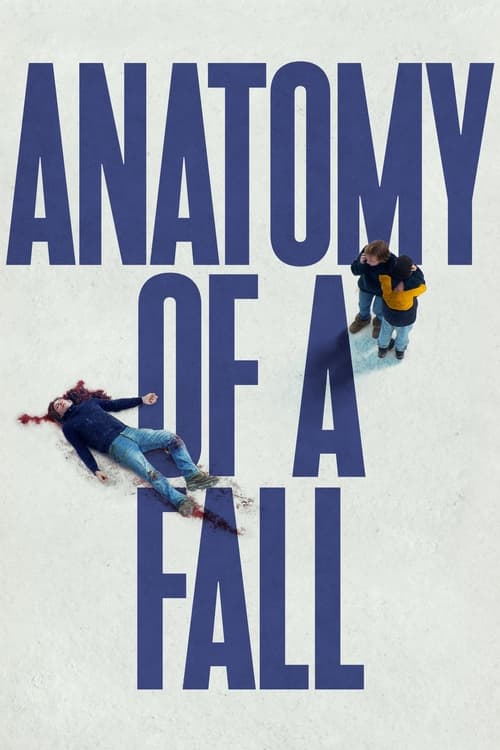
A man falls from the upper floor of the house. His wife was home. Their partially sighted son found the body. From this compact arrangement, Justine Triet builds a 151-minute machine for withholding, and the remarkable thing is how little it feels like withholding while you watch. The film moves like a thriller and thinks like a marriage.
Editorial Deep
Score breakdown, defended
Each dimension scores what it scores. The number is the claim; the prose is the defense.
Editorial Layer
Flat mean of the five dimensions below. Contributes 71% to the Skry Score.
The writing is the film's governing achievement. Triet and Harari build an information-control structure where the order of revelation does the persuading, and the courtroom becomes a machine for showing how partial evidence manufactures conviction. The audiotape sequence, the routing of Samuel's perspective through Daniel's voice, and the ironic promise of the title all cohere into a single sustained thesis about the impossibility of a clean verdict. The dialogue carries three languages as a functional map of estrangement rather than ornament. The limitation is duration: the argument occasionally circles a point already made, and a mid-trial stretch feeds on its own procedure. That does not undercut the design; it tests it.
The image works in disciplined service of the withholding. The audiotape played without cutaway is a shot-grammar decision that stages the film's thesis visually. The dog's-POV tracking shot is a piece of visual architecture that rewards the return. The compositions favor legibility and clean lines over flourish, which suits a film about reading people. The limitation is that the visual language is instrumental rather than expressive; it is built to control information, and it rarely reaches for beauty on its own terms, which is the right choice here but keeps the image from being the film's headline.
Hüller delivers a performance built on a structural void: directed to play innocence without knowing the truth, she leaves no tell to catch, and that absence becomes the film's engine. The rehearsal-on-camera scene shows an actor constructing a self in real time with no baseline for us to measure against. Machado-Graner holds the son's contradiction, most to lose and least power to shape it, without pleading. Reinartz's prosecutor drives the procedural rhythm, and Arlaud gives the defense a measurable human tether. The ensemble operates as a system where every performance is calibrated to the film's interpretive openness rather than to individual showcase.
For a film almost devoid of physical action, the momentum is real and largely sustained; the courtroom runs restlessly and the escalation of the audiotape is unbearable in the intended way. Triet paces revelation so that tension comes from shifting belief rather than event. The limitation is honest: across 151 minutes the grip loosens in places, and a mid-trial passage lets the procedural texture idle. The film runs cool by design, which some will read as inert. The ending recovers the momentum by converting the whole machine into a single decision.
Built for a second pass. Early details gather weight in hindsight, the rehearsal scene reads differently once you know there is no hidden truth to catch, and the routing of Samuel through Daniel becomes clearer as a coming-of-age structure on return. Because the film withholds the specific detail that would resolve guilt, every rewatch is a fresh negotiation with the same evidence. The density is genuine rather than decorative; the architecture is designed to be re-entered.
A thriller that runs like a thriller and thinks like a marriage, shaping your verdict before you know you have one, then refusing to confirm it.
The structure is the argument. Triet, writing with Arthur Harari, doles out information the way a good prosecutor does: selectively, in an order that shapes what you believe before you notice you've decided anything. The courtroom scenes are the engine, and they run on procedure that will strike some viewers as strange in the best way. Antoine Reinartz's prosecutor speaks in opinion, cuts witnesses off, speculates aloud. The floor of the room becomes a place where a private life is dismantled in public and reassembled to suit whoever is speaking.
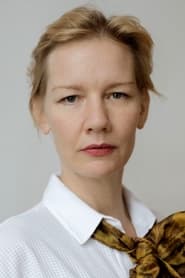
Sandra Hüller anchors all of it. She learned French for the part, though her character speaks mostly English, and the film's shuffle between French, English, and German is not decoration; it is the exact texture of two people who could never fully reach each other. Hüller plays a woman who knows she is being read, and who cannot stop the reading from happening. Watch the scene where she rehearses her testimony on camera. She adjusts, recalibrates, finds a better version of herself to present. It tells you everything about how the film thinks about truth without stating a word of it.
The central set piece is an audiotape of a marital argument, played in court with no image at all. It is the film in miniature: sound supplied, picture withheld. You will leave arguing about what you heard. So will everyone you saw it with.
Milo Machado-Graner, as the son, carries the film's other weight. He is the one person in the story with the most to lose and the least power to shape the outcome, and the performance holds that contradiction without pleading for sympathy. Swann Arlaud, as the defense counsel, gives the proceedings a human tether, someone whose belief you can measure yourself against.
This is a considerable step up from Triet's earlier features. The comic looseness of her previous work has been replaced by a control that never reads as cold to me, though I understand why some find the temperature low. The film runs long and knows it. There are passages where its grip loosens by a degree. It earns the length by refusing the one thing the genre trains you to expect, which is an answer.
That refusal is the whole gamble. If you need the verdict to mean something fixed, this will frustrate you. If you can sit inside not knowing and feel it as the point rather than a dodge, it is one of the most rigorously built films of its year. It does not tell you what happened. It shows you exactly how impossible it is to be sure, and then asks you to decide anyway.
Beyond this line, spoilers
The Conversation
First-person welcome. Pushing back on consensus is a tool, not a formula.
Now I can talk about the fall, the dog, and the thing the film does to your certainty.
Let me start with the tape, because it is the hinge everyone leaves the theater on. Playing the recorded argument as pure audio in the courtroom is a genuinely severe choice. You get voices, escalation, the sound of something breaking, and no faces to read. Then Triet visualizes it, and crucially she cuts back to the courtroom the moment the audio turns violent and ambiguous. She gives you the image right up to the point where the image would settle the question, and there she pulls it away. This is not coyness. It is a formal thesis about evidence: the more you see, the more you think you know, and the film keeps handing you just enough to convict or acquit depending on what you already wanted.
The Hüller decision underneath all this is that Triet withheld from her whether Sandra did it, directing her to play innocent regardless. You can feel the dividend. There is no tell to catch because the actor doesn't have one to leak. That is why the rehearsal scene lands so hard on a second watch. She is constructing a self for the court, and we have no baseline self to compare it against.
The other detail I keep turning over is how absent Samuel is. He exists in two flashback fragments, and the second reaches us through Daniel quoting him rather than his own voice. So the dead man's perspective arrives filtered through the child's need to make sense of him. Ian Scott's negative case argues that Samuel's side is rendered so damning that Sandra's can't credibly compete, and I want to take that seriously because it's the sharpest knock on the film. I don't buy it. The point of routing Samuel through Daniel is precisely that we never get Samuel clean. What feels damning is Daniel's construction, and the film shows us the boy building it. That's the coming-of-age reading and I think it's right: Daniel has to manufacture a truth he can live inside, and we watch the manufacturing.
Which brings me to the real fight. Scott's line, that abstraction is the weapon of the unwise and nothing is actually anatomized, is the most useful attack anyone has mounted, and it deserves better than dismissal. If you promise anatomy and deliver ambiguity, is that not a bait? Here's where I land. The title is ironic on purpose. An anatomy cuts a body open to see how it worked, and this film cuts the marriage open and finds that even fully exposed, it does not resolve. The dissection is real. It just doesn't yield a verdict, because human interiors don't. Brian Tallerico's framing, that the film embeds the idea we can never fully comprehend anyone but ourselves, is the more persuasive read of the same evidence.
The dog is where the film shows its structural hand most nakedly. That early tracking shot from Snoop's point of view reads as a puzzle until the late scene involving him pays it off, and the payoff is genuinely disturbing. It is the closest the film comes to hard evidence, and it arrives through the one witness who cannot lie or be cross-examined. I think that's the movie's driest joke and its cruelest move at once.
What I'd cut, if pressed: the film does go chilly in stretches, and the Tallerico concession about self-indulgence across 151 minutes is fair. There's a mid-trial lull where the procedural texture starts feeding itself. But the ending justifies the patience. It doesn't give Daniel, or us, a fact. It gives him a decision, and makes us feel the difference. That's the whole film in one beat.
Cast & Crew
Who made it, and who’s in it.
Cast
Sandra Hüller
Sandra Voyter

Swann Arlaud
Maître Vincent Renzi

Milo Machado-Graner
Daniel
Antoine Reinartz
Advocate General

Samuel Theis
Samuel Maleski
Jehnny Beth
Marge Berger
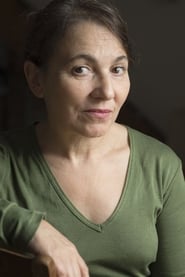
Saadia Bentaïeb
Maître Nour Boudaoud
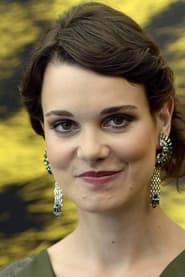
Camille Rutherford
Zoé Solidor

Anne Rotger
President of the Court

Sophie Fillières
Monica
Julien Comte
Forensic Pathologist

Pierre-François Garel
Judge Janvier
Crew
- DirectorJustine Triet
- Director of PhotographySimon Beaufils
- EditorLaurent Sénéchal
Trailer
Plays on YouTube, in a new tab.
 Official US Trailer · 2023Watch on YouTube
Reader response
About the Editor
Derik Silva
Editor-in-Chief
Derik founded The Skry to do for film and television what aggregator culture stopped doing — read closely, score honestly, and defend the score in writing. He believes the long arc is the only arc that matters: the films that earn their reputation by holding up over years, and the ones whose reputations have grown larger than the films can carry. Previously, he founded Travault.
The Skry Dispatch
Read closely, weekly. Reviews and dispatches from The Skry.