
Film Review
There Will Be Blood
Daniel Day-Lewis · Paul Dano · Kevin J. O'Connor
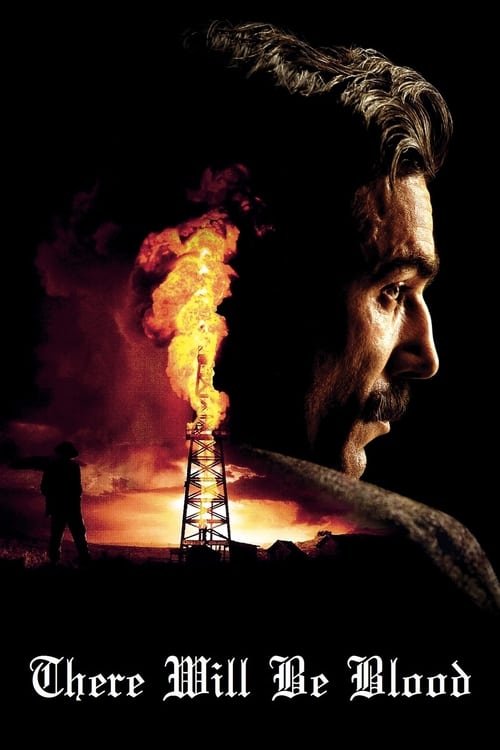
There Will Be Blood opens underground and without a word. Daniel Plainview works a mine shaft alone, falls, breaks himself, and drags his body across the desert to file a claim. It runs for minutes on labor and breath and silence, and it tells you what kind of film you are inside: one that trusts the image and the body over exposition, that builds its portrait of appetite from externals before it lets anyone speak. When it reaches for a comparison, the pre-verbal toil of Kubrick's 'Dawn of Man' is the honest one.
Editorial Deep
Score breakdown, defended
Each dimension scores what it scores. The number is the claim; the prose is the defense.
Editorial Layer
Flat mean of the five dimensions below. Contributes 71% to the Skry Score.
The screenplay fuses western and horror into a single ascending line of appetite, delivering its title twice as both ironic and literal payoff and mapping American oil and American salvation onto the same fraudulent gesture. The Huston-derived study of a man's worst self gives Plainview a coherent, terrifying arc built from behavior rather than speech. Ebert's charge of unbending characters and a relentless tone is fair as description; it reads here as design, the airlessness enforcing the moral claim, and the writing sustains it without a slack passage.
Elswit's plain-frames discipline, shot on slow stock without filters, produces images of enormous scale that never announce themselves. The film builds an entire power system from camera height, tilting up to share authority between the two men and dropping to look down on Eli at the exact turn. The reunion staged in wide shot, pipeline dominant over faces, lets the composition carry estrangement before dialogue does. This is visual storytelling of unusual command, and the wordless opening sequence alone justifies the mark.
Day-Lewis constructs Plainview from externals first, voice and gait, and the technique reveals its subtlety on return; the first address to the smallholders is mesmeric on charisma alone. Dano gives Eli real force in the crowd-facing scenes. The ensemble supplies a credible frontier world around a central performance that ranks among the era's most memorable. The one honest limitation is the disparity in the quiet two-handers, where Eli thins beside Plainview, a gap that stops just short of undermining the pairing.
At two and a half hours the film moves with certainty, staging assignment, temptation, rupture, and reckoning as a controlled descent that Anderson himself likened to a worsening crash. The oil-fire pivot and the baptism land as structural hinges rather than mere set pieces. The relentless register is the deliberate cost of that momentum; some viewers will find the sustained airlessness wearing, and that reservation is the ceiling here rather than any failure of pacing.
Day-Lewis's performance discloses its architecture only on return, and the camera-height grammar becomes fully legible once you know where the power lands. The score's shift from classical instrumentation to bare environmental sound rewards close listening. The double resolution of the title, ironic then literal, restructures earlier scenes retroactively. Density and design make this a film built to be re-watched, with new mechanics surfacing each pass.
Oil and salvation turn out to be the same hustle wearing different clothes, and the film watches both men bill for it.
Paul Thomas Anderson made this at his fifth feature, and it is the hinge in his career. The hyperactive formalism of his earlier work gives way to something observational and patient. Close-ups sit on faces. Wide shots hand full-body performances back to the actors and let the environment crowd in around them. Push-ins reduce distance so quietly you feel the closeness before you notice the move. Robert Elswit shot it on slow stocks with no filters and no tricks, chasing the plainest possible frames, and the restraint is the point: the picture is grand without being fussy.
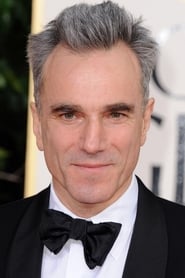
Daniel Day-Lewis builds Plainview from the voice up, a drawl carrying strange Scots-Irish-American intonations, and the construction is a sensual pleasure in itself. Watch his first address to a room of smallholders. He explains, with faint impatience, why they should trust him as a real oil man, and he is already mesmeric before a single dramatic thing has happened. It is charisma as physical fact. Against him, Paul Dano plays Eli Sunday, a young preacher whose theatrics rhyme with Plainview's own, so that oil and salvation start to look like the same hustle wearing different clothes.
Jonny Greenwood's score is the film's other engine. Built from classical instruments to fix the period, it scrapes and swells atonally, then drops away to leave footsteps, drilling, and wind to carry the loneliness. Anderson has described the film as a western crossed with a horror picture, with Plainview modeled partly on Dracula, and that description is more useful than it sounds. The dread is real. So is the ugliness of the man at the center.
Anderson and Elswit build a whole grammar of power out of camera position, tilting up to grant Plainview and Eli a shared authority, then dropping to look down on Eli the instant Plainview refuses him. The staging does the arguing. When father and son reunite, the composition holds them in wide shot with the pipeline and the workers more prominent in the frame than either face, so that the estrangement is legible in the blocking before a word confirms it.
It is not a warm film, and it does not want to be. There are almost no women, almost no ordinary society, and the tone rarely relents. Roger Ebert, who called it easily great yet remained unsure of its greatness, named those very qualities as the places where its reach exceeds its grasp, and the objection is worth holding onto. Whether the relentlessness is a limitation or the entire design is the argument the film keeps starting. What is not in doubt is the command. At two and a half hours it moves with the certainty of something that knows exactly where it is going. It went nearly everywhere that mattered in 2007, and the reasons are on the screen.
Beyond this line, spoilers
The Conversation
First-person welcome. Pushing back on consensus is a tool, not a formula.
Everything past here is open, so if you haven't seen it, stop.
I want to start with the baptism, because it is where the film's two con men finally collide on Eli's turf. Plainview needs the pipeline easement, so he comes to the Church of the Third Revelation and lets Eli make him confess. He announces he abandoned his son, declares himself a sinner, and Eli works the crowd while the title lands as an ironic joke: reject the blood and you'll never be saved. It is probably the best scene in the picture for how it inverts the power map the whole movie has been building. Plainview, who tilts the camera up wherever he goes, is here made small and loud and humiliated. The staging that granted him height gives it to Eli instead.
Which is what makes the bowling-alley finale pay. Blood barely appears in the film until the last scene, and then Plainview beats Eli to death with a bowling pin in the basement of his mansion and says 'I'm finished.' The title resolves twice, ironically at the baptism and literally at the end. Ebert flagged the ending as a flaw, and I take the point seriously even while I disagree. It is operatic, it is grotesque, it abandons realism entirely. But the film has been sliding toward horror the whole way, with Plainview built on Dracula, and a monster movie is allowed a monster's exit. Anderson called the story a car crash that keeps getting worse. The bowling alley is the crash.
The conflict worth pressing is Dano. The consensus treats him as a co-equal pillar, and most of the time I think that's right; the baptism doesn't work if Eli is a lightweight. But there's a minority read that he is only serviceable, that the disparity when he shares a frame with Day-Lewis is visible and costs the film. I'd split it. Dano is strongest when Eli is performing for a crowd, weakest in the quiet two-handers where Day-Lewis's density exposes him. That he was cast with four days to prepare, after the original actor left because Day-Lewis's intensity made the set unworkable, is either the reason for the gap or irrelevant to it, and honestly I can't tell which. The gap is real. Whether it's damage is a matter of taste.
What isn't a matter of taste is the sound design's control of the oil-well fire. The blowout deafens young HW, and the film treats that not as spectacle for its own sake but as the moment the father-son bond breaks. The most expensive image in the movie is also its most intimate loss. That's the trick Anderson pulls repeatedly: the biggest gestures carry the smallest, most personal ruptures inside them.
One champion argued this is a deeper and more damning film than Citizen Kane, and another named it the best American film of the century. I don't need the ranking to make the case. What I'll say is that the film earns its scale honestly, spanning from the turn of the century toward the crash of 1929, using one appetite to draw a whole national dysfunction. The dedication to Robert Altman in the credits is a tell about where Anderson came from, but the debt he actually pays here is to Huston's Treasure of the Sierra Madre, and specifically to its interest in the worst parts of a man. If I were cutting for time I'd tighten nothing; the relentlessness is load-bearing. Ebert wanted more air and more world. I think the airlessness is the film telling the truth about the man.
Cast & Crew
Who made it, and who’s in it.
Cast
Daniel Day-Lewis
Daniel Plainview

Paul Dano
Paul Sunday / Eli Sunday
Kevin J. O'Connor
Henry
Ciarán Hinds
Fletcher Hamilton

Dillon Freasier
H.W. Plainview

Hope Elizabeth Reeves
Elizabeth

Colleen Foy
Mary Sunday
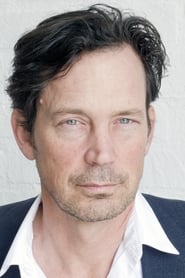
Barry Del Sherman
H. B. Ailman
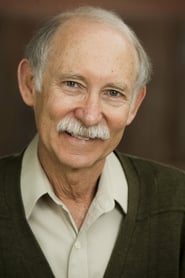
David Willis
Abel Sunday
Hans Howes
Mr. Bandy
Sydney McCallister
Mary Sunday (young)

Paul F. Tompkins
Prescott
Crew
- DirectorPaul Thomas Anderson
- Director of PhotographyRobert Elswit
- EditorDylan Tichenor
- Original Music ComposerJonny Greenwood
Teaser
Plays on YouTube, in a new tab.
 Official Trailer · 2016Watch on YouTube
Reader response
About the Editor
Derik Silva
Editor-in-Chief
Derik founded The Skry to do for film and television what aggregator culture stopped doing — read closely, score honestly, and defend the score in writing. He believes the long arc is the only arc that matters: the films that earn their reputation by holding up over years, and the ones whose reputations have grown larger than the films can carry. Previously, he founded Travault.
The Skry Dispatch
Read closely, weekly. Reviews and dispatches from The Skry.