Film Review
The Matrix
Keanu Reeves · Laurence Fishburne · Carrie-Anne Moss
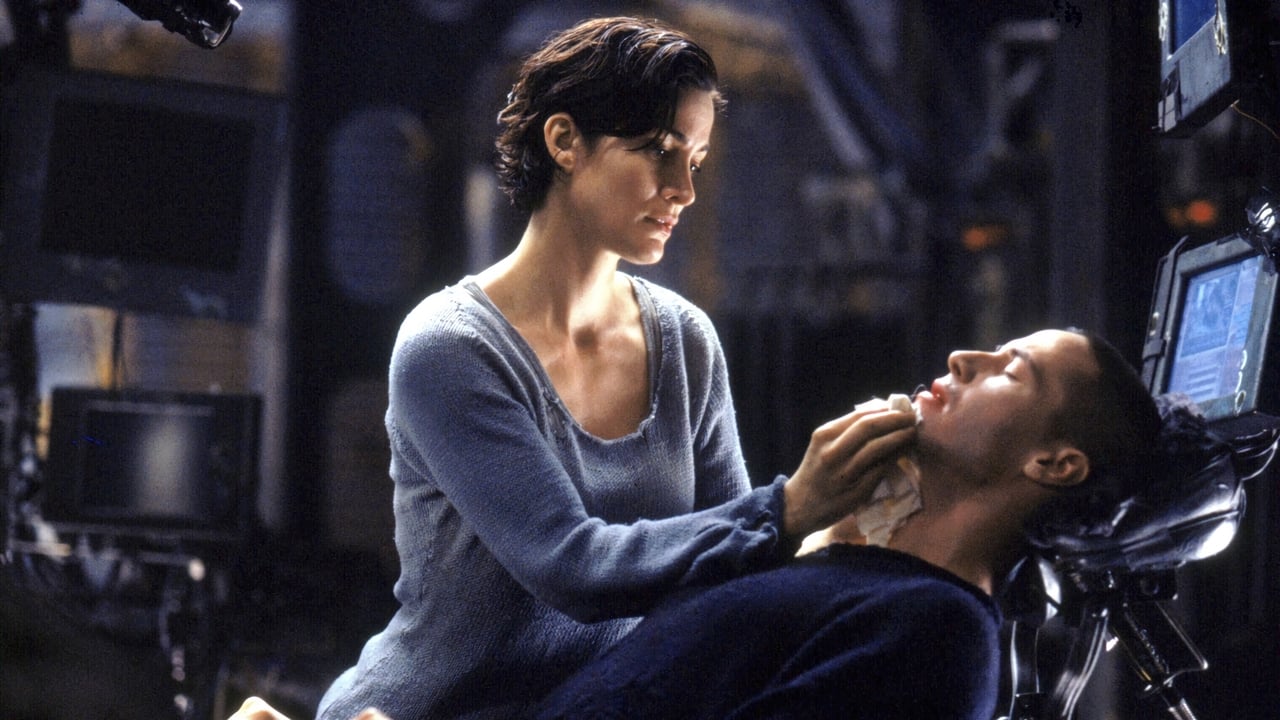
Twenty-five years on, the thing that still governs The Matrix is its sense of physics. The Wachowskis open not with exposition but with a woman cornered on a rooftop, and the way she solves that problem tells you the rules of the world before a single line explains them. Trinity leaps an alleyway no human could clear; the man chasing her matches it. Threat and impossibility are established in the same gesture. From that first sequence the film asks you to accept a body that can do more than a body should, and then spends two hours pressing on exactly what that means.
Editorial Deep
Score breakdown, defended
Each dimension scores what it scores. The number is the claim; the prose is the defense.
Editorial Layer
Flat mean of the five dimensions below. Contributes 71% to the Skry Score.
The screenplay's real accomplishment is architectural: it establishes an impossible physics in its opening minutes without exposition, keeps three planes of reality legible across constant intercutting, and fuses cyberpunk, martial-arts, and paranoid-SF logic into a single coherent object. The 'My name is Neo' refusal gives the film a genuine spine. The limitation is the emotional connective tissue. The Neo/Trinity romance is asked to carry weight it hasn't built scene to scene, and the Chosen One prophecy leans on inherited structure rather than earning its stakes. Those are real seams in an otherwise confident design, which places it as competent-plus rather than exceptional.
Bill Pope's photography is doing sustained, disciplined work that rewards close attention. The three-register color logic, sickly green for the simulation, cold gray for the real, clean brightness for the programs, is not decoration; it keeps a constantly layered narrative readable at every moment. The high-frame-rate gunplay, lit to extreme stops so still-camera arrays could composite super-slow motion, produced images that reorganized action cinematography for a decade. Composition holds the actors in frame rather than hiding technique in cutting. This is command of the image at a distinctive, memorable level.
The ensemble is built to serve the design, and it does. Reeves is deployed with real intelligence: the part is engineered around a watchful, physically slight, internal presence, and it rewrote what an action lead could look like rather than exposing his weaker registers. Moss and Fishburne anchor the surrounding structure with conviction, and Weaving supplies the uncanny, pressing threat the whole machine requires. The limit is in what the film asks for: iconography and physical credibility more than dramatic range, and a romantic pairing that never generates the chemistry the ending needs.
The film moves with a clarity of intent that is its defining pleasure. It states a rhythm early, escalates its set pieces in a legible progression from flight to direct assault, and trusts the viewer to feel a promise before it pays out. The rooftop opening, the armory turn, the lobby, the finale each raise the stakes cleanly. Whether the climax satisfies you is a genuine dispute, but the momentum carrying you there is confident and rarely slack. The four months of physical prep translate directly into a kinetic ease on screen. Strong command of feel and pace.
This is a film that improves under scrutiny because its craft is invisible on first pass and legible on the second. The conditioning, the take counts, the lighting engineering all read as effortlessness rather than effort, and knowing what produced them deepens the watch. The 'My name is Neo' beat accrues meaning across viewings in a way the first pass doesn't fully register. Its density of influence and its layered visual logic give real reasons to return. The love story remains a soft spot on rewatch, but the architecture around it holds up as an object built to be re-examined.
The Matrix trained its cast for months to do the impossible, then photographed it so you could watch the impossible happen in an unbroken frame.
Bill Pope's photography splits the picture into three legible registers. The simulated world carries a sickly green cast, the real world a cold industrial gray, the training programs a hyper-clean brightness. You always know which layer you are standing in, and that clarity does real narrative work: the film is constantly cutting between planes of reality, and it never loses you. The look is deliberate rather than merely stylish.
The action is the reason it endures, and the craft behind it is not incidental. Yuen Woo-ping was given four months to condition a cast that no one expected to reach fighting shape, and the payoff is that the camera can hold on the actors instead of hiding them in cuts. The dojo sparring between Morpheus and Neo is built from that discipline: real technique, held in frame, printed after twenty or thirty takes so the geometry reads clean. The lobby assault, shot at extreme frame rates while columns come apart in slabs, is the film cashing a check it wrote an hour earlier in the armory. There is a governing rhythm to how these set pieces escalate, and the movie trusts you to feel the promise before it pays out.
Keanu Reeves is central to whether this works, and the film is engineered around what he does well. Neo is watchful, physically slight, internal. The role plays to a minimalist presence rather than exposing him in the dialogue-heavy passages where he is less comfortable, and the result is an action lead built on stillness and a mournful, curious gaze rather than bulk and swagger. It reorganized what the part could be. Carrie-Anne Moss and Laurence Fishburne anchor the surrounding architecture, and Hugo Weaving's Agent is the uncanny, pressing threat the whole design needs.
The reservation is real and worth naming up front, because thoughtful viewers have argued it since release: the film opens by promising to redefine reality, and some have felt it retreats to formula at the very moment it was most interesting. Whether the landing satisfies you depends on what you came for. If the ideas are the draw, the resolution can disappoint. If the action is the draw, the escalation delivers precisely what it set up. Both readings are honest, and the film's reputation contains both.
What the two camps share is respect for the movement between those poles. This is a movie that knew exactly how it wanted to move, trained its cast for months to move that way, and then photographed the result so you could see it. It smuggled a Hong Kong choreographic vocabulary into the center of American action cinema and made it look inevitable. Worth your time for the craft alone, whatever you decide about the ending.
Beyond this line, spoilers
The Conversation
First-person welcome. Pushing back on consensus is a tool, not a formula.
I want to start with the disagreement, because it is the most interesting thing about the film's reception and it has never fully settled. Roger Ebert, who put the Wachowskis' Bound on his ten-best list and clearly wanted to love this, landed on a mixed verdict: dazzling, kinetic, and then a retreat to formula 'just when it's getting interesting.' His complaint is structural. A film that begins by asking whether reality is real ends with automatic-weapons fire and a hero beaten near death before he finds the will to stand up. The conceptual promise, in this reading, gets abandoned for the Friday-night action market.
Against that, the opening-day trade read called it an adrenaline rush that furthers the genre, with the action escalating in stylish, inspired steps and the performances elevating the spectacle rather than trailing it. Both critics are describing the same third act. One sees a philosophical premise capitulating; the other sees a promise being kept.
Here is where I come down, and I think the frame matters. The film never actually claimed to be a philosophical treatise. It claimed to be an action movie with a genuinely intelligent core, and the climax it delivers is the one the armory scene promised an hour earlier. When Neo asks for guns and gets an arsenal, the shoot-out that follows is the structure paying out what it set up, not the film losing its nerve. Judged as the thing it set out to be, the resolution is the one the design demanded. Judged as the thing some viewers wanted it to become, it falls short. I don't think you can score the film down for failing to be a different, quieter film.
That said, the harshest dissent has a point worth taking seriously. Keith R.A. DeCandido called it undeservedly overpraised, a collection of hoary SF clichés with nothing added, and singled out the betrayer, the reluctant hero, and the love interest as arcs that develop illogically. On the romance, he is right, and a retrospective take agrees: the Neo/Trinity love story gets too much of a pass. There is little chemistry between them, and the film leans on the Chosen One prophecy to carry an emotional weight it hasn't earned scene to scene. When the ending asks the romance to mean something, it is asking for credit it never quite banked. This is the seam in the script, and it is a real one.
What DeCandido gets wrong, I think, is the dismissal of the whole. The clichés he lists are structural bones the film is deliberately reassembling. The synthesis is the achievement: cyberpunk, Hong Kong choreography, and the paranoid Philip K. Dick premise fused into a single legible object. That fusion is why the film influenced everything downstream, from Wanted to Inception.
The reading I keep returning to lives in one line. When Agent Smith insists on calling him 'Mr. Anderson' and Neo answers, 'My name is Neo,' the scene is a refusal of an imposed name in favor of a chosen one. Given who the Wachowskis are, that beat has acquired a resonance it may not have carried in 1999, and it deepens on rewatch in a way the prophecy plot never does. It is the film's real emotional spine, hiding inside its most quotable exchange.
On replay, the craft only gets more impressive because you can watch the seams that aren't there. The four months of conditioning, the twenty-to-thirty takes, the decision to light a lobby to T11 so still cameras could fire fractions of a second apart. None of that reads as effort on screen. It reads as ease. The action holds up when so much of what it inspired has aged badly, and that durability is the direct dividend of all that hidden labor.
Cast & Crew
Who made it, and who’s in it.
Cast
Keanu Reeves
Neo

Laurence Fishburne
Morpheus

Carrie-Anne Moss
Trinity
Hugo Weaving
Agent Smith

Gloria Foster
Oracle

Joe Pantoliano
Cypher

Marcus Chong
Tank
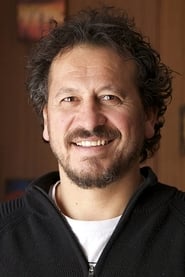
Julian Arahanga
Apoc

Matt Doran
Mouse

Belinda McClory
Switch
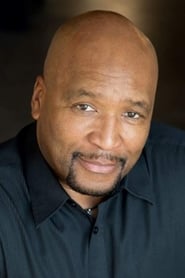
Anthony Ray Parker
Dozer

Paul Goddard
Agent Brown
Crew
- DirectorLana Wachowski
- DirectorLilly Wachowski
- Director of PhotographyBill Pope
- EditorZach Staenberg
- Original Music ComposerDon Davis
Trailer
Plays on YouTube, in a new tab.
 20th Anniversary UK Trailer · 2019Watch on YouTube
Reader response
About the Editor
Derik Silva
Editor-in-Chief
Derik founded The Skry to do for film and television what aggregator culture stopped doing — read closely, score honestly, and defend the score in writing. He believes the long arc is the only arc that matters: the films that earn their reputation by holding up over years, and the ones whose reputations have grown larger than the films can carry. Previously, he founded Travault.
The Skry Dispatch
Read closely, weekly. Reviews and dispatches from The Skry.