
Film Review
Bad Apples
Saoirse Ronan · Jacob Anderson · Sean Gilder
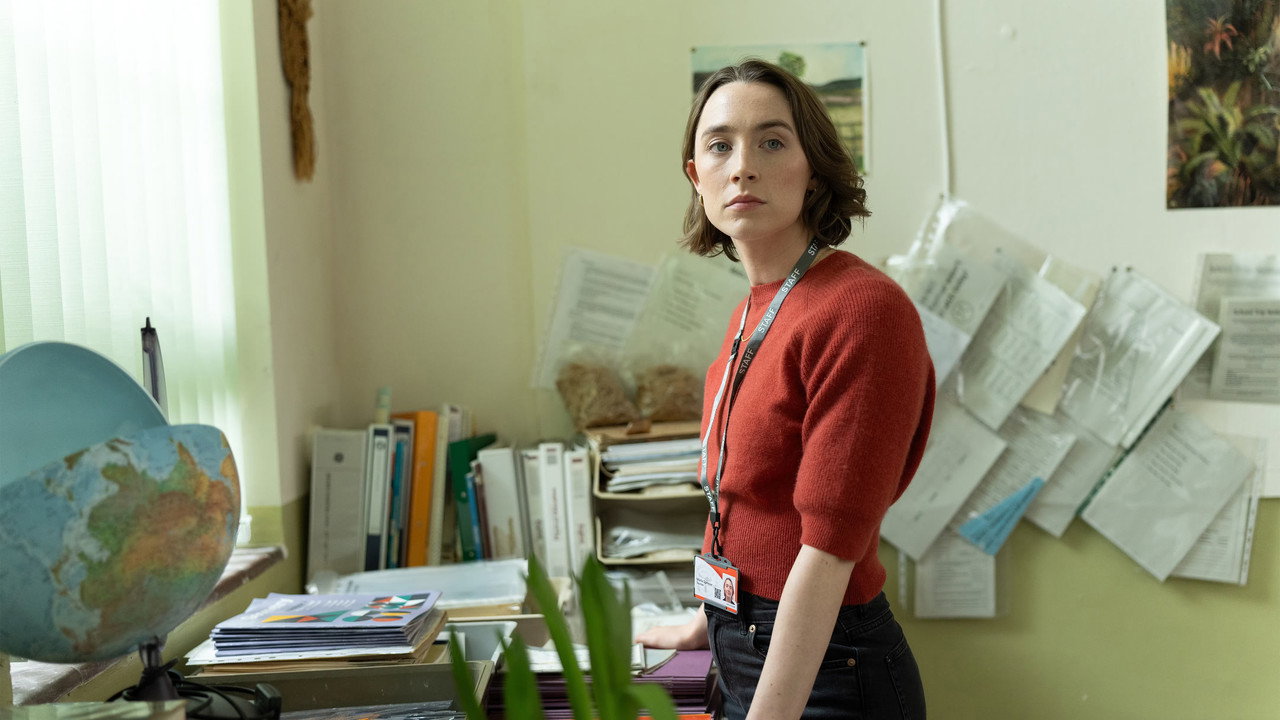
The premise of Bad Apples is a dare, and Jonatan Etzler stages it as one. A schoolteacher named Maria, played by Saoirse Ronan, faces a disruptive pupil the whole system has given up on, and the film's opening set piece establishes both the problem and the register: on a cider-factory field trip, the boy destroys an entire batch with a well-lobbed trainer. From there the picture builds a machine out of moral collapse, and it runs the machine with unusual tonal control. The comedy stays broad enough to draw open laughter; the thriller mechanics tighten underneath without ever swamping the jokes.
Editorial Deep
Score breakdown, defended
Each dimension scores what it scores. The number is the claim; the prose is the defense.
Editorial Layer
Flat mean of the five dimensions below. Contributes 71% to the Skry Score.
O'Kane's screenplay executes a genuinely difficult tonal task: it inverts the 'bad apple' idiom so the corruption sits with the adults, and it structures the escalation as a tightening power play through the Pauline blackmail. The dialogue is crisp and the ironies are cleanly built, the delivery-scene reveal chief among them. The limitation is reach. The satire sets up more punchlines than it consistently lands, and the third act bends plausibility to keep its moral puzzle in motion, so the film arrives at a deliberate non-verdict that reads as unresolved rather than fully argued. That is a real ceiling on a script that is otherwise confident and specific.
The image carries a sustained visual argument. Boxes and squares recur across classrooms, apartments, a basement and a delivered package, so composition itself enacts order and confinement rather than illustrating it once. Harnebrandt Asphäll's framing and the boxed production and costume design pull in the same direction, and Etzler's insistent tight close-ups on Ronan give the camera a second, intimate register that counterpoints the geometry. This is disciplined, motivated cinematography doing thematic work without announcing itself; the design language is consistent enough to reward attention across the whole film.
Ronan anchors the film by playing against type, collapsing her usual self-possession the instant Maria faces a room of children, then rebuilding the character from wretched to resourceful across a run of held close-ups. Her comic timing keeps an appalling person watchable and does the crucial job of tipping cruelty toward comedy instead of horror. The performance sustains the movie's entire tonal wager and stays legible shot to shot. It is the film's most distinctive craft achievement and it earns the high mark on the strength of what it accomplishes, not the size of the role.
The film moves with a clear engine: crisp comic beats land in the moment while the thriller mechanics tighten underneath, and the montage sequences, driven by Roe's emphatic score, give the middle stretch real propulsion. The designed delay of discomfort, laughter now, unease later, is a deliberate rhythmic choice and it mostly holds. The limitation is the back third, where implausibility strains the momentum and the moral queasiness has to fight the creaking of the plot machinery. Through most of its length the pacing is assured.
There is real architecture to return to: the box-and-square motif rewards a second pass, the montage ironies read differently once you know where the story lands, and the Omelas and Dahl frames give the film a structure worth re-examining. The deliberate refusal to side with anyone opens genuine interpretive room. The third-act implausibilities don't deepen on rewatch the way the visual design does, so the density is strong in image and theme and thinner in plot.
Etzler's wager is that you laugh first and feel sick on the drive home; when Ronan is on screen, the timing of that delay is impeccable.
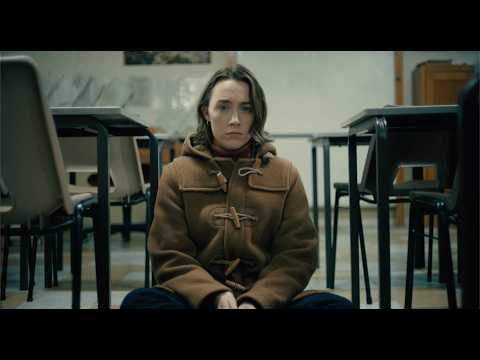
Etzler, making his English-language debut, has form with the educator-under-siege setup, and the confidence shows. He keeps the frame boxed in. Classrooms, apartments, a basement, a delivery package: the composition returns again and again to squares and right angles, so that order and confinement start to look like the same thing. Nea Harnebrandt Asphäll's cinematography treats this geometry as a recurring visual argument rather than a one-off gag, and the production design extends it into the smallest corners of the set. Chris Roe's score leans emphatically dramatic, and it does its best work under a run of montage sequences whose subject I will leave for you to discover. The irony of those montages is the film's cleanest trick, and the music sells it.
Ronan is the engine. She plays against the poised resilience she is known for, letting Maria's authority evaporate the second she walks into a room full of children. Etzler favours the tight close-up, holding on her face while several contradictory feelings cross it in a single shot, and Ronan gives him the register to sustain that. Wretched one moment, resourceful the next, she keeps a genuinely appalling character watchable through sheer comic timing. The performance is the reason the film's cruelty reads as comedy rather than horror.
Jess O'Kane's screenplay works in a tradition the film wears openly: the gallows humour of Shallow Grave, the satirical needle of Election, the Dahl-adjacent pleasure in children as agents of chaos and adults as the real rot. The idiom in the title gets inverted. The disruptive kid is not the corruption here; the desperation of the teacher, the complicity of the parents, and the silence of the institution are. When the film escalates through a blackmail subplot involving a class suck-up, it finds its sharpest pivot, cranking tension without dropping the joke.
Whether the satire finally bites is the film's live question, and it is worth naming honestly. The picture is heavily stylised, and the stylisation has a cost: Maria's exhaustion can read as another gag rather than a lived struggle, which loosens the tether to anything real. The moral puzzle is nifty and the third act asks you to accept some wild implausibilities to keep the puzzle spinning. Etzler's wager is that discomfort should arrive late, on reflection, after you have already laughed. At its best that wager pays. When it misses, the film feels cooler and more sealed-off than a premise this incendiary should allow. What is not in doubt is the craft holding it together, and a lead performance that would justify the ticket on its own.
Beyond this line, spoilers
The Conversation
First-person welcome. Pushing back on consensus is a tool, not a formula.
I want to start with the montages, because they are where I think the film either works on you or doesn't. Roe's orchestral score swells while Maria feeds, clothes, teaches Danny to read, and plays FIFA with him in her basement, and the whole grim joke is that captivity is measurably improving his life. That is the Omelas move made literal, the perfect arrangement resting on one hidden, suffering child, except here the child isn't suffering so much as thriving, and the adults around him are the ones rotting. It's a genuinely nasty idea and the film commits to it.
The delivery scene is the moment I'd point anyone to. The driver bringing Danny's heavy-duty harness turns out to be Danny's own tear-choked father, Josh, and the film lets that irony sit without underlining it. That's the tone at its most precise. The Pauline escalation is the other high point, the class suck-up sniffing out where Danny is and extorting favourable treatment through increasingly eccentric, song-based blackmail. It's here the thriller and the comedy finally fuse instead of trading turns.
Where I land is close to the split in the reception. Chase Hutchinson's scalpel line feels right on the film's ambition, cutting at the lies people tell to mask who they are. James Mottram's read of it as a three-way power play among teacher, student, and PTA gets at the structure. But Giovanni Lago's dissent isn't a contrarian shrug, and I don't think it should be waved off. His argument that the satire sets up punchlines that rarely land, leaving the thing more sterile than its premise promises, describes a real failure mode this movie flirts with. The stylisation that makes the cruelty funny is the same stylisation that keeps Maria's actual exhaustion at arm's length. You laugh, but you're not always tethered.
Guy Lodge's point is the one I keep returning to: the film 'winds up siding with no one,' leaving the moral question unresolved rather than argued. Is that a flaw or the whole design? Etzler has said publicly he considers this realism, that people are genuinely weird when you look closely, and I think he'd say refusing to resolve is the honest choice. I'm half convinced. An amorality tale that declines to moralise is a legitimate form. But there's a difference between withholding a verdict on purpose and not having one, and Bad Apples doesn't always make that difference legible. The third-act implausibilities Leslie Felperin flags are the tell. When the plot has to bend that far to keep the puzzle spinning, the puzzle starts to feel like the point, and the people become pieces.
On Ronan I'm firmly with the majority. Lago's line that she 'isn't particularly at the height of her powers' is the one place I'd push back hardest. Inverting her usual self-possession IS the work here, and the wide-eyed tremble that reads as diminishment is exactly the register the part needs. Watch what she does in the close-ups Etzler keeps cutting to, the ones he carried over from The Outrun. She's building a person from wretched to resourceful across a series of held shots, and she keeps it funny. That's not a coasting performance.
If I were cutting, I'd tighten the back third. The film earns its late discomfort but pays for it with plausibility, and I suspect a leaner run at the climax would have let the moral queasiness land without the machinery creaking so loudly. The parts of the supporting ensemble around Ronan are doing real work too, though the film keeps most of them in service to her arc rather than giving them room. What holds is the tone. Etzler wanted the laughter first and the sting on the drive home, and for a stylised dark comedy about the worst decision a tired person ever made, he mostly gets the timing of that delay right.
Cast & Crew
Who made it, and who’s in it.
Cast

Saoirse Ronan
Maria

Jacob Anderson
Sam
Sean Gilder
Frank
Robert Emms
Josh

Rakie Ayola
Sylvia

Kerry Howard
PC Williams

Jaye Jacobs
Khaliya's Mum
Joanna van Kampen
Carys's Mum

Kirris Riviere
Jamal's Dad
Dorian Simpson
Zayn's Dad

Jack Ashton
Eddy's Dad
Martin Carroll
Neighbor #1
Crew
Not listed.
Trailer
Plays on YouTube, in a new tab.
 Official Trailer · 2026Watch on YouTube
Reader response
About the Editor
Derik Silva
Editor-in-Chief
Derik founded The Skry to do for film and television what aggregator culture stopped doing — read closely, score honestly, and defend the score in writing. He believes the long arc is the only arc that matters: the films that earn their reputation by holding up over years, and the ones whose reputations have grown larger than the films can carry. Previously, he founded Travault.
The Skry Dispatch
Read closely, weekly. Reviews and dispatches from The Skry.