Film Review
Chinatown
Jack Nicholson · Faye Dunaway · John Huston
Chinatown works the way a good confession works: slowly, then all at once. For its first half, Roman Polanski withholds the shape of the thing entirely. J.J. Gittes, a private detective who trades in adultery and grubby surveillance, takes a job that seems routine and turns out to have no bottom. The screenplay by Robert Towne builds intrigue beat by beat rather than in the tidy architecture of a three-act outline; the pleasure is not in the scaffolding but in watching each new scene reroute the last. You do not know what the mystery is until you are deep inside it, and even then it keeps opening.
Editorial Deep
Score breakdown, defended
Each dimension scores what it scores. The number is the claim; the prose is the defense.
Editorial Layer
Flat mean of the five dimensions below. Contributes 71% to the Skry Score.
The screenplay withholds the shape of its own mystery through the entire first half, then feints toward resolution before the final act reorganizes everything you thought you understood. Its command is not in three-act grammar but in beat-by-beat intrigue and dialogue that carries characterization without exposition. Gittes stays exactly as informed as the audience, which makes the mystery structurally open rather than a puzzle solved from above. The construction turns the detective's central flaw into the plot's engine and its imagery. This is writing operating at the top of its form.
Alonzo delivers a period Los Angeles that reads sun-bleached and faintly diseased, a look the production reached only after discarding both a too-classical approach and its opposite. The images hold long enough for dread to accrue rather than announcing themselves, and the framing serves the withholding structure instead of decorating it. The accomplished period atmosphere is undeniable; the limitation is that the visual language works in service of mood and story rather than calling attention to itself as spectacle, which is the correct choice for the film and a modest ceiling on pure visual ambition.
Nicholson plays against his own register, internalizing Gittes into a man whose confidence is a tool and whose curiosity is a liability, a genuinely subdued turn. Dunaway constructs Evelyn from micro-gestures, faint panic and suppressed tension calibrated so the late emotional revelation feels inevitable rather than sprung. The two leads hold the film's moral weight between them with precision. The ensemble around them is deep and specific. This is performance work of unusual control and coherence.
The film moves by accumulation. O'Steen's editing lets scenes breathe until unease sets in, and Goldsmith's low dysphoric score sits under the image without ever pushing. The structure paces revelation deliberately: a first half that withholds, a second that feints, a final stretch that pays everything off at once. The 130-minute runtime is used to build conviction rather than momentum for its own sake, and the slow burn is a deliberate register that rewards patience more than it delivers propulsion.
A second pass rewards you differently because the film front-loads clues you cannot read on first watch, the barking dogs and the horn among them, so the ending is prefigured in plain sight. It sustains genuinely new frames, including ecological readings its makers could not have intended, which is the mark of a work that keeps generating meaning. The density of its construction and the honesty of its foreshadowing give it real architecture to return to.
A monument you visit; this one keeps talking back, and after fifty years neither the film nor its audience will settle the argument it started.
The crucial structural decision is to keep Gittes exactly as informed as the audience, and no more. He is resourceful, unpredictable, frequently wrong. He is not a chess-playing genius arranging the pieces from above. That single choice does more for the film's tension than any twist could: the not-knowing is genuine, shared, and it turns every scene into a room whose exits you cannot see.
Jack Nicholson plays Gittes at a lower flame than the register he is usually associated with. The performance is toned down and internalized. He is not performing charisma at you; he inhabits a man whose confidence is a working tool and whose curiosity is a liability. That liability gets literalized in the alley confrontation, where a small knife-wielding man opens Gittes's nostril for the crime of putting his nose where it does not belong. It is one of the film's cleanest fusions of set piece and character: the wound is also the thesis.
Faye Dunaway builds Evelyn Mulwray out of micro-gestures. A flicker of panic across an iced-tea scene, a suppressed tension while she waits outside for her car, a guarded tenderness that never quite settles. She is aggressive, feminine, and fragile in the same frames, and she calibrates the mounting anxiety so precisely that the emotional revelation, when it lands, feels less like a reveal than like something that was always visible if you had known where to look.
John A. Alonzo shot it, the third cinematographer attached to a production that could not settle on a look until it found one that was neither too classical nor too showy. The result is a period Los Angeles that feels sun-bleached and slightly sick. Sam O'Steen's editing holds shots long enough for dread to accumulate, and Jerry Goldsmith's score sits under the image like a low, dysphoric hum rather than a set of announcements.
Polanski directs with total authorial control, and you feel it as a kind of pressure. Every lens, every prop, every framing seems chosen by one governing sensibility, and that sensibility is not interested in comforting you. The film runs 130 minutes. It uses them to earn a conviction that terrible things happen and mostly go unpunished. I will say only that the closing sequence has been argued over for fifty years, and that the argument is a sign of how much the ending is doing, not a sign that it fails.
This is one of the essential American films of its decade, and it has aged into something more complicated than a trophy. It is still bruised, still cynical, still built better than almost anything that imitates it.
Beyond this line, spoilers
The Conversation
First-person welcome. Pushing back on consensus is a tool, not a formula.
Everything from here on is open, so if you have not seen it, go.
I want to start with the ending, because everyone does, and because the disagreement about it is more interesting than either side admits. Evelyn is shot through her damaged eye during the gunfight; Katherine is taken by Cross; Gittes is held back by his own men. Then the line: 'Forget it, Jake. It's Chinatown.' Towne wanted a less catastrophic resolution. Polanski insisted on this one, and the standard reading is that he saved the film's integrity by refusing to let it flinch. I mostly buy that. The whole picture has been teaching you that the machinery of corrupt power does not lose, and a softer finish would have been a lie the previous two hours had already exposed.
But I take the dissent seriously, and not only the mild version that says Towne was right and the tragedy is tacked on. Michael Olderr makes a harder argument: that the ending is not sophisticated fatalism but the director telling the audience he can do whatever he wants, a claim Polanski went on to confirm in his own life. Olderr also charges the film with a proud misogyny, reading the women as liars, manipulators, or people the film frames as deserving punishment. I don't think that reading holds against what Dunaway actually does on screen; Evelyn is the moral center of the film and its only fully seen human being. But the objection is not nothing, and it gains force from the fact that we cannot pretend the man who insisted on that ending is a neutral craftsman. Michael Rubenstein has traced how the film's slide off best-of lists tracks with #MeToo's renewed attention to Polanski's status as a confessed statutory rapist and fugitive. In 2010 a critics' poll crowned it the best film ever made. By its fiftieth anniversary it had quietly dropped from many of the same lists. Both facts are true, and the film lives in the gap between them.
What keeps me on the film's side as a made object is how much of it works without the director's biography attached. Roger Ebert kept returning to the point that Gittes is confused right alongside us, and that this is the engine of the whole thing: a mystery that feels genuinely open because its detective is not a mastermind. Watch how the structure exploits that. The first half won't even tell you what you're investigating. The second half feints toward one resolution before the last fifteen minutes detonate. Peter Bradshaw called it a superlative neo-noir in direct succession to the earlier pictures, weathered with real class, and that lineage is the point. Polanski took the clichés of the detective movie and grounded them in something real, the California water wars, with William Mulholland's history split across several characters so no single villain lets the system off the hook.
Rubenstein has the most durable defense, I think, when he says the film 'is not done with us.' He means it keeps generating new readings, including an ecological one about water capitalism and petromodernity that would have been invisible in 1974. That is the difference between a monument and a living object. A monument you visit. This one keeps talking back.
The cameo deserves its own line. Polanski casting himself as the little man with the knife, the one who cuts Gittes for snooping, is either a great piece of thematic wit or a queasy self-portrait, and after everything, I no longer think you can watch it as only the first. That doesn't ruin the film. It complicates the pleasure, which may be the most honest state to watch it in now.
Felicia Feaster situates it as the endpoint of a line running through Repulsion and Rosemary's Baby, the same cynical instinct pushed into noir. That framing helps. It was Polanski's last American film, made in the shadow of real grief, and the bleakness reads as conviction rather than pose. Whether that conviction is wisdom or something colder is exactly what the film refuses to settle, and fifty years on, so do we.
Cast & Crew
Who made it, and who’s in it.
Cast
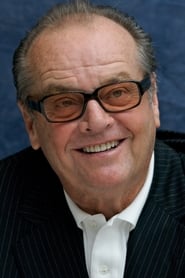
Jack Nicholson
J.J. 'Jake' Gittes

Faye Dunaway
Evelyn Cross Mulwray

John Huston
Noah Cross
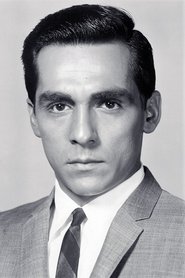
Perry Lopez
Lieutenant Lou Escobar

Burt Young
Curly
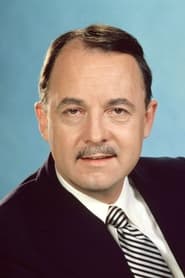
John Hillerman
Russ Yelburton
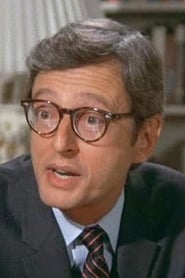
Darrell Zwerling
Hollis I. Mulwray

Roman Polanski
Man with Knife
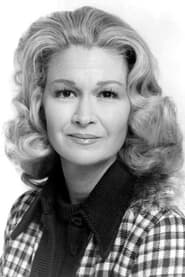
Diane Ladd
Ida Sessions
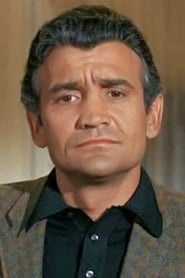
Richard Bakalyan
Detective Loach
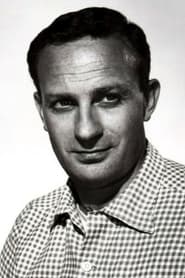
Joe Mantell
Lawrence Walsh

Roy Jenson
Claude Mulvihill
Crew
- DirectorRoman Polanski
- WriterRobert Towne
- Director of PhotographyJohn A. Alonzo
- EditorSam O'Steen
- Original Music ComposerJerry Goldsmith
Teaser
Plays on YouTube, in a new tab.
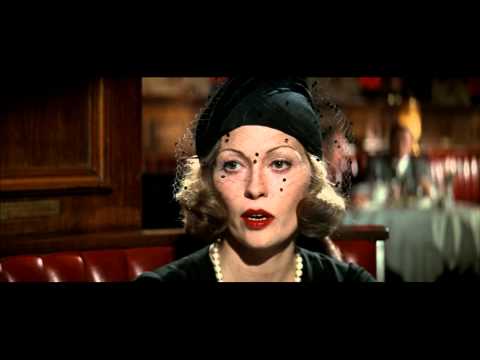 Trailer · 2012Watch on YouTube
 Reader response
About the Editor
Derik Silva
Editor-in-Chief
Derik founded The Skry to do for film and television what aggregator culture stopped doing — read closely, score honestly, and defend the score in writing. He believes the long arc is the only arc that matters: the films that earn their reputation by holding up over years, and the ones whose reputations have grown larger than the films can carry. Previously, he founded Travault.
The Skry Dispatch
Read closely, weekly. Reviews and dispatches from The Skry.