Film Review
Die Hard
Bruce Willis · Alan Rickman · Alexander Godunov
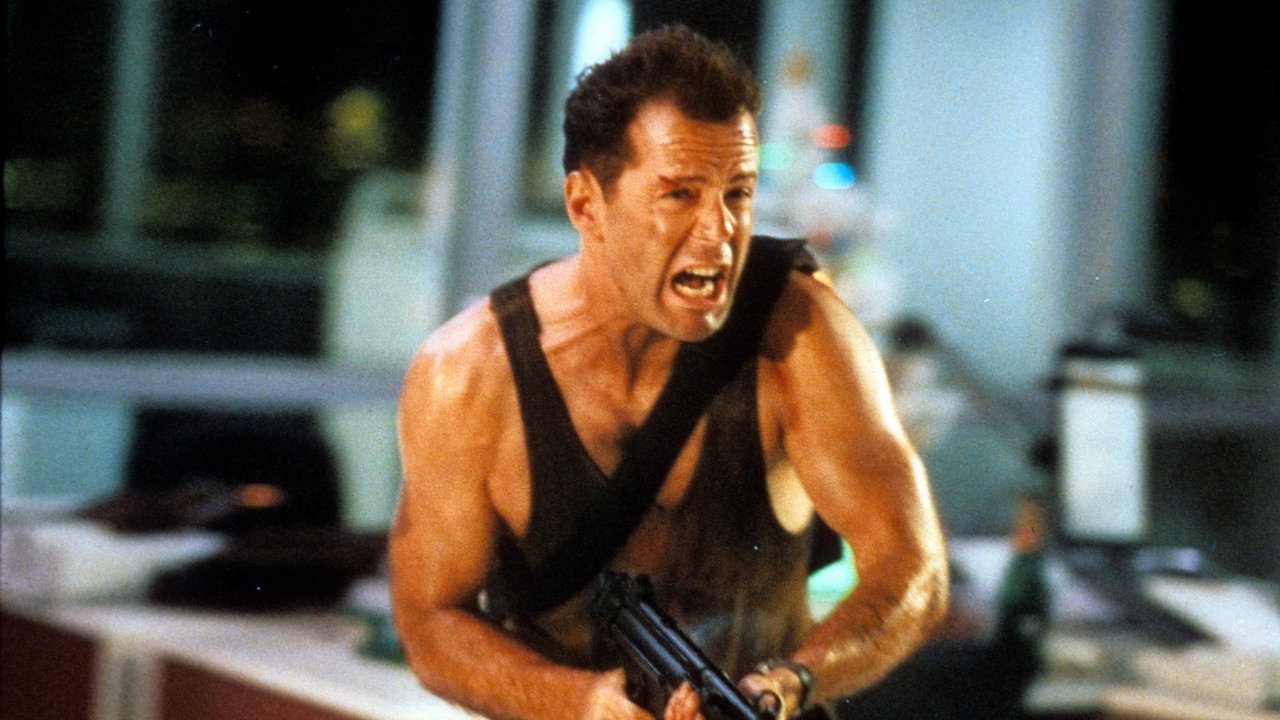
Watch how John McTiernan introduces his hero and you understand the whole design. Bruce Willis arrives clean-cut, healthy, a cop out of his element at a corporate Christmas party in a tower that dwarfs him. By the end he is limping and shaking, a wreck held together by nerve. That continuity of injury is the film's engine. Where the muscle-bound invulnerables of the era took hits and shrugged, this hero bleeds, fears, and doubts, and the tension lives in that accumulation.
Editorial Deep
Score breakdown, defended
Each dimension scores what it scores. The number is the claim; the prose is the defense.
Editorial Layer
Flat mean of the five dimensions below. Contributes 71% to the Skry Score.
The screenplay wires cause and effect with real discipline: a hero's improvisations carry consequences, the ensemble deepened under production pressure into something better than functional, and the class friction between cop and corporate world gives the action a spine beyond spectacle. The honest limitation is the one Ebert named. The obstructive authority figures work as targets of the film's satire but also as convenient plot machinery, and the seams show when the mechanism needs an official to behave stupidly on schedule. Strong construction with a load-bearing contrivance.
The image work is the film's most distinctive achievement. McTiernan and de Bont stage in depth and exploit rack-focus with a snapping, cut-like force, making it one of the great rack-focus films of its era. The Dutch-angle low camera during gunfights and the rise to eye level when violence stops is a genuine emotional modulation built into coverage. Framing the hero small in doorways and at the frame edge borrows noir claustrophobia to make a tower feel like a trap, and the bright, deliberately non-earth-tone palette keeps dark-corridor action spatially legible throughout. This is command, not competence.
Rickman turns what could have been a throwaway antagonist into a figure of calibrated menace and class, and does it in his first film role, giving the picture a counterweight equal to its star. Willis carries an unbroken physical and emotional arc from clean-cut to shaking wreck while landing the comedy, a continuity of injury rare in the period's action cinema. The friction between the two is the film's motor. The ensemble, expanded by circumstance, holds its weight, with Bedelia's confrontation scene a standout of poise under threat.
This is where the film sets its era's standard. The whip-pan links between character and environmental consequence compress the story so it feels faster than its cut rate, and the escalating practical set pieces build genuine crescendos rather than noise. Across 132 minutes the tension-and-payoff engineering rarely slackens, and the tonal control, comedy tightening rather than releasing suspense, keeps the momentum coherent. It moves with intent and knows exactly when to breathe.
A second pass rewards the architecture. The cause-and-effect wiring that reads as velocity the first time resolves into deliberate design on return, the class subtext threads through set dressing and behaviour, and the depth staging hides business in the background worth catching. The practical set pieces hold up decades on because they were physical events, not effects that date. The contrivances that carry the plot are more visible on rewatch, which is the one thing that keeps it below the top band.
McTiernan and Willis retired the invulnerable action hero and replaced him with someone who limps; every imitator since has been trying to reverse-engineer that.
McTiernan and cinematographer Jan de Bont stage the action in depth and lean on rack-focus with a snapping force that reads like a cut. Foreground and background trade emphasis inside a single frame, so the eye is always being told where the danger is. The camera drops into Dutch angles during gunfights to sit inside the chaos, then rises to eye level when the shooting stops, letting the aftermath register before the next surge. Willis is framed in doorways, wedged between objects, pushed to the edge of the widescreen, small inside the Nakatomi labyrinth. The set design refuses earth tones for bright, sharply lit colour so that motion in the dark stairwells stays legible. Nothing gets lost.
The set pieces still land with weight because they were built, not painted in. The C4 dropped down an elevator shaft is a genuine practical crescendo. The barefoot roof-leap, hero tied to a fire hose and kicking through plate glass above a burning tower, remains among the most spectacular stunts of its decade. These are physical events with physical consequences, and the film's velocity comes from how tightly cause and effect are wired: a character, a sprinkler, an alarm switch, blinking panels, all linked by whip-pans that compress the story and make it feel faster than its cut rate.
Alan Rickman, in his first film role, gives the picture its counterweight. His Hans Gruber is calibrated flamboyance rather than overacting, imposing and entertaining at once, a villain of class and dignity where a lesser film would have settled for a snarl. The friction between Willis's comic timing and Rickman's cool is the thing the imitators never quite reproduced. At 132 minutes the film is engineered as tension and payoff, and it holds. McTiernan called his aim an action comedy in a Shakespearean style; the ambition is audible in how the thing moves. Whether the deck is stacked too neatly for its hero is a fair question, and I'll return to it. As a machine for suspense, this remains the model everything after it copied.
Beyond this line, spoilers
The Conversation
First-person welcome. Pushing back on consensus is a tool, not a formula.
I want to sit with the gap this film opened up, because it's the most interesting thing about its reputation. When it landed in 1988, Roger Ebert gave it two stars and built his case around the deputy police chief, whom he called a product of the Idiot Plot Syndrome, so willfully useless that the character single-handedly turns the back half into a mess. That is not a lazy pan. Ebert's argument is structural: if the story only works because a man in authority behaves like an idiot on cue, the tension is rigged rather than earned. And there is a related popular complaint that McClane always seems on top of things, outsmarting the terrorists while dropping one-liners, which can drain the threat of urgency.
Here's where I land. Both objections are real, and neither is fatal, because they misread what the film is doing with its hero's control. McClane is not actually on top of events. He improvises, he panics, he bleeds through the second half, and the running joke is that his competence keeps costing him. The obstructionist authority figures, the deputy chief among them, are part of the class picture the film keeps drawing: the blue-collar cop against a gilded Los Angeles of corporate parties, Rolex watches, and cocaine, with Gruber's crew mirroring that corporate polish in their own professionalism. The idiots in charge are the point, even when the mechanism creaks.
The Ellis scene is where all of this snaps into focus for me. A coked-up executive tries to negotiate with Gruber over the radio, certain his deal-making instincts will carry the room, and Gruber lets him find out otherwise. It is the moment Rickman stops being theatrical and becomes frightening. Rickman himself credited the film's staying power to being delivered with wit and style, and that scene is the proof.
The production history explains part of the ensemble's richness. Willis was shooting Moonlighting concurrently, could only work exhausted nights, and the schedule forced screenwriter Steven De Souza to expand the non-McClane material. Out of that constraint came Holly's confrontation with Gruber, where Bonnie Bedelia walks in and lays out demands, including a couch for her pregnant assistant, that visibly put Gruber on the back foot. That scene exists because of a scheduling headache. It's one of the best in the movie.
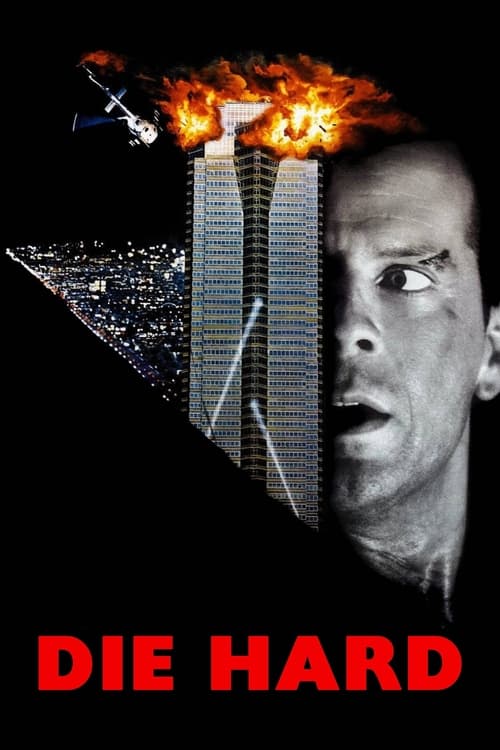
Step back and the numbers tell the story of the reversal. A 94% aggregate approval, 8.2 with audiences, readers ranking it among the greatest action films of all time. The picture that arrived with low expectations, marketed around the building rather than the star, went on to birth an entire subgenre. Under Siege, Sudden Death, The Rock: all of them are 'Die Hard in a [location].' What none of them inherited was the vulnerability. McTiernan and Willis retired the invulnerable action hero and replaced him with someone who limps. Everything since has been trying to reverse-engineer that.
Is it a Christmas movie? I'm not settling that here. I'll only say the argument has outlived most of the films that started arguments in 1988, which tells you what kind of object this is.
Cast & Crew
Who made it, and who’s in it.
Cast

Bruce Willis
John McClane

Alan Rickman
Hans Gruber
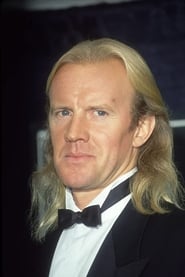
Alexander Godunov
Karl

Bonnie Bedelia
Holly Gennaro McClane
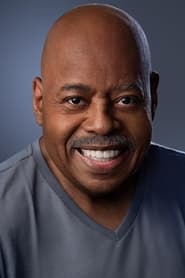
Reginald VelJohnson
Al Powell
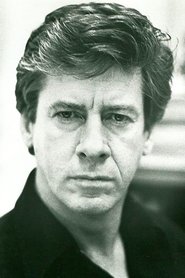
Paul Gleason
Dwayne Robinson

De'voreaux White
Argyle
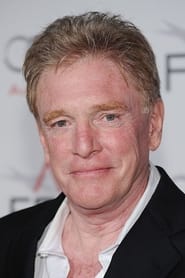
William Atherton
Richard Thornburg

Hart Bochner
Harry Ellis
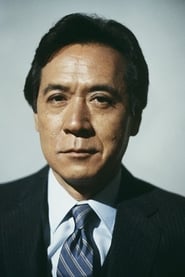
James Shigeta
Joseph Yoshinobu Takagi
Bruno Doyon
Franco

Andreas Wisniewski
Tony
Crew
- DirectorJohn McTiernan
- ScreenplayJeb Stuart
- Director of PhotographyJan de Bont
- EditorJohn F. Link
- Original Music ComposerMichael Kamen
Trailer
Plays on YouTube, in a new tab.
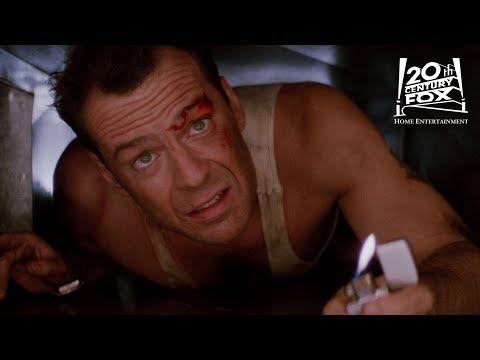 30th Anniversary Trailer · 2018Watch on YouTube
 Reader response
About the Editor
Derik Silva
Editor-in-Chief
Derik founded The Skry to do for film and television what aggregator culture stopped doing — read closely, score honestly, and defend the score in writing. He believes the long arc is the only arc that matters: the films that earn their reputation by holding up over years, and the ones whose reputations have grown larger than the films can carry. Previously, he founded Travault.
The Skry Dispatch
Read closely, weekly. Reviews and dispatches from The Skry.