
Film Review
Fight Club
Edward Norton · Brad Pitt · Helena Bonham Carter
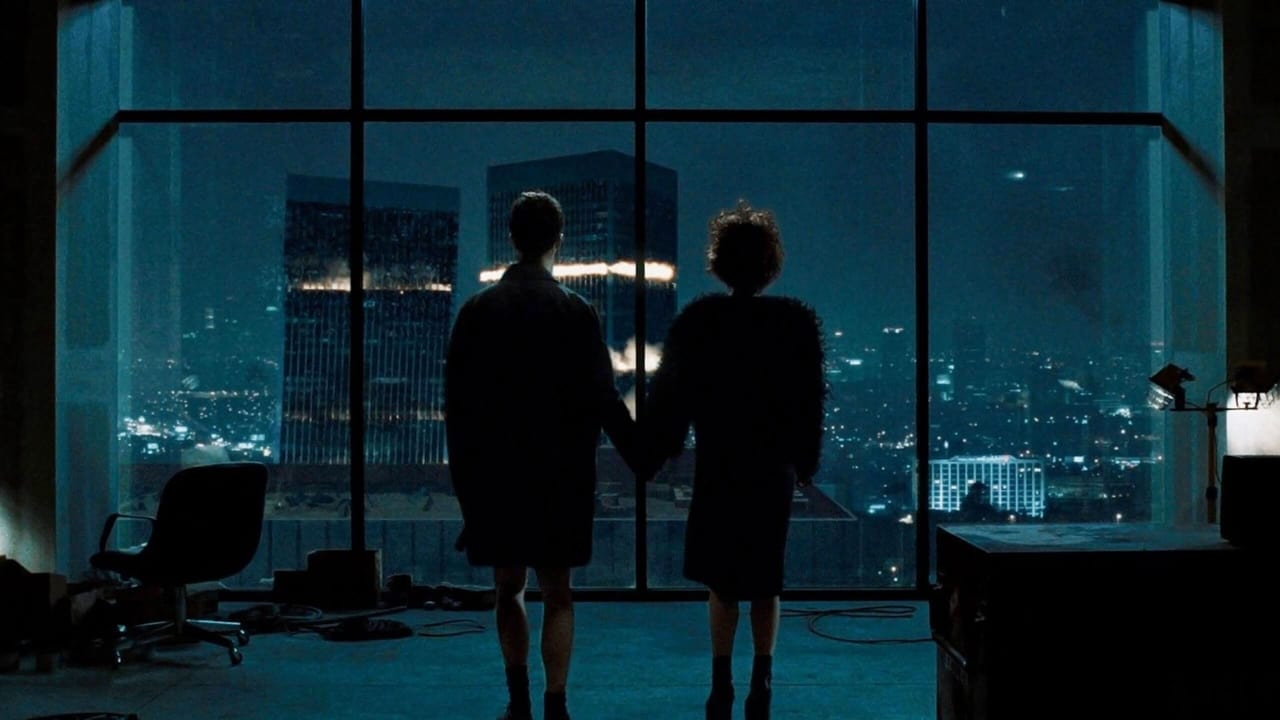
David Fincher's fourth feature runs 139 minutes and spends nearly all of them building a machine to trap you. It arrives lit like a wound. Cinematographer Jeff Cronenweth underexposes the walls of the Paper Street house by two full stops, backlights the actors with practical streetlights, and washes them in fluorescents that turn skin cold and off-colour. The result is a world that looks deconstructed before anyone throws a punch: rot as decor, the house itself a diagram of the Narrator's head.
Editorial Deep
Score breakdown, defended
Each dimension scores what it scores. The number is the claim; the prose is the defense.
Editorial Layer
Flat mean of the five dimensions below. Contributes 71% to the Skry Score.
The screenplay's coup is architectural: it begins near the end and loops, which is what makes the eventual reveal read as a mind snapping into focus rather than a sprung gimmick. The two-act shape, Tyler as model then tyrant, is coherent and self-aware on the page. The honest limitation is that the ideological turn arrives late and does not fully neutralize the seduction the script spends its first two hours engineering, a slippage the film's cultural afterlife exposes. Strong structure, contested moral clarity.
The image is where the film's command is least arguable. Cronenweth underexposes the interior walls by two-plus stops, backlights with practical streetlights, and uses fluorescents to turn skin cold and wrong, building a world that looks deconstructed before the plot deconstructs anything. The decaying Paper Street house works as a direct visual correlative for its narrator's state, and the twice-broken frame in the projection-room and khakis sequences turns cinematography into confession. This is total control of light and space in service of a single psychology.
Norton and Pitt are engineered to lock together, and both hit their marks with force. Norton carries the film's interior collapse, sardonic voiceover riding just above panic, sinking into a character immersed in his own psychoanalysis. Pitt's physical calculation, lean rather than bulked and never towering over Norton, is a performance decision that serves the projection dynamic exactly. The pairing is the film's central wager and it pays. The limitation is not the acting but a design that occasionally treats Norton as a delivery system for a concept rather than trusting the depth on offer.
The film moves with deliberate propulsion. Fight sequences cut short and fast to plant the audience inside impact rather than at a remove, and the editing is built to replicate a specific unraveling psychology, so momentum and meaning are the same gesture. The reveal montage detonates the accumulated rhythm to devastating effect. The one drag is the mid-film expansion of Project Mayhem, where the picture begins to admire its own mischief and the forward pressure slackens before the finale reclaims it.
Built for the second pass, and the box-office-to-cult trajectory confirms it. The reveal recontextualizes every prior scene, which means a rewatch is a different film with visible seams: the framing, the costuming duality, the house's scheduled decay all read as planted evidence. The density of the visual and editorial system rewards return, and the unresolved argument about what the whole apparatus finally endorses guarantees it stays live. Few films of its era leave this much on the table for a second viewing.
Genuinely great and genuinely compromised, Fincher's machine seduces you into an ideology and then dares you to notice you enjoyed it.
Edward Norton anchors the whole apparatus. His insomniac drifter is a man narrating his own dissolution, and Norton plays the register precisely, the sardonic voiceover pitched just below panic. Brad Pitt's Tyler Durden is the counterweight, and the physical calculation is worth naming: Pitt keeps the body lean and punchy rather than bulked, and never lets himself tower over Norton. The two performances are built to lock together, which is the film's central formal wager.
Fincher is drawn to the seams of his own medium here. Twice the film breaks the frame to expose the mechanics of what you are watching. In the projection-room sequence the Narrator walks you through cigarette burns and the splicing of single frames, and the film confesses its own artifice while you sit inside it. Tyler's 'you are not your fucking khakis' monologue plays a similar trick with the boundaries of the image. This is a director who spent his teens in a projection booth, and the fascination shows.
The fight sequences are cut for sensation, not observation. Short shots and fast cuts drop you inside the impact rather than leaving you at a safe distance. Whether that immersion is a critique of the appetite it feeds or a satisfaction of it is the question the film has never stopped generating, and I'll come back to it in the open zone.
What is not in dispute is the command of the thing. The editing is designed to replicate a specific psychology, so that a conventional continuity cut would flatten it into a lesser film. The costuming externalizes the split between the two men. The house decays on a schedule tied to the Narrator's state. Every department is pulling in the same direction, and that coordination is rare.
The film was a commercial disappointment on release, opening soft against modest projections, and it took the home-video era to rehabilitate it into the cult object it now is. That trajectory tells you something. This is a movie that plays differently the second time, and it was built to. Whether it earns the reputation or merely provokes it depends on how you read its final act, and reasonable, serious critics have split hard on exactly that. Roger Ebert gave it two stars and called it fascist. Others called it a singular event on the scale of Pulp Fiction. Both camps are looking at the same frames.
Come to it knowing it wants to unsettle you and is not above cheating to do so. On the level of craft, of performance, of a director imposing total control over image and rhythm, it delivers what it sets out to deliver. On the level of what all that control is finally in service of, you will have to decide for yourself. The film is confident that you can't.
Beyond this line, spoilers
The Conversation
First-person welcome. Pushing back on consensus is a tool, not a formula.
Everything from here spoils the film, including the ending. If you haven't seen it, stop.
The twist is where I have to start, because it's where the whole argument lives. James Haygood's revelation montage recuts scenes you thought you'd watched, now shown from the Narrator's true perspective, and in a single burst it rewrites the meaning of everything prior. Tyler was never there. I think this is the most technically impressive stretch of the film, and it's also the stretch that fewest people agree on. Peter Bradshaw, revisiting it, calls the twist ungainly and disappointing and says The Sixth Sense did the same trick better the same year. I understand the comparison but I think it misreads what the reveal is for. Shyamalan's twist reorganizes a plot. Fincher's reorganizes a diagnosis. The screenplay starts near the end and loops back, which is what lets the reveal feel structural rather than sprung. It's a diagram of a mind snapping into focus, and the fast-cut recut is the only grammar that could carry it.
Then there's the fault line that has never closed: does the film critique the authoritarian masculinity it stages, or does it luxuriate in it? Ebert's charge that it's cheerfully fascist macho porn is not a lazy read. When the fights are cut to put you inside the adrenaline, the film is manufacturing exactly the high Tyler is selling, and irony is a thin membrane over pleasure. The defense, which Benoit Lelievre makes well, is that the two-act shape is the argument: Tyler as necessary liberating model, then Tyler as tyrant, with Project Mayhem as the demonstration of what happens when you don't examine the model. I mostly buy this. The film does turn on Tyler. The Narrator does shoot through his own cheek to be rid of him. But I won't pretend the turn fully neutralizes the two hours of seduction that precede it, and the culture that grew up around the film, the alpha-influencer and incel lineage it now sits at the head of, suggests the irony was more legible to critics than to a large chunk of the audience. A critique that gets read as an endorsement by the people it's aimed at has an execution problem, whatever its intent.
Which brings me to the finale, the single choice I'd interrogate hardest. Buildings implode while the Narrator and Marla watch hand-in-hand. One reading takes this as an eerie premonition of 9/11, and after 2001 it plays as more than a flourish. But there's a real objection that mass destruction as a romantic visual punchline is unforgivable, and I feel the pull of it. The image asks you to find the demolition beautiful and the couple sweet in the same beat, and the film hasn't done the work to hold both. It's the moment where style is asked to carry a meaning it can't quite bear.
If I were cutting, I'd tighten the middle stretch of Project Mayhem's expansion, where the film starts to admire its own mischief. And I keep circling the Harvard reading that Fincher underestimates Norton, deploying a shattering performance in service of a design that doesn't fully trust it. I don't think the film fails on that count, but I think the note lands. Norton draws blood in every scene, and the machine around him occasionally treats him as a delivery system for a concept.
Still. Cronenweth's cold light, Haygood's psychotic editing, the two locked performances, a director exposing his own projection booth: this is craft operating at a level most films never reach for. I think it's genuinely great and genuinely compromised, and I've made peace with holding both. The film would probably tell me that discomfort is the point.
Cast & Crew
Who made it, and who’s in it.
Cast
Edward Norton
Narrator

Brad Pitt
Tyler Durden

Helena Bonham Carter
Marla Singer
Meat Loaf
Robert Paulson

Jared Leto
Angel Face
Zach Grenier
Richard Chesler (Regional Manager)

Holt McCallany
The Mechanic
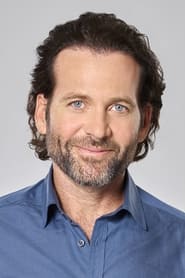
Eion Bailey
Ricky

Richmond Arquette
Intern at Hospital
David Andrews
Thomas at Remaining Men Together

George Maguire
Group Leader at Remaining Men Together

Eugenie Bondurant
Weeping Woman - Onward and Upward
Crew
- DirectorDavid Fincher
- ScreenplayJim Uhls
- Director of PhotographyJeff Cronenweth
- EditorJames Haygood
- Original Music ComposerJohn King
Trailer
Plays on YouTube, in a new tab.
 #TBT Trailer · 2014Watch on YouTube
 Reader response
About the Editor
Derik Silva
Editor-in-Chief
Derik founded The Skry to do for film and television what aggregator culture stopped doing — read closely, score honestly, and defend the score in writing. He believes the long arc is the only arc that matters: the films that earn their reputation by holding up over years, and the ones whose reputations have grown larger than the films can carry. Previously, he founded Travault.
The Skry Dispatch
Read closely, weekly. Reviews and dispatches from The Skry.