Film Review
Groundhog Day
Bill Murray · Andie MacDowell · Chris Elliott
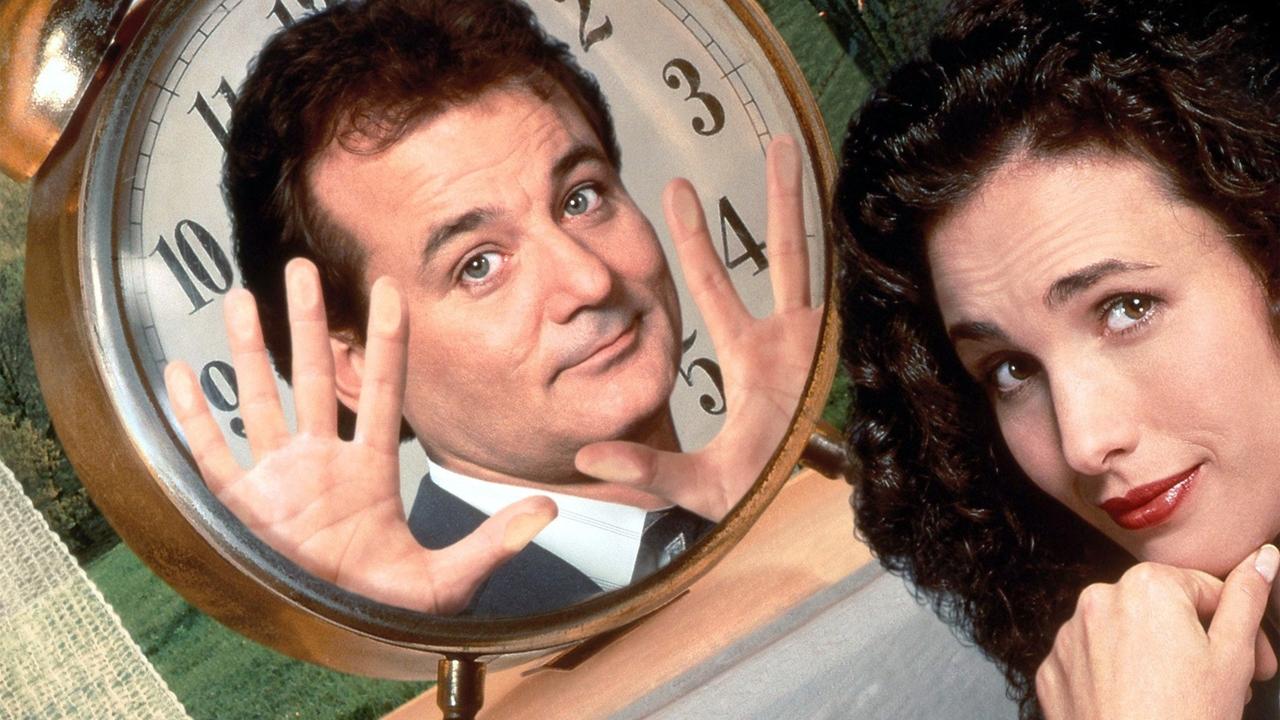
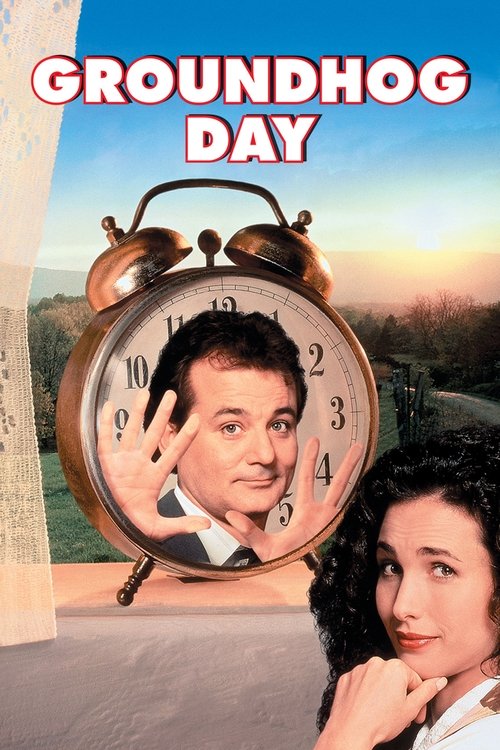
A weatherman gets stuck in a small Pennsylvania town on the morning of February 2nd, wakes to the same clock radio, the same song, the same day, and cannot get out. That is the whole machine, and Harold Ramis builds the film around a single formal decision: establish a routine, then break it, again and again, until the breaking becomes the story. The alarm clock flips its numbers. 'I Got You Babe' comes on. We know exactly where we are, and the pleasure of the film is watching what changes inside a frame that refuses to.
Editorial Deep
Score breakdown, defended
Each dimension scores what it scores. The number is the claim; the prose is the defense.
Editorial Layer
Flat mean of the five dimensions below. Contributes 71% to the Skry Score.
The writing operates on a single, unusually clean principle: establish a routine, then break it, and signal inner change through external action rather than exposition. It withholds all explanation of the loop's cause and cure, which forces the attention onto conduct instead of mechanism. The variations across repeated scenes carry both the comedy and the arc, so structure and character are the same instrument. It builds a genuinely unlikable protagonist and earns his turn without softening him early. This is design of a high order, and the arc lands with moral clarity that most comedies never reach for.
The image work is at its most expressive in the quarry chase, where camera angle, framing, and staging externalize a psychological collapse without dialogue, a real demonstration of mise en scène. The leitmotif system, the falling clock numbers and the recurring song, gives the visual grammar a spine that makes the montage structure legible. The limitation is that outside the signature sequences the film's visual approach is functional in service of the comedy rather than distinctive on its own terms.
Murray carries the whole apparatus, playing boredom and contempt for real over long stretches so that the eventual turn is earned rather than declared, and the film is genuinely hard to imagine recast. MacDowell takes the opposite discipline, playing straight against him as the earnest anchor that keeps the comedy from curdling. The ensemble around them holds the fixed town convincingly. The one honest tension is MacDowell's range, but the role asks for grounding, not fireworks, and she supplies exactly that.
The film moves with real confidence inside its fixed frame, compressing large spans of time through variation and keeping the emotional beats connected to the comedy. It builds patiently toward its turns rather than spiking. The honest limitation is that the repetition, run long enough, produces stretches where progress feels stalled and certain scenes play as isolated bits, a genuine drag on momentum that the film mostly, but not entirely, overcomes.
A second pass is where the film reveals its second floor. The variations that read as jokes the first time read as architecture the second, the suicide montage recloses as a structural death-and-rebirth, and the existential weight under the accessible surface becomes the main event. The withheld explanation rewards return rather than frustrating it. Few comedies are this densely built for rewatching, and the film's long critical and scholarly afterlife is a symptom of that density.
A mainstream comedy with a second floor underneath the first, and it lets you find it alone.
Ramis came up through Chicago's Second City and cut his directing teeth on broad comedies, and the surprise here is how much restraint governs the construction. The repetition is not a gimmick left to run on its own. It is scored by small alterations, a line delivered differently, a punch thrown a beat sooner, a piano scale that gets better across weeks we never see counted. The leitmotifs do the heavy structural lifting: the falling numbers, the song, the same faces on the same street. They give the montage a spine, so that the film can compress enormous stretches of time without ever losing us.
Bill Murray is the reason it holds. The role asks him to carry contempt, boredom, mania, despair, and eventually something like grace, all inside a man the film refuses to soften prematurely. Murray plays the boredom for real. He lets the character be genuinely unpleasant for long stretches, which is a riskier choice than it looks, because it means the eventual turn has to be earned rather than announced. Andie MacDowell takes the opposite assignment and holds it with discipline. She plays straight against him, declining to chase the laugh, and that earnestness is what keeps the comedy from spinning into pure cynicism. The two readings of her work anchor or limitation both have a point, but the film needs exactly what she gives it.
There is a genuine argument to be had about the repetition. Run long enough, a repeated scene can start to feel like a treadmill, and some of the set pieces do play as isolated bits rather than pieces of one accelerating machine. The counter case is that the small variations are the point, that the script is complex precisely because it keeps finding new angles on a fixed situation. I land closer to the second position, though the first is not wrong about the stretches where the momentum sags. The humor, too, runs mild more often than not. This is a film of accumulated chuckles rather than big detonations, and it is built to reward patience rather than deliver spikes.
What the film understands, and never explains, is that the loop needs no explanation. It never tells you why the day begins or why it ends. That refusal is a discipline, not a gap. It keeps the attention where it belongs: on a man learning, slowly and against his own nature, how to spend a single day well. The film runs 101 minutes and moves with the confidence of something that knows exactly what it is doing. It is a mainstream comedy that turns out to have a second floor underneath the first, and it lets you find it on your own.
Beyond this line, spoilers
The Conversation
First-person welcome. Pushing back on consensus is a tool, not a formula.
I want to start with the car chase, because it is the sequence that convinced me the film is more formally ambitious than its reputation as a warm crowd-pleaser suggests. Our man kidnaps the groundhog, leads the police on a chase, and drives off a quarry cliff. Ramis and cinematographer John Bailey stage it with suspenseful music, a camera that reads dread rather than fun, and a face gone pale and crazed. The whole thing externalizes a psychological collapse without a word of exposition. It is a textbook use of mise en scène in a movie people remember as gentle.
The suicide montage is the real pivot, and I think it is the boldest thing in the picture. He kills himself in every way he can devise, and the sequence ends in a morgue where Rita and Larry identify the body. For a broad comedy to walk right up to that and hold the frame is remarkable, and structurally it functions as a death before a rebirth. The miserable, selfish man has to die before the one capable of honest connection can appear. The film does not underline this. It just lets the montage do the work.
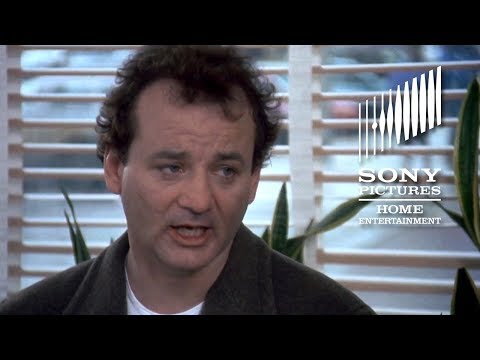
Danny Rubin has described the script's principle as building a routine and breaking it, signaling inner change through external action rather than dialogue. That is the engine, and once you see it you see it everywhere: the piano, the ice sculpture, the small acts of rescue that repeat until they become character. The diner scene where he confesses the loop to Rita is the dramatic hinge Barry Norman identified back in 1993, the moment the comedy turns and Murray plays a man being forced to live through consequences he cannot escape.
The reception has hardened into a consensus I mostly share. A. O. Scott's revisit makes the strongest case: that under the accessible surface sits a stark existential situation with real philosophical weight, and that the film shows how hard it is simply to live in the present and connect with other people. Gene Siskel argued no other actor could have made the transformation believable, and I think that is right; the film is unimaginable recast. David O. Russell went further, calling it one of the greatest films ever made and envying the script outright. Murray called it his best work. MacDowell called it her favorite of her own films. That is a lot of people who were there telling you the same thing.
The dissent deserves its hearing too, and not just the pacing complaints. There is a real objection that the conceit forces you to spend a long time with someone genuinely unlikable, running a montage of boundary-violating behavior toward Rita before any redemption arrives, and that some viewers simply never want him to succeed no matter how he grows. I don't share that reading, but I understand it, because the film does bet everything on your willingness to sit with the unpleasant version long enough for the change to mean something. If you can't, the machine doesn't run.
What's striking in hindsight is how much the film seeded. It normalized fantasy premises in mainstream comedy and effectively wrote the template for the time-loop story that Palm Springs, Russian Doll, and Happy Death Day would later inherit. Its title became English shorthand for repetitive misery. Buddhist, Christian, and Jewish scholars have all claimed it as allegory. The Library of Congress preserved it in 2006; there is a stage musical. For a movie that was not even the biggest comedy of its own year, outgrossed by Mrs. Doubtfire and Free Willy, that is an unusual afterlife. There is a colder footnote too: this was the last collaboration between Murray and Ramis, who did not speak again until shortly before Ramis died in 2014. A film about repairing a broken connection, made by two men who never quite repaired their own.
Cast & Crew
Who made it, and who’s in it.
Cast
Bill Murray
Phil Connors

Andie MacDowell
Rita Hanson

Chris Elliott
Larry

Stephen Tobolowsky
Ned Ryerson
Brian Doyle-Murray
Buster Green

Marita Geraghty
Nancy Taylor

Angela Paton
Mme Lancaster

Rick Ducommun
Gus
Rick Overton
Ralph

Robin Duke
Doris the Waitress
Carol Bivins
Anchorwoman

Willie Garson
Phil's Assistant Kenny
Crew
- DirectorHarold Ramis
- ScreenplayDanny Rubin
- Director of PhotographyJohn Bailey
- EditorPembroke J. Herring
- Original Music ComposerGeorge Fenton
Trailer
Plays on YouTube, in a new tab.
 Official Trailer · 2018Watch on YouTube
 Reader response
About the Editor
Derik Silva
Editor-in-Chief
Derik founded The Skry to do for film and television what aggregator culture stopped doing — read closely, score honestly, and defend the score in writing. He believes the long arc is the only arc that matters: the films that earn their reputation by holding up over years, and the ones whose reputations have grown larger than the films can carry. Previously, he founded Travault.
The Skry Dispatch
Read closely, weekly. Reviews and dispatches from The Skry.