Film Review
Inception
Leonardo DiCaprio · Joseph Gordon-Levitt · Ken Watanabe
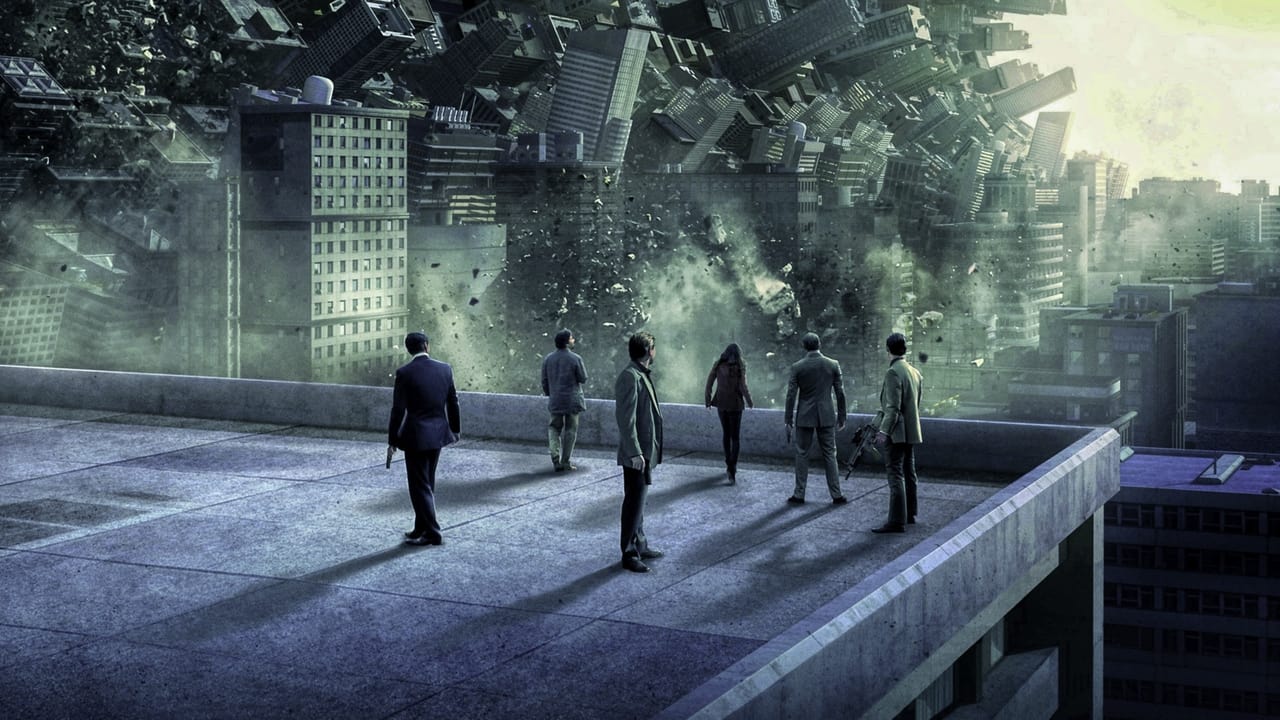
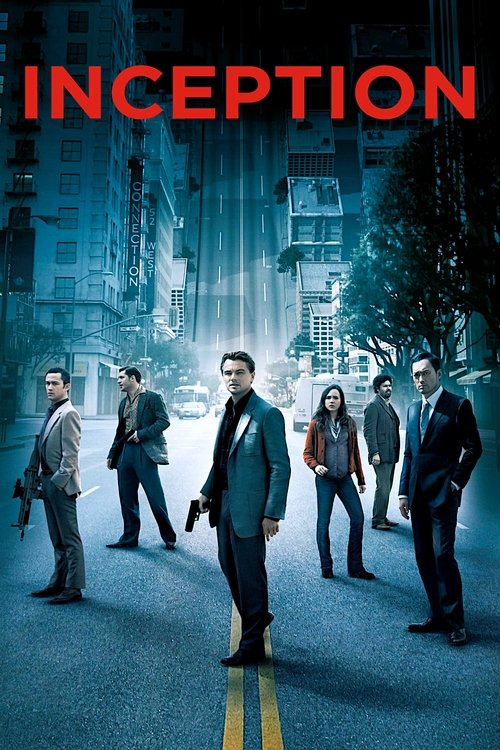
Christopher Nolan spent close to a decade building the machine that runs for these 148 minutes, and its precision is the first thing you register. Inception is a heist film wearing science fiction as a second skin: a crew is assembled, a mark is chosen, a job that shouldn't be possible is planned in obsessive detail, and then the plan meets the world and buckles. The novelty is that the vault is a mind and the terrain is a dream, layered several levels deep, each level running on its own clock.
Editorial Deep
Score breakdown, defended
Each dimension scores what it scores. The number is the claim; the prose is the defense.
Editorial Layer
Flat mean of the five dimensions below. Contributes 71% to the Skry Score.
The screenplay accomplishes something genuinely hard: it makes a four-level nested structure comprehensible and dramatically clear, teaching its rules so the parallel climax can pay off. That legibility is a real achievement of construction. The honest limitation is that comprehension is bought with exposition; characters narrate the machinery, and stretches of the middle re-explain physics the audience already grasps. The emotional through-line via Cobb is sturdy, but the script often crowds out its own best character work with instruction. Accomplished at its structural aim, held back from higher by dialogue that briefs more than it dramatizes.
The image work here is distinctive and largely practical, which is its whole argument. A hundred-foot rotating corridor shot so cleanly that a long take survives the edit; a Paris street folded with air cannons and no CGI; 35mm anamorphic blended with 65mm and VistaVision; speed-ramping and extreme slow motion deployed to make differing dream velocities physically readable. Nolan directs his own action in a single unit and the control shows in the composition and continuity of space. This is command of the frame at blockbuster scale, memorable and repeatable, and it earns the high mark on execution rather than mere spectacle.
The ensemble does considered work with distinct registers. DiCaprio holds rational planning and raw feeling in one body, and the grief reads on his face even as the plot narrates elsewhere. Gordon-Levitt turns composure into physical comedy in zero gravity, and Hardy takes scenes on timed, needling exchange rather than mere charm. Watanabe, Page, Murphy, and Cotillard each anchor a separate tone. The limitation is that the script often subordinates performance to plot machinery, giving several strong actors less room than their gifts want. Genuine craft across the board; the constraint is the writing that boxes it, not the acting itself.
Momentum is the film's most reliable engine. The heist rhythm of assembly, planning, and improvisation drives the first hours, and the twenty-minute climax cross-cutting a falling van, a spinning corridor, and a snow assault is a control of simultaneity few blockbusters match. The beats land and the escalation is clean. The honest cost of that velocity is that the film sometimes rushes past its most wondrous images, launching the café fold and hurrying on before it can breathe. High marks for drive and structural momentum; a small deduction for tempo that occasionally outruns its own best moments.
This is built for return. The nested architecture, the timed collapse of parallel levels, and the deliberately unresolved final image reward a second viewing that few spectacle films sustain. The rules that felt like exposition on first pass become pleasures to re-trace; the Cobb reading deepens once the plot ceases to surprise. Ebert's framing of it as a labyrinth sure to inspire endless analysis is fair. The density is real and the reasons to re-enter are structural, not incidental, which earns a high mark on this domain independent of any coldness elsewhere.
Nolan chose comprehension over mystery, and built a dream you could read like a blueprint; the wonder is how much feeling survives the diagram.
What holds it together is architecture, in the literal and structural sense. The film teaches you its rules through images before it explains them in words, most memorably when a Paris street folds up and over itself like a closing book, and when an endless staircase loops back on its own beginning. These moments are built to be legible: Nolan wants you to understand the geometry of the trick so the later payoffs land. That clarity is a deliberate choice, and it comes with a cost the film knowingly pays. There is a great deal of talking here, characters narrating the machinery so the audience can keep up. When the dialogue is working, it is a briefing; when it isn't, it is a manual.
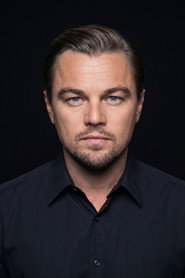
Leonardo DiCaprio carries the emotional freight as Cobb, the thief who leads the crew, and he keeps a private grief alive under all the planning. It is a performance that has to hold rational calculation and raw feeling in the same body, and DiCaprio never lets either go slack — the strategist's composure and the widower's exhaustion read in the same face. Around him the ensemble is sharply cast. Joseph Gordon-Levitt brings a dry, buttoned composure that turns into physical comedy once gravity abandons him, fighting through a corridor with his suit still immaculate. Tom Hardy, as the crew's shape-shifting forger, sparring his way through the exposition, times his needling so the briefing scenes play as verbal fencing rather than instruction. Ken Watanabe, Elliot Page, Cillian Murphy, and Marion Cotillard each anchor a distinct register, and Michael Caine and Pete Postlethwaite lend the edges some gravity.
The craft is the argument, and the argument is practical. That rotating hallway fight, with Gordon-Levitt tumbling through a corridor as the floor becomes the ceiling, was staged on a genuine hundred-foot spinning set, and editor Lee Smith trusted the footage enough to let a long stretch of it run as a single unbroken take. The café explosion was air cannons, not pixels. Shooting on 35mm anamorphic with passages in 65mm and VistaVision, Nolan blends grand aerial sweep with handheld urgency, and rides speed-ramping and extreme slow motion to make the different velocities of the dream levels physically readable.
The climax is the showpiece: roughly twenty minutes cutting between a van falling off a bridge, that spinning corridor, and an assault on a snow fortress, all of it timed to collapse together. It is a feat of parallel construction that few blockbusters have matched for sheer control of simultaneity.
Is it as strange as a dream actually is? No, and that is a fair objection. Nolan's dreams feel real rather than surreal; the film reasons where it might have hallucinated. If you come wanting the unhinged imagery of a Buñuel or the visual fever of stranger films, you may find this too orderly, too explained. But judged as what it is, a puzzle-box spectacle built to be understood and re-entered, it operates at a level of ambition and execution the form rarely reaches. It is worth your time, and it rewards a second run.
Beyond this line, spoilers
The Conversation
First-person welcome. Pushing back on consensus is a tool, not a formula.
I want to take the dissent seriously, because it is real and it is smart. The sharpest charge against Inception is not that it's dumb but that it's the opposite: too legible, too diagrammed, a dream world that behaves like an engineering problem. Wael Khairy makes the case cleanly, arguing the dreams feel disappointingly real when they should feel surreal, and pointing at The Cell as the film that got the haunted imagery Nolan left on the table. David Denby's Buñuel comparison lands the same punch from a different angle: where Buñuel slid you into reverie without a word, Nolan needs pages of dialogue to hold the trance together. I think both are correct about the mechanism and wrong about the verdict. The explaining isn't a failure of nerve; it's the price of the structure. You cannot cross-cut four levels of collapsing time and expect an audience to feel the stakes unless they know the rules cold. Nolan chose comprehension over mystery. That is a defensible trade, not a botch.
Where I'd push back on the film's defenders is the originality claim, which is the most overheated part of its reputation. Keith Garlington calls it one of the most original pictures ever made, and I don't buy it. The parallels to Satoshi Kon's Paprika are specific enough — plot beats, scenes, characters — that documented scholars have laid them side by side, and you can add Solaris to the ancestry. The heist skeleton is ancient. What's original is the assembly, not the parts, and that's a genuine achievement without needing the inflated label. Nolan himself has admitted the film's deeper resonances weren't fully premeditated, which I find more honest than the fans do.
On DiCaprio, I side hard with Sheila O'Malley, who called his work here one of the year's most overlooked, buried under plot. The scene of Mal's death — DiCaprio collapsing, screaming, and somehow not tipping into melodrama — is nearly impossible to play, and he plays it. Jon Negroni's read is right too: what makes Cobb compelling is the war between his logic and his impulse, and that war is legible on DiCaprio's face even when the script is busy narrating something else. The performance is the film's beating heart, and it's telling how easy it is to talk about the rotating hallway for an hour before mentioning it.
What would I cut? Some of the mid-film briefing. There's a stretch where the movie stops to re-explain its own physics, and I think it underestimates its audience there. Khairy's most useful complaint is that the film is too busy to sit inside its own best images — it launches the Paris café fold and then hurries past it. I'd have held on that a beat longer. There's a version of this that's ten minutes leaner and loses nothing but redundancy.
And yes, the ending. The spinning top, the cut to black before it falls or doesn't. I've made my peace with it as the correct choice: the point was never whether Cobb is dreaming but whether he's stopped caring, and he walks away before it settles. The film hands the anxiety to you and refuses to resolve it, which is either the one place it trusts the audience completely or a cheap tease, depending on your mood. I lean toward the former.
The legacy is its own footnote. This became the shorthand — the film every layered-reality show gets compared to — and the trailer's BWAAAM reshaped how a decade of blockbusters announced themselves. Villeneuve keeps it among his favorites; Stephen King ranked it high the year it landed. There's a minority view that this is where Nolan's work began to dip even as his fame climbed. I understand the argument and I don't share it. The control on display here is total, whatever the coldness costs.
Cast & Crew
Who made it, and who’s in it.
Cast
Leonardo DiCaprio
Dom Cobb

Joseph Gordon-Levitt
Arthur

Ken Watanabe
Saito

Tom Hardy
Eames

Elliot Page
Ariadne

Dileep Rao
Yusuf
Cillian Murphy
Robert Fischer, Jr.
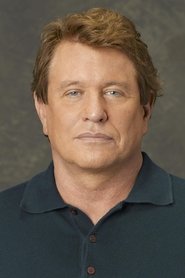
Tom Berenger
Peter Browning

Marion Cotillard
Mal Cobb

Pete Postlethwaite
Maurice Fischer
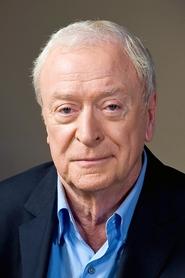
Michael Caine
Stephen Miles
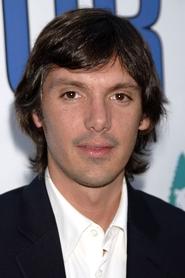
Lukas Haas
Nash
Crew
- DirectorChristopher Nolan
- Director of PhotographyWally Pfister
- EditorLee Smith
- Original Music ComposerHans Zimmer
Trailer
Plays on YouTube, in a new tab.
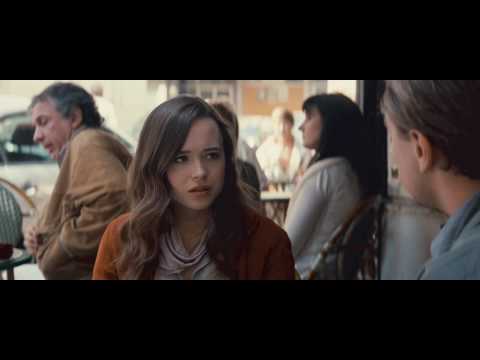 Official New UK Trailer · 2010Watch on YouTube
 Reader response
About the Editor
Derik Silva
Editor-in-Chief
Derik founded The Skry to do for film and television what aggregator culture stopped doing — read closely, score honestly, and defend the score in writing. He believes the long arc is the only arc that matters: the films that earn their reputation by holding up over years, and the ones whose reputations have grown larger than the films can carry. Previously, he founded Travault.
The Skry Dispatch
Read closely, weekly. Reviews and dispatches from The Skry.