Film Review
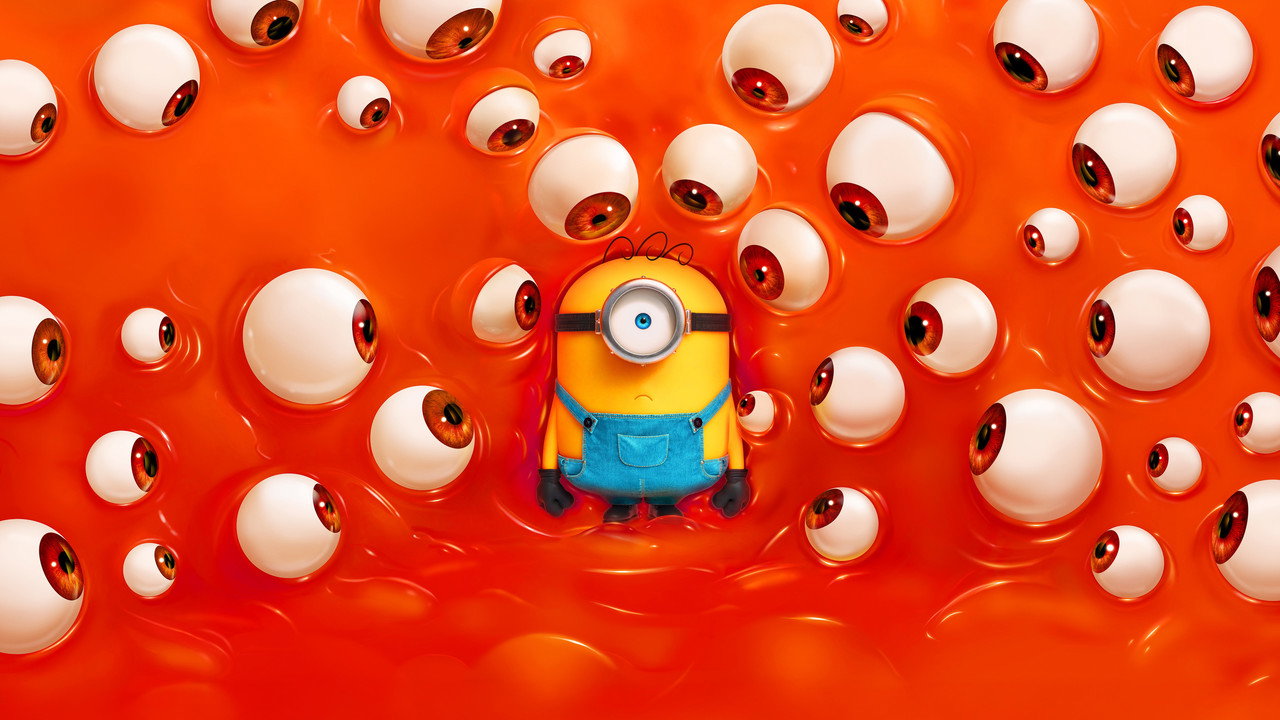
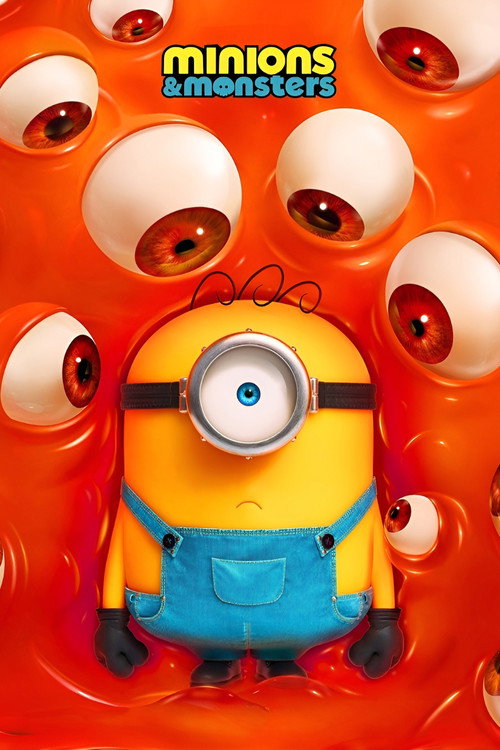
Minions & Monsters
Pierre Coffin · Trey Parker · Allison Janney
The seventh Minions picture opens by rewinding the Universal logo all the way back to the studio's 1912 origins, and the gesture tells you what kind of film this wants to be. Pierre Coffin, returning to direct a standalone entry on his own for the first time, has made the most openly cinephile object in a franchise that had shown little interest in its own lineage. The premise is straightforward and, for these characters, unusually generous: the Minions were present at the birth of the movies, and this ninety-minute picture sets out to prove it.
Editorial Deep
Score breakdown, defended
Each dimension scores what it scores. The number is the claim; the prose is the defense.
Editorial Layer
Flat mean of the five dimensions below. Contributes 71% to the Skry Score.
The screenplay's central idea is strong and specific: place the Minions at the origin of cinema and build the comedy from silent-era grammar. For most of its first hour it executes that idea with real wit, structuring gags the way two-reel comedies did rather than stringing set pieces at random. The limitation is structural rather than conceptual. The monster plot promised by the title arrives late and adds little, and the alien overlord Dort consumes screen time the story cannot spare. The writing achieves its thesis and then loses confidence in it.
The visual program is unusually considered for the franchise. The title sequence rewinding the studio logo to 1912, the museum framing dense with canonical props, and a locomotive set piece that moves from desert horse chase to runaway-train disaster all show a director staging period cinema rather than generic animated action. The increased Minion density in the chases stays legible instead of turning to noise. The image-making is confident and specific where it engages film history, and it carries the picture through its weaker passages.
The vocal ensemble serves the material well. Allison Janney anchors the museum framing with the tour-guide narration that holds the film's cleverest sequence together, and the physical-comedy voicing of the Minions themselves remains Coffin's precise instrument. The clear drag on the domain is Dort: the film pitches Jesse Eisenberg's alien overlord as more delightful than he plays, and the performance's welcome runs out well before its screen time does. The strong work outnumbers the misjudgment.
Momentum is the film's most uneven quality. The wordless prologue and the train sequence move with genuine snap, and the joke-per-minute rate early on is high enough to carry all ages. But the picture loses its rhythm at the sixty-minute pivot, when the monster plot displaces the silent-comedy engine and the alien overlord brings stretches to a near halt. The climax is engaging without being distinct. The feeling is of a film that front-loads its best pacing and coasts through the back third.
There is real density in the first hour for a return visit: the logo rewind, the Easter-egg-laden museum, and the layered film-history quotation reward a viewer who knows the references. The operatic Golden Age score adds a second dimension that rewards attention. The back half offers less to come back to, since its action is more familiar than particular. The reasons to rewatch cluster in the opening act and the set pieces rather than spreading evenly across the whole.
A love letter to cinema that front-loads its best hour, then hands the back third to a monster plot the title promised and the film half-delivers.
The strongest stretches arrive early. A wordless prologue moves the Minions through a run of masters (a Cyclops, a mummy, a warlock) before dropping them into 1920s Hollywood, and it is the purest distillation of what the characters have always been: silent-comedy engines, closer to Buster Keaton and Harold Lloyd than to any modern animated mascot. Coffin has said as much, and here he makes the debt explicit rather than incidental. The film is smarter, wilder, and funnier when it trusts that lineage and lets the gags carry structure the way the old two-reelers did.
The grandest set piece is a runaway locomotive sequence that quotes The Great Train Robbery and hands the pursuit to the Keystone Cops. It shifts from a frenzied desert chase into full runaway-train disaster mode, and it earns the escalation. Coffin has noted that current animation lets him crowd far more Minions into a chase than the technology once allowed, and the density pays off: the frame stays legible while the chaos multiplies. A second highlight is quieter and more contained, a present-day Hollywood History museum tour led by Allison Janney's guide, its shelves loaded with props from the cinematic canon and a cameo from George Lucas. It functions as both framing device and the film's cleverest single joke.
John Powell's score is the craft decision that most cleanly separates this entry from its predecessors. In place of the franchise's habitual pop-song insertions, he writes in an operatic, deliberately overwrought Golden Age idiom, closer to Max Steiner than to a needle drop. The music treats the material as period cinema rather than product, and the film is better for taking itself that seriously about its own past.
Where it wobbles is in the back half, and the trouble is baked into the title. The monsters take their time arriving, and once the Hollywood setup gives way to the creature plot, the invention thins. Jesse Eisenberg's spacesuited alien overlord, Dort, is the clearest symptom: the film seems more entertained by him than the audience is likely to be, and his screen time slows the momentum the first hour built. The climax is competently staged without being distinct; it recalls a good deal of modern animated action rather than extending the silent-comedy grammar the opening promised.
Still, the thing holds its goodwill. As a very late-franchise entry with no obligation to have an idea at its core, it has one, and it commits to it with a stubbornness that is genuinely disarming. The question of whether a nine-year-old will care about a Harold Lloyd homage is a fair one. The joke-per-minute rate is high enough that the answer may not matter as much as it seems it should.
Beyond this line, spoilers
The Conversation
First-person welcome. Pushing back on consensus is a tool, not a formula.
I want to talk about the split this film has produced, because it is the most interesting thing about its reception. On paper it is broadly beloved. In practice there is a real argument underneath the praise, and it comes down to whether you weigh the first hour or the whole shape.
Guy Lodge makes the strongest case for it, and I find him persuasive on the core point: this is a weird, willful popular entertainment for much of its length, and a seventh entry has no right to be that committed to a premise. He calls the train sequence a coup de cinema in its own right, and I think that's correct. But Lodge is also the one who names the problem most precisely, that the film is smarter, wilder, and funnier before the monsters enter the equation. That's the whole review in a sentence. The gear shift is where the picture starts spending down the capital the prologue earned.
The structural dissent is worth taking seriously. The monsters, the literal second noun of the title, don't turn up until the sixty-minute mark of a ninety-minute film. You can read that two ways. Lodge treats the Hollywood-to-monsters pivot as within acceptable genre convention and stays inside the film's goodwill. The counter-position is that a movie called Minions & Monsters that underdelivers on monsters has a design flaw, not a pacing quirk, and I lean toward that reading. The back half isn't bad. It's ordinary, and ordinary is exactly what the opening promised to avoid.
Then there's the audience question, which I find genuinely unresolved. This is a love letter to cinema history, and the affection is real. Derek Smith and others read the Old Hollywood setting as a pro-theater argument aimed at multiplex adults, which it plainly is. Whether an eleven-year-old responds to Keaton and Lloyd tributes is another matter. The gentlest evidence on offer is the anecdote of kids who looked unmoved during the film and claimed afterward to have loved it, which tells you approximately nothing and is somehow the most honest data point in the whole conversation.
What I keep returning to is Coffin's own framing. He thought he was finished with these characters after the better part of two decades, and he came back for a reason that is essentially personal: a childhood love of silent comedy and Universal Monsters. That autobiography is legible in every frame of the first hour and thins precisely where the obligations of a franchise tentpole reassert themselves. Steven Prokopy says this is the first Minions film he can fully endorse, on the grounds that the idea is fresh. James Crooks calls it the best adventure with the Minions yet. I'd land closer to the more measured take that it's a better Minions movie than a great one. The love for cinema is total. The film around it is only intermittently as good as its own thesis.
The box office read of an underwhelming number-one open is its own small irony for a movie this openly in love with the moviegoing experience. It made the argument for the theater and the theater half-listened. That gap between the film's affection and its reach feels, in the end, like the truest thing about it.
Cast & Crew
Who made it, and who’s in it.
Cast
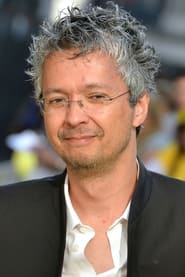
Pierre Coffin
James / Henry / Ed / Dick / The Minions (voice)

Trey Parker
Goomi (voice)

Allison Janney
Olivia (voice)

Christoph Waltz
Max (voice)
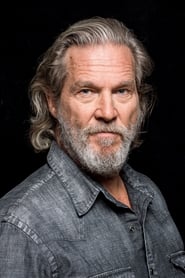
Jeff Bridges
Frank / Elwood (voice)

Jesse Eisenberg
Dort (voice)

Zoey Deutch
Debbie (voice)
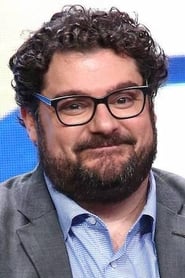
Bobby Moynihan
Phillips (voice)
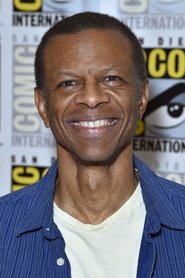
Phil LaMarr
Howard (voice)
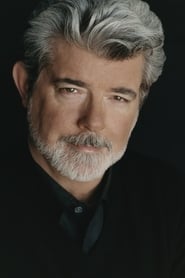
George Lucas
George Lucas (voice)

Barbara Eve Harris
Additional Voices (voice)
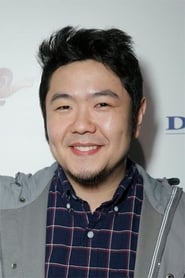
Eric Bauza
Additional Voices (voice)
Crew
- DirectorPierre Coffin
- WriterBrian Lynch
- EditorGregory Perler
- Original Music ComposerJohn Powell
Trailer
Plays on YouTube, in a new tab.
 Final Trailer · 2026Watch on YouTube
 Reader response
About the Editor
Derik Silva
Editor-in-Chief
Derik founded The Skry to do for film and television what aggregator culture stopped doing — read closely, score honestly, and defend the score in writing. He believes the long arc is the only arc that matters: the films that earn their reputation by holding up over years, and the ones whose reputations have grown larger than the films can carry. Previously, he founded Travault.
The Skry Dispatch
Read closely, weekly. Reviews and dispatches from The Skry.