Film Review
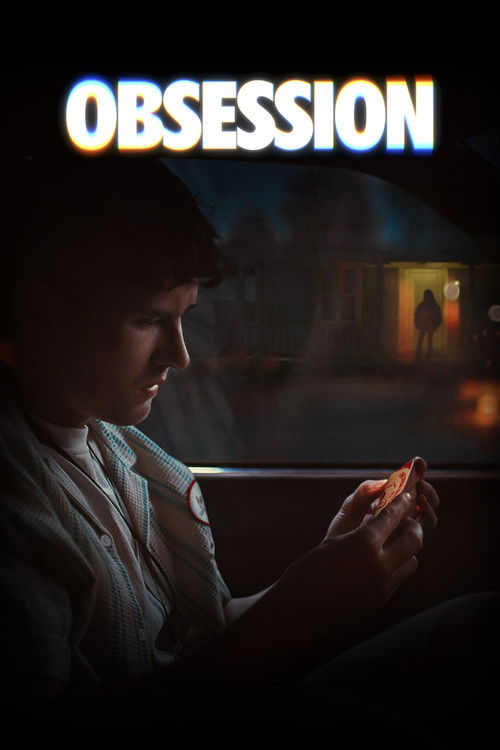
Obsession
Michael Johnston · Inde Navarrette · Cooper Tomlinson
Curry Barker made his no-budget feature debut with Milk & Serial in 2024, and Obsession arrives as the fuller realization of the same instincts: comic timing pointed at horror, and horror running on the mechanics of a joke. Barker writes, directs, and cuts his own work, a habit carried over from a life on a sketch YouTube channel, and the result is a rhythm that refuses to sit where you expect it to. There are no clean jump scares here. Instead the film sets up a beat, holds on a face a half-second too long, and lets the punchline curdle. As the story darkens, the jokes grow meaner and colder, until the laugh and the flinch are the same reflex.
Editorial Deep
Score breakdown, defended
Each dimension scores what it scores. The number is the claim; the prose is the defense.
Editorial Layer
Flat mean of the five dimensions below. Contributes 71% to the Skry Score.
The script builds a tight 108-minute machine out of a single wish premise and sustains its tonal braid of dread and dark comedy without a slack stretch. The customer-service and door-discovery beats show real command of when to withhold and when to detonate. The honest limitation is the central figure: the writing of Nikki draws a genuine critical fault line, and whether it earns its thematic claim about the nice guy and the manosphere is contested on the merits, not merely on taste. That unresolved question is a limit on the writing's reach, not a collapse of it; the structure and dialogue work cleanly around a character the film may not have fully written.
The image was built scene by scene from the feeling of confinement inside Bear's world rather than from a reference bible, and the discipline shows in a palette that accumulates dread instead of declaring it. The party set piece is staged and shot to escalate social discomfort into physical threat with control. Paired with sound design engineered to tighten the body before the mind registers cause, the visual language does precise, unshowy work. The ceiling is scale: this is intimate, low-budget craft, and its command is in restraint rather than spectacle, which is exactly what the material asks for.
Navarrette's possession is one of the year's genuine performance achievements. She builds it physically, through contorted and childlike expression, while keeping the eyes legibly human so a trapped person peers out from inside the thing that has taken control. The film's entire horror apparatus rests on this and holds. Johnston complements her with a face that carries what the script leaves unspoken, mapping Bear's distress and confusion in real time. This is the film's strongest domain by a clear margin, and the awards conversation around Navarrette is earned by what is on screen.
The film surges and does not sag across its runtime. Barker cuts his own work, and that produces an off-kilter meter that destabilizes without relying on conventional jump scares, replacing them with punchlines that grow colder as the story darkens. The escalation is well-governed: awkwardness tips into violence on a rhythm the editing controls. Physiological response was part of the design and it lands. The momentum is a real accomplishment of the assembly, not a byproduct of shock.
A second pass rewards the film's central ambiguity: the same sequences read differently depending on which interpretation of Nikki you carry in, which gives the architecture genuine reversibility. The tonal engineering, the sound work that acts before comprehension, and Navarrette's layered physical performance hold up to closer attention. The limit on replay value is that the contested reading may resolve into disappointment rather than depth for some viewers, and the small world offers less to excavate than a denser mystery would; still, there is real structure here to return to.
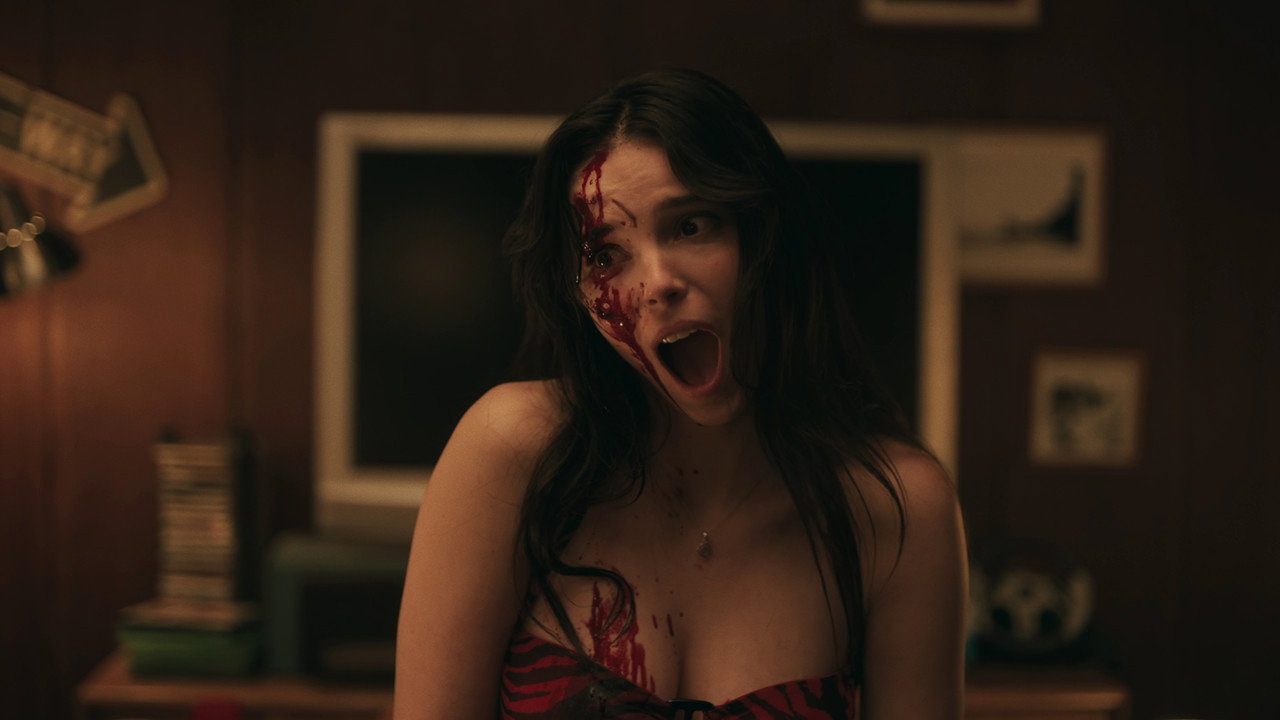
The scares rest entirely on Navarrette's face, and her face is the film's special effect.
The premise runs on a wish, a device called the One Wish Willow, and the film treats it with the deadpan bureaucratic comedy of a thing you might call a customer service line about. Bear, played by Michael Johnston, is the young man at the center, and Johnston does something quietly precise with him: whatever the dialogue leaves unstated, his face carries. Distress, confusion, the slow arithmetic of a man realizing what he has set in motion, all of it registers before a word confirms it.
The engine of the picture is Inde Navarrette as Nikki. Possession horror lives or dies on the body of the possessed, and Navarrette builds hers out of contortion: eerie smiles, enormous frowns, expressions that read as childlike and wrong at once. What holds it together is the eyes. They stay legibly human, a person peeking out from inside something that has taken the controls and won't give them back. It is a performance of enormous physical control that never tips into camp, and the film's scares are staked almost entirely on it.
Barker and cinematographer Taylor Clemons worked without a reference bible, breaking the look down scene by scene from the sensation of being trapped in Bear's world. The palette grows rather than announces itself. Rock Burwell's debut score, synth-heavy and dread-soaked, was built alongside Barker to chase a specific uncanny discomfort, and the sound design does something sly: it tightens your body before your mind catches up to why. A drunk Jenga party is the film's showcase set piece, a controlled escalation of social awkwardness into something feral, and Barker's editing keeps the whole thing on an off-kilter meter that unsettles independent of any single shock.
At 108 minutes the film does not sag. It is lean and it moves. What it is doing with Nikki has become the loudest conversation around it, and that conversation belongs in the open zone below. For a debut-adjacent feature made for almost nothing, this is a work of unusual control over tone, one that keeps dread and dark comedy braided so tightly you stop trying to separate them.
Beyond this line, spoilers
The Conversation
First-person welcome. Pushing back on consensus is a tool, not a formula.
Let me start with the fight, because it's the only honest place to start. Obsession has become the year's horror lightning rod, and the charge runs entirely through Nikki. The film centers Bear, a young man who wishes for a woman and gets one whose soul is being taken from her, and it tells that story from the point of view of someone who sees her as a prize rather than a person. That framing is the whole gamble. One camp reads it as deliberate indictment: the horror is Bear's entitled selfishness, and the objectification is the thing being exposed, not the thing being enjoyed. The other camp reads the progressive framing as a disguise, an escape hatch that lets the film pile violence and tropes onto Nikki while claiming immunity. In that reading she stays another thinly written woman in horror, dressed up in tongue-in-cheek jokes.
I don't think this is settled, and I don't want to pretend it is. Both sides agree on what happens on screen. They disagree on whether the execution earns the claim. The steering-wheel attack, where Nikki smashes a man's head against the wheel something like twenty times until his face is a mass of blood, is the kind of sequence that plays completely differently depending on which reading you walk in with. The RogerEbert.com review names the film's biggest blind spot as its refusal to fully reckon with the sexual and psychological violence done to Nikki during her possession, arguing that by locking onto Bear's perspective the film risks sidelining her ordeal. Joey Magidson goes further, calling it particularly icky, finding a cruelty toward the women he doesn't believe is intentional but that colors the whole thing, and saying the film can only gaze longingly at what Barbarian and Weapons managed.
That Cregger comparison is worth sitting with. The film has been labeled proof that the Cregger-ification of 2020s horror is in full effect: sadistic violence, ironic needle drops, dark comedy welded to real dread. Barker cites Peele and Whannell, and reviewers keep reaching for Get Out and Hereditary as the prestige-horror lineage. Whether Obsession belongs in that room or is doing an impression of it is, I think, the same question as the Nikki question wearing a different hat.
Louis Peitzman makes the case for the defense in the cleanest terms I've seen, arguing the film refuses to flatten Nikki into the crazy girlfriend archetype. Marshall Shaffer's early read framed it as a chilling portrait of a crush gone awry, and that framing did real work in the film's reception. And there's a genuinely persuasive version of the pro argument: the commentary lives not in turning evil into metaphor but in how the people around Nikki react to something they don't understand. If you buy that, the film is about the manosphere by anatomizing the nice guy from inside his own delusion.
On Navarrette I have no reservations at all. The awards discourse started on opening weekend and it isn't hype. Her performance carries the entire horror apparatus; her face is the film's special effect. Whatever you conclude about the writing of Nikki, the acting of Nikki is the reason people leave the theater rattled.
A few smaller pleasures. Barker voices the One Wish Willow customer service agent himself, a seemingly stoned functionary, and it's the scene where you hear Nikki screaming in the background and understand she is no longer her human self. Bear's morning discovery of what she's done to the door is the film's tonal thesis in miniature, dread and dark comedy at their most precise. There's also a real formal argument buried in the reception: one reviewer thinks the well-rounded supporting cast and open-ended premise make it tiptoe between cinema and prestige TV, a season arc compressed by a sub-million-dollar budget. Others find the tightness unambiguously cinematic. I lean toward the second. The film's grip is the grip of a movie, not a pilot.
Adam Kempenaar landed at four out of five, which feels about right to me as a summary of the majority position: this is one of the strongest, scariest horror releases of the year, and it is also a film whose central ethical question its makers may not have fully answered. Both things are true. I'd rather a horror film gamble this hard and leave a real argument in its wake than play it safe and leave nothing.
Cast & Crew
Who made it, and who’s in it.
Cast
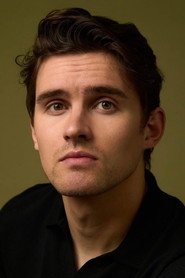
Michael Johnston
Bear

Inde Navarrette
Nikki
Cooper Tomlinson
Ian

Megan Lawless
Sarah
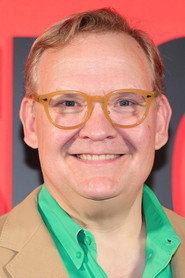
Andy Richter
Carter

Haley Fitzgerald
Viola
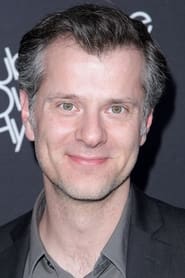
Darin Toonder
Harry
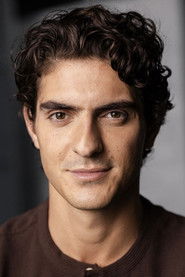
Anthony Pavone
Reggie
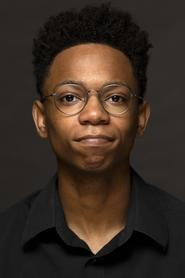
Justice
Joe
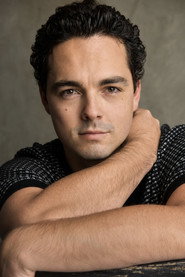
Anthony Casabianca
Chris

Chloe Breen
Ruthie

Malcolm Kelner
Bartender
Crew
- DirectorCurry Barker
- Director of PhotographyTaylor Clemons
- Original Music ComposerRock Burwell
Trailer
Plays on YouTube, in a new tab.
 Official Trailer · 2026Watch on YouTube
 Reader response
About the Editor
Derik Silva
Editor-in-Chief
Derik founded The Skry to do for film and television what aggregator culture stopped doing — read closely, score honestly, and defend the score in writing. He believes the long arc is the only arc that matters: the films that earn their reputation by holding up over years, and the ones whose reputations have grown larger than the films can carry. Previously, he founded Travault.
The Skry Dispatch
Read closely, weekly. Reviews and dispatches from The Skry.