Film Review
Project Hail Mary
Ryan Gosling · Sandra Hüller · James Ortiz
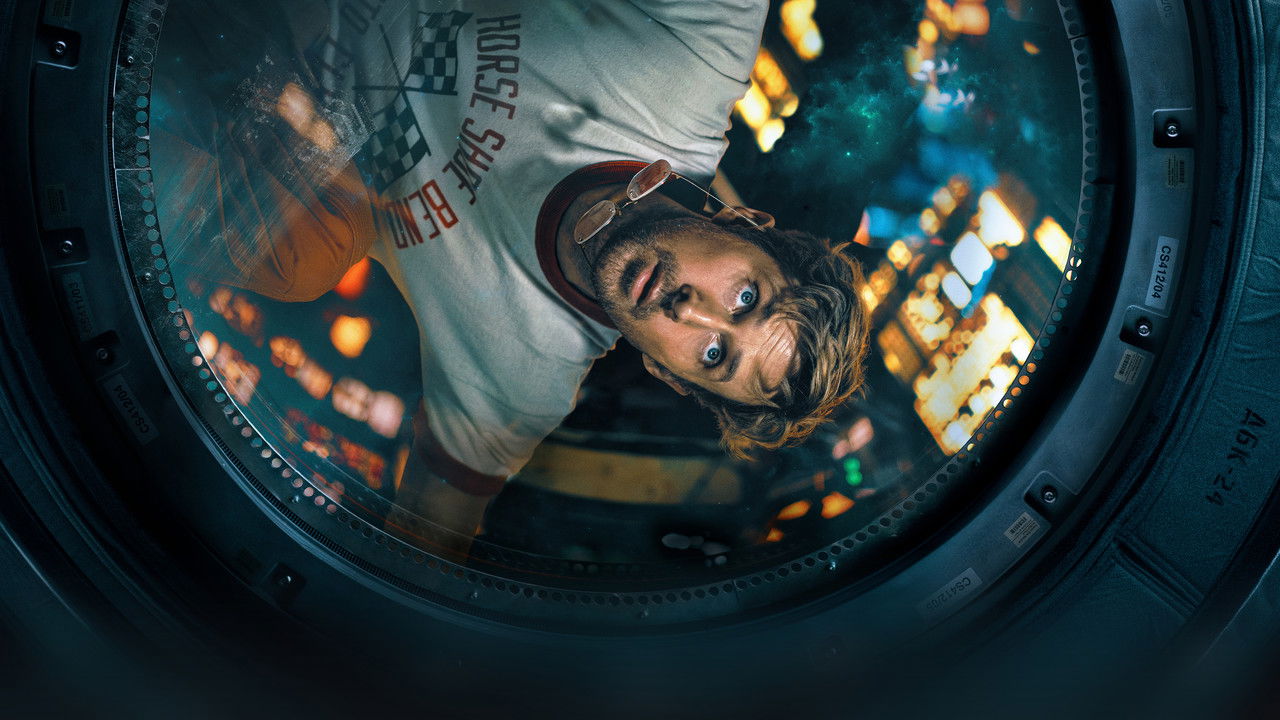
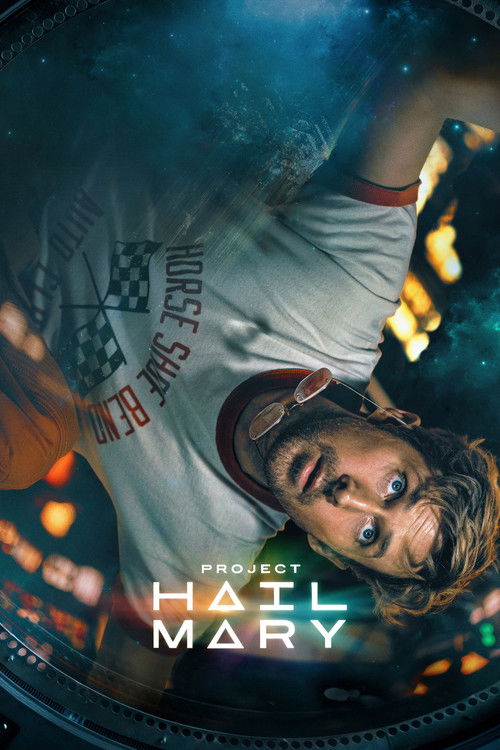
Phil Lord and Christopher Miller made their names on velocity and gag density. Cloudy with a Chance of Meatballs, the Jump Street pictures, The Lego Movie: all of them run on the assumption that a joke can arrive every eight seconds without the emotional load-bearing walls collapsing. Project Hail Mary is the film in which they test whether that engine can pull a 157-minute science-fiction rescue. Mostly, it can.
Editorial Deep
Score breakdown, defended
Each dimension scores what it scores. The number is the claim; the prose is the defense.
Editorial Layer
Flat mean of the five dimensions below. Contributes 71% to the Skry Score.
The screenplay executes a two-timeline rescue structure with clarity and gives Gosling's Grace a workable comic-heroic register. It accomplishes the crowd-pleaser arc it reaches for, and its humor-to-stakes balance succeeds often enough to carry a long runtime. The limitation is thematic reach: the gag reflex intermittently undercuts the gravity the premise claims, and the flashback structure leans on redundant exposition where a lighter hand would trust the viewer. The writing does what it sets out to do; it declines the sharper existential material the concept could have supported.
The image is the film's most distinctive achievement. Committing to fully practical sets with visual effects as finishing polish gives the compositions a weight and eyeline integrity that render-heavy blockbusters routinely lose. The two-stock strategy, a grainy nostalgic texture for the flashbacks against clean large-format 70mm for the space passages, orients the audience below conscious notice and gives the deep-space sequences genuine photochemical warmth and scale. This is confident, purposeful visual language executed at a level well above the category norm.
Gosling delivers a physical-comedy lead of real specificity and is at his most alive in the flashback scenes, playing off other actors. Hüller is the finer instrument: her coy, deadpan withholding builds a mystery that lets the film's emotion land harder than the material around it earns, and the karaoke sequence is a standout of controlled vulnerability. The limitation is structural rather than performed. The film strands Gosling alone for long stretches, the register where he is least dynamic, and a specific dissent argues he leans on his default persona. The ensemble work is strong; the design of who acts when is not always in the performances' favor.
The film moves with the assurance you expect from directors trained on gag density, and the score is a major driver of its momentum, culminating in a seven-minute cue that shapes the largest set piece into a genuine climb. The two-timeline cutting keeps the narrative moving between its threads. The limitation is tonal friction at the seams: the silly and the serious don't always defer to each other cleanly, and the aspect-ratio flashback signals introduce jolts that break the flow for some of its length. The engine pulls; it occasionally lurches.
A second pass rewards attention to the craft architecture: the film-stock split, the puppet performance and how Gosling calibrates against a real object, Pemberton's four-note theme threading the score. The practical-effects commitment holds up to scrutiny in a way digital spectacle rarely does. The limitation is that the narrative itself is relatively linear in its pleasures once the surprises are known, and the emotional beats are telegraphed enough that they reveal less on return than the images do. There is real texture to come back for, weighted toward the making rather than the mystery.
Lord and Miller built a real room for their actors to stand in, and the film's best minutes are the accidents that only happen in one.
The most consequential decision here is a material one. There is no green screen. The sets are built, the spacecraft interiors are physical, and the 2,018 visual-effects shots function as a finishing coat rather than the substance of the image. You can feel the difference in how the actors hold their eyelines and in how light behaves against real surfaces. The alien, Rocky, is a puppet with a voice by James Ortiz, which means Ryan Gosling is reacting to a thing that exists in the room with him. The lineage the film is reaching for is the practical creature work of an earlier era, and it earns the comparison more often than not.
The cinematography splits the world in two by splitting the film stock. Earth-bound flashbacks carry a grainy, nostalgic texture; the deep-space passages move to a cleaner large-format 70mm with photochemical warmth. It is an orientation trick that works below the level of conscious notice, which is the best kind. Daniel Pemberton's score is the other great asset, built on a four-note theme and instruments you rarely hear carrying a blockbuster, the ondes martenot and the cristal baschet among them. The seven-minute cue attached to the film's largest set piece opens on thudding percussion and climbs from there.
Gosling's Ryland Grace is a physical-comedy performance first, a wit second, and the film knows it. He is at his sharpest in the flashback sequences, where he has other actors to bounce against. The film is less sure of him when it leaves him entirely alone in the vacuum, which happens more than a little. Sandra Hüller works in the opposite register. Her deliveries are coy and deadpan, and she withholds enough that the emotion, when it lands, arrives with more force than the surrounding material has prepared you for. There is a karaoke sequence built around her that stands as the film's most surprising few minutes, her voice doing something her face refuses to confirm.
Where the picture wobbles is at the seam between comedy and stakes. The gag reflex that made Lord and Miller famous does not always defer to the gravity the premise is claiming, and the flashback architecture leans on aspect-ratio shifts that some viewers will find clarifying and others distracting. The film is genuinely funny and genuinely moving, sometimes within the same scene. It is less reliably both at once. If you came to The Martian for the pleasure of watching a competent person improvise their way out of death, this is playing the same instrument, tuned warmer and a half-step sillier.
Judged by what it sets out to do, which is deliver a high-concept crowd-pleaser without hiding behind a render farm, it succeeds with room to spare. The reservations are real, but they are the reservations you have about a confident film, not a broken one.
Beyond this line, spoilers
The Conversation
First-person welcome. Pushing back on consensus is a tool, not a formula.
Everything past here is open. If you haven't seen it, come back after.
The fight I find most interesting is the one over Gosling. The majority read is that his Ryland Grace is a real, lived-in creation, and one argument goes further, calling it superior to the character on the page and crediting him with solving a thinness the novel never did. Michael Fairbanks takes the minority position with actual specificity: that Gosling is coasting on his default movie-star setting, and that the performance is never as dynamic as Matt Damon's in The Martian. I land closer to the majority, but Fairbanks has identified something true about the shape of the film. Gosling is best in company and thinnest in solitude, and Robert Daniels flags the same split from the other direction. A space picture that strands its lead alone for long stretches is exposing exactly the mode where its star is least electric. Both things can be true. He's very good with people to play off, and the film asks him to be alone more than serves him.
Then there's the Hüller karaoke scene, which apparently wasn't scripted at all. Gosling heard her singing on set, and it got written in. That's the kind of accident that only happens when you've built a real space for actors to occupy, and it's the strongest argument I can make for the whole no-green-screen philosophy. Guillermo del Toro's public praise for the practical commitment reads less like a courtesy and more like a manifesto, and the framing of the film as a stand against CGI-saturated, AI-adjacent blockbuster production is doing real cultural work in 2026, whatever you make of the movie underneath it.
The adaptation dispute is the one I can't settle, and I won't pretend to. Brandon Sanderson, who read the novel in advance years ago, gives it a 10 and calls the pivot from science to relationship the correct call. Serena Seghedoni argues the opposite: that the departures from the book are precisely where it fails, that the existential edges got sanded into a saccharine buddy comedy. These aren't taste positions dressed as arguments. Both writers know the source, and they're disagreeing about what the source was for. My instinct is that Sanderson is right about what the film is trying to be and Seghedoni is right about what it costs. The relationship focus is what makes the thing move; it's also what dulls the harder philosophical points the premise could have pressed.
River Phan's objection is the sharpest political read on offer, and it deserves airing even if I don't fully sign it. The argument is that dimming the sun with a blameless alien microorganism instead of human action turns a climate-catastrophe premise into an apolitical wash, one that quietly acquits the real-world culprits. I think that overstates the film's obligation to be an allegory it never claimed to be. But Phan is correct that the frictionlessness is a choice, and that a movie about a dying planet which locates the cause entirely off-world has decided, deliberately, not to look in a particular direction.
The Rocky problem is smaller but worth naming. Brandon Sanderson singles out the hamster-ball entrance as the moment the character becomes lovable, goofier than the book's version. Others found the voice a touch too sitcom-coded. I think the puppet is the film's best formal idea and the writing around it is its most uneven, and those two facts live in the same character.
Where I come down: this is Lord and Miller's most ambitious directorial swing, and the ambition is legible in the craft even when the tone slips. Peter Bradshaw notes the moments of dullness and the puppyish silliness while granting that Gosling keeps it watchable, and observes that it deliberately refuses the stunned awe of Interstellar. That refusal is the whole design. It wants to be warm rather than overwhelming, funny rather than sublime. On its own terms, it mostly gets there.
Cast & Crew
Who made it, and who’s in it.
Cast

Ryan Gosling
Ryland Grace

Sandra Hüller
Eva Stratt
James Ortiz
Rocky (voice)
Lionel Boyce
Carl

Milana Vayntrub
Olesya Ilyukhina

Ken Leung
Yao

Priya Kansara
Mary (voice)

Mia Soteriou
Dr. Browne

Annelle Olaleye
Olivia

Maya Eva Hosein
Rekha

Bastian Antonio Fuentes
Parker
Alice Brittain
Hardware Store Cashier
Crew
- DirectorPhil Lord
- DirectorChristopher Miller
- ScreenplayDrew Goddard
- Director of PhotographyGreig Fraser
- EditorJoel Negron
- Original Music ComposerDaniel Pemberton
Trailer
Plays on YouTube, in a new tab.
 Final Sneak Peak · 2026Watch on YouTube
Reader response
About the Editor
Derik Silva
Editor-in-Chief
Derik founded The Skry to do for film and television what aggregator culture stopped doing — read closely, score honestly, and defend the score in writing. He believes the long arc is the only arc that matters: the films that earn their reputation by holding up over years, and the ones whose reputations have grown larger than the films can carry. Previously, he founded Travault.
The Skry Dispatch
Read closely, weekly. Reviews and dispatches from The Skry.