Film Review
Spider-Man: Brand New Day
Tom Holland · Zendaya · Sadie Sink
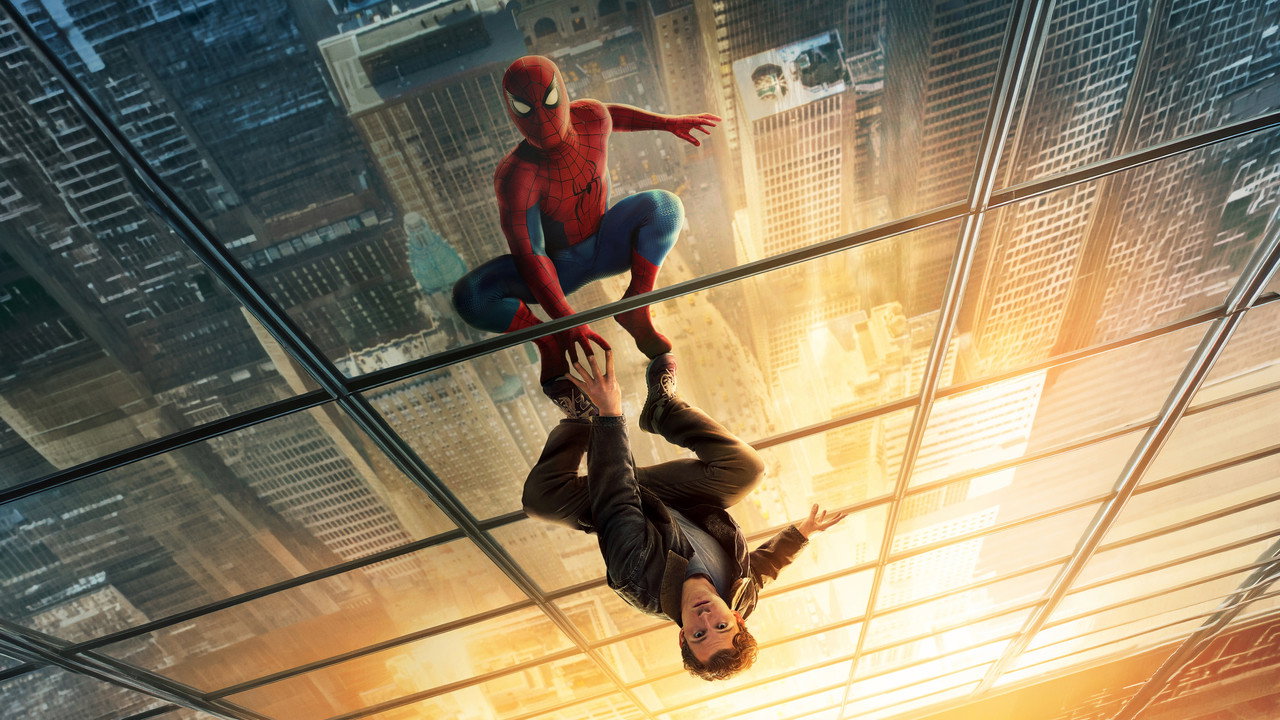
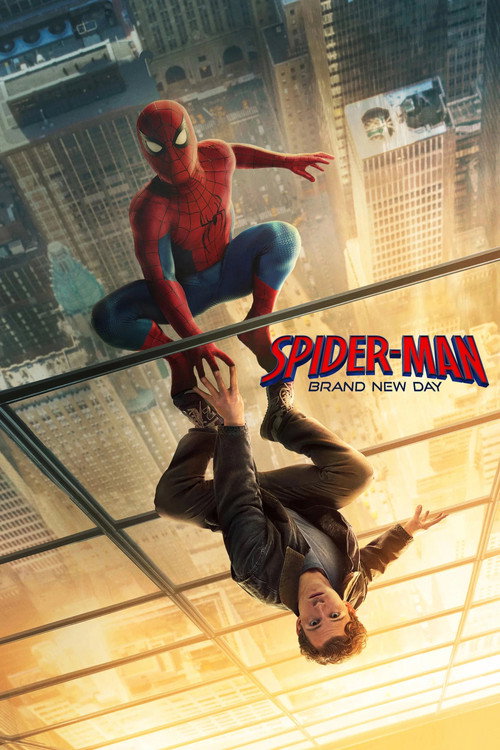
Destin Daniel Cretton opens Spider-Man: Brand New Day with a piece of housekeeping disguised as a flex. Before the plot proper arrives, Spider-Man clears a run of villains in quick succession, and Cretton pauses the flow at intervals to hold a frozen composition in the style of a comic-book splash page. It tells you two things at once. First, the slate is being wiped. Second, this is a director who wants you to look at the frame rather than merely be dragged through it. That impulse governs the whole film.
Editorial Deep
Score breakdown, defended
Each dimension scores what it scores. The number is the claim; the prose is the defense.
Editorial Layer
Flat mean of the five dimensions below. Contributes 60% to the Skry Score.
The screenplay achieves a genuine character continuation: it lets Peter's fatigue and loneliness breathe instead of sprinting past them, and it keeps MJ's specificity intact rather than smoothing her into a stock love interest. The central estrangement is built with care and the mystery structure holds. The limitation is reach: the film carries a second, competing mandate as franchise architecture, and the supporting MCU cast dilutes focus rather than deepening it. The result is a script that succeeds at its intimate spine while diffusing its own attention.
The image is the film's most distinctive achievement. Cretton and his team rebuild the franchise's look with earthy, high-contrast grading and deep blacks that give the suit real saturation and legibility. The splash-page compositions are a coherent visual thesis rather than a gimmick, pausing action so staging reads as staging. The practical body-possession effect and the tank sequence show the same discipline: build it for real, then frame it with intent. This is confident, memorable visual design working at a level above its genre norm.
Holland delivers his most grounded turn in the role, carrying the physical toll of the job in the body and giving Peter's angst somewhere to live. Zendaya plays MJ with retained edge and, in the possession sequences, sustains a dual occupancy that demands and rewards precision. The chemistry between them generates a specific yearning the franchise hadn't found. The ensemble is strong enough that some of it works against the film, pulling focus, but the core performances are assured and detailed.
The film moves with real snap when it trusts its central relationship, and the humor is calibrated to cut the darker material without deflating it. The set-piece rhythm, particularly the tank sequence, balances feeling and kinetics. The limitation is length and plotting: at 145 minutes there are stretches where momentum slackens and the mechanics knot up, and the competing franchise obligations create drag the emotional story has to keep pulling against.
A second pass rewards the visual design especially: the splash-page beats, the grading, and the practical effects hold up under scrutiny and reveal their construction. The dual-performance rooftop sequence deepens once you know where it's going, and the off-screen dimension between the leads gives the estrangement scenes extra texture on return. The density is real but uneven, since the franchise-servicing material offers little to return to, which caps how much of the runtime actually invites a rewatch.
When the connective tissue serves Peter, it sings; when it services the calendar, it sags. This is the best Marvel crossover in ages, and it's still carrying more freight than it should.
Cretton arrives from character drama rather than spectacle, and the seams of that training show in the best way. The images have been reworked from the ground up. Where earlier entries leaned washed-out and flat, this one runs earthy and high-contrast, with deep blacks that let the suit's reds and blues sit on the screen with real saturation. It is a legible visual identity, not a house style borrowed wholesale. The splash-page beats recur through the action as deliberate homage, stopping the choreography just long enough to let staging register as staging.
The practical emphasis pays off. A body-possession effect, in which a mental parasite leaps between people on an open street, is one of the most convincing things here precisely because the production chased a practical solution before reaching for a rendered one. A stolen-tank sequence lands as the film's clearest statement of its balance: heart on one side, kinetic set-piece muscle on the other, held in tension rather than traded off.
At the center is Tom Holland, doing his most grounded work in the role. The film insists on the physical toll of the job, and Holland carries it in the body: the fatigue, the accumulated wear, the sense of a person who has been doing this too long to pretend it costs nothing. He is allowed to slow down and sit inside Peter's angst rather than sprint past it, which turns out to be the single most consequential choice in the whole design. Zendaya's MJ is written with her quirks intact rather than sanded smooth, and the push and pull between the two of them generates a specific kind of yearning and confusion that the franchise has not previously located.
At 145 minutes, the machine does occasionally cough. There are patches where momentum slackens and the plotting knots itself tighter than the story needs. The film wants to be both an intimate continuation of one person's story and a large piece of franchise architecture, and it does not always reconcile those ambitions cleanly. But the core is confident, the images are considered, and the performances hold. Cretton has framed this as a first chapter rather than a fourth installment, and the film mostly earns that framing.
Beyond this line, spoilers
The Conversation
First-person welcome. Pushing back on consensus is a tool, not a formula.
Now I can talk about what the film is actually doing, so stop here if you haven't seen it.
The big swing is Jean Grey. Brand New Day folds an X-Men character into the main continuity, and it stages that convergence through the film's strongest sustained sequence: a rooftop scene in which Peter believes he's reuniting with MJ, only for her to be mind-controlled and body-possessed by Jean. The scene works because it asks Zendaya to play two occupancies at once, and because the emotional trap is cruel in a way the film has earned by then. The later beat, placing Peter and Jean together inside his mind in his old apartment, is pitched as the culmination of both arcs, and it holds better than that kind of interior-mindscape device usually does.
The real-world charge is impossible to ignore here. Holland and Zendaya are married off-screen, and the film builds its central plot on their characters' estrangement. That knowledge sits underneath every scene between them and does a lot of unpaid work. It's worth naming because the movie clearly counts on it.
Where I land is close to the consensus, which is unusually warm. A 90% critical score against a 98% audience number is a rare alignment, and the box office was its own event: the second-highest global opening on record, and enough of a Monday to suggest that whatever fatigue has hit other franchises this year has skipped this character entirely. Robbie Collin's read on the Holland-Zendaya dynamic, that it produces a genuine yearning not seen before between them, matches what I felt. Erik Kain's point that the film delivers a real story at a good clip with humor cutting the darker material is the clearest account of why it lands.
But I don't want to wave off the dissent, because it's pointing at something structural and true. Matt Goldberg's case is that this is two decent movies mashed together: a satisfying Peter Parker continuation and a standard MCU franchise-builder, with the second dragging on the first. Amy Nicholson's version is more specific and, to me, more damning: the Hulk, a new Black Widow, and the Punisher crowd out the central emotional story. I felt that. Bernthal's Punisher is a genuine pleasure and Ruffalo's presence is welcome, but every minute spent servicing the wider machine is a minute not spent on the two people the film is actually about. Eddie Harrison's harsher framing, that the MCU malaise has reached the Spider-Verse and left narrative dead ends behind, overstates it, but he's reacting to a real drag.
There's a live disagreement about Zendaya that I find genuinely hard to settle. One line of praise treats the Holland-Zendaya chemistry as a co-equal strength, a load-bearing pillar of the film. Another credits Zendaya specifically with saving the film from its own generic tendencies, which is a subtly different and less flattering claim about the material around her. Both can't fully be true. My honest read is that she's doing both jobs at once, which is a compliment to her and a quiet indictment of the franchise scaffolding.
And the crossover question is the crux. Scott Mendelson reads the cameos as organic, the natural payoff of a universe that's actually been built. Goldberg reads the same material as obligation. I think the difference comes down to a single editorial instinct the film keeps failing to exercise: knowing when enough mythology is enough. When the connective tissue serves Peter, it sings. When it services the calendar, it sags. Cretton, coming off Short Term 12 and Just Mercy and Shang-Chi, clearly knows the difference. He just wasn't always allowed to act on it. Jesse Hassenger calling it Marvel's best crossover in ages is fair; so is the quieter observation that the best crossover in ages is still carrying more freight than it should.
Cast & Crew
Who made it, and who’s in it.
Cast
Tom Holland
Peter Parker / Spider-Man

Zendaya
MJ

Sadie Sink

Jacob Batalon
Ned Leeds

Jon Bernthal
Frank Castle / Punisher
Tramell Tillman
Bill Metzger

Michael Mando
Mac Gargan
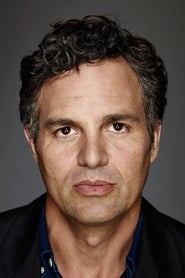
Mark Ruffalo
Bruce Banner / Hulk

Liza Colón-Zayas
Detective Jean DeWolff

Marvin Jones III
Lonnie Lincoln / Tombstone
Eman Esfandi

Zabryna Guevara
Sheila Rivera
Crew
- DirectorDestin Daniel Cretton
- WriterErik Sommers
- Director of PhotographyBrett Pawlak
- EditorNat Sanders
- Original Music ComposerMichael Giacchino
Trailer
Plays on YouTube, in a new tab.
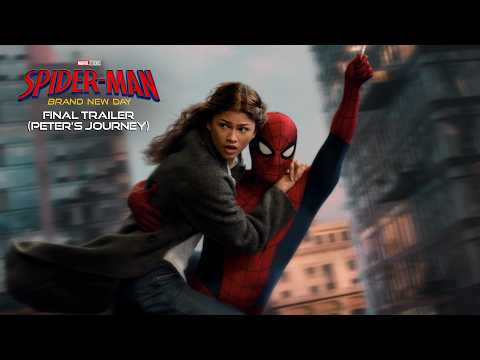 Final Trailer (Peter’s Journey) · 2026Watch on YouTube
 Reader response
About the Editor
Derik Silva
Editor-in-Chief
Derik founded The Skry to do for film and television what aggregator culture stopped doing — read closely, score honestly, and defend the score in writing. He believes the long arc is the only arc that matters: the films that earn their reputation by holding up over years, and the ones whose reputations have grown larger than the films can carry. Previously, he founded Travault.
The Skry Dispatch
Read closely, weekly. Reviews and dispatches from The Skry.