Film Review
Spider-Man: Into the Spider-Verse
Shameik Moore · Jake Johnson · Hailee Steinfeld
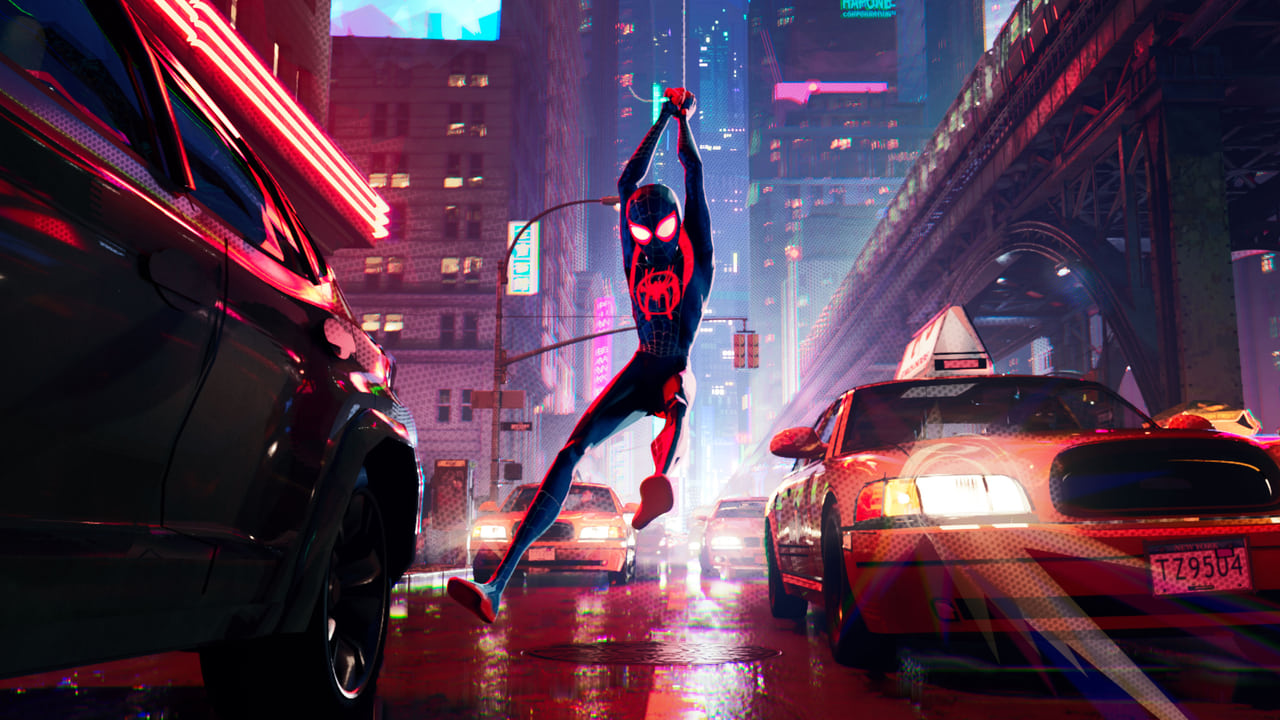
Watch any frame of Into the Spider-Verse in freeze and it holds as a comic panel. Light comes as printed dot patterns. Shadow arrives as hatched lines. There are no soft glows anywhere; the production banned them. Color layers misalign on purpose, mimicking the registration errors of cheap offset printing, and that decision does real work, controlling depth of field and steering the eye rather than sitting there as decoration. The result is an animated film that looks unlike anything the American studios had put on screen.
Editorial Deep
Score breakdown, defended
Each dimension scores what it scores. The number is the claim; the prose is the defense.
Editorial Layer
Flat mean of the five dimensions below. Contributes 71% to the Skry Score.
The screenplay compresses an over-familiar origin into a clean, propulsive arc and pays it off with real emotional debt: the early death of one Peter Parker funds everything after it, and the film immediately supplies a second, deadbeat Peter so grief registers without stalling. The dialogue is fast and specific, the comedy is structural rather than decorative. The honest limitation is population: several alternate Spider-characters charm without changing the story, and the reliance on prior mythology leaves casual viewers behind in stretches. That crowding keeps a genuinely accomplished script from full command.
This is the film's exceptional domain and the case is not close. The team built a codified style language rendering light as dot patterns and shadow as hatched lines, with soft glows forbidden, so every frame reads as a printed comic panel. Misaligned color registration, borrowed from offset-printing error, is repurposed to control depth of field and direct attention. Different Spider-characters move at different frame rates to encode experience into motion itself. The design is distinctive, disciplined, and functional at once, and it changed what American animation permitted itself to look like.
Shameik Moore gives Miles a steadying core beneath the panic, anchoring an escalating multiverse to one anxious teenager, and the work carries the film's emotional through-line with authenticity — a performance the awards circuit singled out. The wider ensemble fills the world convincingly, and the voice work achieves genuine character. The limitation is that several roles are written as cameo-scale delights rather than parts an actor can build an arc from, which caps how much the ensemble can do beyond charm.
The film moves on a tight, repeating rhythm of discovery, panic, and improvisation, and it trusts the audience to keep up without hand-holding. The comedy lands at speed, the emotional beats are tucked inside quiet scenes so they don't halt momentum, and the Fisk Tower climax delivers a genuine surge of scale. The stepped low-frame-rate motion is deliberate and, for most viewers, expressive; it is also the one element some find physically uncomfortable, a real friction the film knowingly courts. On balance the momentum is confident and sustained.
The density rewards return with unusual generosity. Jokes hide in tiny lettering, color logic carries thematic weight without announcing itself, and the frame-rate design becomes legible as character work only once you know to look for it. Emotional freight is buried in small scenes that pay off later, and the ensemble's quieter performances register more on a second pass. The surface is loud but the architecture beneath is exact, giving the film substantially more to find than a single viewing surrenders.
The discomfort is the point: Miles feels wrong in his own body, and the animation stutters until he grows into it.
The achievement runs deeper than surface. Each Spider-character is animated at a different frame rate, so Miles Morales moves on twos, his motion slightly stepped and hesitant, while the veterans glide on ones. Clumsiness is built into the frame count. The discomfort is the point: Miles feels wrong in his own body, and the animation stutters until he grows into it. When he finally moves fluidly, you feel the shift before you can name it. This is character rendered through the machinery of animation itself, and it is the smartest formal idea the film has.
The story is an origin, told at speed. Miles, voiced by Shameik Moore with a real spine under the nerves, is a Brooklyn kid pulled into a fracturing multiverse and forced to grow up faster than he wants to. Moore gives him a core steadiness that keeps the escalating chaos anchored to one anxious teenager. Jake Johnson's rumpled Peter B. Parker supplies the film's comic ballast, and Hailee Steinfeld, Mahershala Ali, Brian Tyree Henry, and Liev Schreiber fill out a world that never feels thin.
A governing rhythm drives the whole thing: discovery, panic, improvisation, momentum. The comedy is fast and specific, and the film trusts you to catch its jokes without slowing down. Onomatopoeia and text boxes do triple duty as transitions, interior monologue, and gags. A great deal of it rewards attention. A great deal of it rewards a second pass.
The honest reservation is accessibility. The film leans on Spider-Man mythology, and it assumes you already know the shape of that story. If you arrive cold to every prior version, some sections will move faster than they explain themselves. The film is confident enough to keep going without you, which is both its charm and its one real cost. There is also the frame-rate question. The same stepped motion that carries the character work strikes a minority of viewers as physically uncomfortable, closer to a broken video feed than an aesthetic. I don't share that reaction, but it isn't imaginary, and it's worth knowing before you sit down.
What lands is the confidence of the thing. Three directors, the largest crew in the studio's history, and a style language strict enough to be a rulebook, all aimed at a single teenager learning to trust himself. The scale is vast and the tone stays warm. It is the best-reviewed film in its genre by the aggregators, and that verdict is doing something more than piling on. This is a film that changed what animation was allowed to look like, and it did so while telling a clean, moving story. Go in knowing your Spider-Man. It's worth your time.
Beyond this line, spoilers
The Conversation
First-person welcome. Pushing back on consensus is a tool, not a formula.
I want to talk about the assembly-room scene, because I think it's the load-bearing wall of the entire film. Miles watches Spider-Man fight the Green Goblin in a cavern of collider machinery. Peter dies. Miles is handed the kill-switch and the responsibility that comes with it. Everything after runs on the debt incurred in that room. It's a bold move to kill your headline Spider-Man in the first act, and the film gets away with it because it immediately gives you another Peter, the tired divorced one, so the loss registers without stalling the momentum. That's structural craft. The grief is real but the engine keeps turning.
The subway spider-bite is the other pivot, and I love that it's staged so quietly. A wall, an uncle, a bite. The origin most versions treat as spectacle is here almost incidental, tucked into a moment of family closeness that pays off later. The film keeps hiding its emotional freight inside small scenes and its jokes inside big ones.
On the frame-rate conflict: I think the dissenters are describing something true and drawing the wrong conclusion from it. The twelve-fps stepping IS uncomfortable at first. It reads as wrong. That wrongness is the design, because Miles feels wrong to himself in his own body, and the film literalizes that in the animation until he grows into fluid motion. If you don't clock the design, it just looks like your projector is failing. That's a fair thing to trip over. It's also, I'd argue, the single most sophisticated thing the film does, and the reason its influence spread the way it did. You can trace this look directly through a wave of animation that followed.
Where I'll push on the consensus is the crowded-multiverse complaint, because I think it has more merit than the near-universal rave allows. Peni Parker and Spider-Ham are delightful in the moment and structurally close to dead weight. They arrive, they charm, they don't change the story. The critics-tower climax, where all the Spider-People converge on Fisk Tower as a unit while the bridge flickers and the city panics, is a genuinely great set piece, but it has to carry more characters than it can fully service. Nicolas Cage's noir Spider-Man and John Mulaney's cartoon pig get laughs and little arc. If I were cutting, I'd tighten their real estate to give Miles and the two Peters more room. The film's generosity is also its slight bloat.
The accessibility argument is the one I keep turning over. The case that the film's dependence on Spider-Man canon costs casual viewers whole sections, and keeps it from the philosophical reach of Spider-Man 2, is the strongest thing the skeptics have. I half agree. The film assumes fluency and doesn't pause to earn it. But I'd counter that the assumption is a feature. By 2018 the origin story was so overtold that the film could compress it to a punchline and spend its energy elsewhere. The cost is real and the trade is worth it.
Uncle Aaron carries warmth that I only fully felt on a rewatch, and the film uses it to seed the subway scene's later payoff. Same with the color logic, Manhattan drowned in deep blues and greens to carry the weight Miles doesn't want. None of that announces itself. It just accumulates. That's why the thing holds up on return in a way most blockbusters don't: the surface is loud, but the architecture underneath is quiet and exact.
Cast & Crew
Who made it, and who’s in it.
Cast

Shameik Moore
Miles Morales (voice)

Jake Johnson
Peter B. Parker (voice)

Hailee Steinfeld
Gwen Stacy (voice)

Mahershala Ali
Uncle Aaron (voice)

Brian Tyree Henry
Jefferson Davis (voice)

Lily Tomlin
Aunt May (voice)

Luna Lauren Vélez
Rio Morales (voice)

Zoë Kravitz
Mary Jane (voice)

John Mulaney
Spider-Ham (voice)

Kimiko Glenn
Peni Parker (voice)
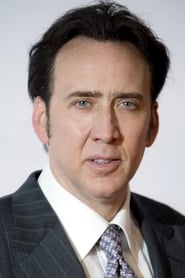
Nicolas Cage
Spider-Man Noir (voice)

Kathryn Hahn
Doc Ock (voice)
Crew
- DirectorBob Persichetti
- DirectorPeter Ramsey
- DirectorRodney Rothman
- ScreenplayPhil Lord
- EditorMatthew Landon
- Original Music ComposerDaniel Pemberton
Trailer
Plays on YouTube, in a new tab.
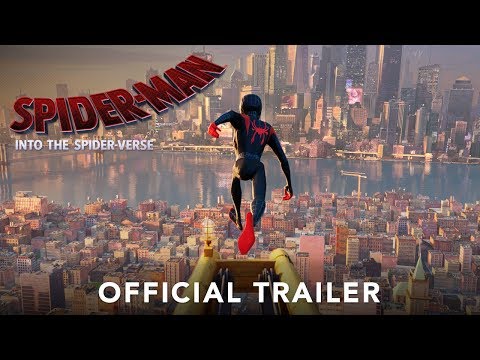 Official Trailer #2 · 2018Watch on YouTube
 Reader response
About the Editor
Derik Silva
Editor-in-Chief
Derik founded The Skry to do for film and television what aggregator culture stopped doing — read closely, score honestly, and defend the score in writing. He believes the long arc is the only arc that matters: the films that earn their reputation by holding up over years, and the ones whose reputations have grown larger than the films can carry. Previously, he founded Travault.
The Skry Dispatch
Read closely, weekly. Reviews and dispatches from The Skry.