Film Review
Supergirl
Milly Alcock · Eve Ridley · Matthias Schoenaerts
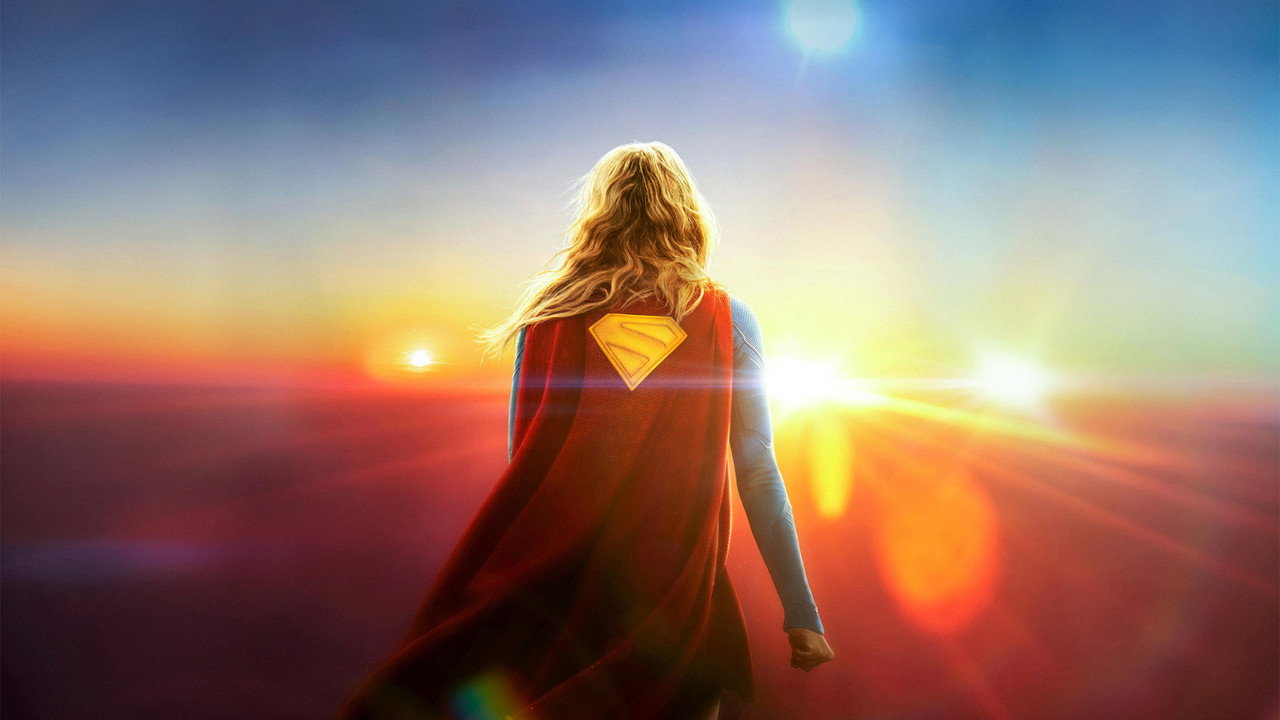
Craig Gillespie's Supergirl opens not with flight but with a bender. On the red-sun planet Bilquis, Kara Zor-El spends her birthday in a Blondie T-shirt, downing shots and dancing to Wet Leg before a girl named Ruthye turns up carrying her dead father's sword. The scene tells you what kind of movie this wants to be: grimy, interplanetary, powered by needle drops and a snarl. Gillespie, who made Cruella and I, Tonya, has always been drawn to prickly protagonists inside genre machinery, and for its first stretch this film runs on that energy. Milly Alcock's Kara masks a broken heart with unrestrained confidence, and Alcock plays the acerbic register with total commitment. When she is on screen doing this, the film has a pulse the character studies Gillespie built his name on would recognize.
Editorial Deep
Score breakdown, defended
Each dimension scores what it scores. The number is the claim; the prose is the defense.
Editorial Layer
Flat mean of the five dimensions below. Contributes 71% to the Skry Score.
The screenplay assembles genuine raw material: the Argo City and Earth flashbacks give Kara a specific, legible trauma that distinguishes her from Superman, and that groundwork is the film's most dramatically sound writing. The failure is structural. The film banks on investment in an arc it stages mainly in flashback, so the present-tense revenge quest plays as a sequel to an origin never told. The villain is drawn too thin to anchor that quest, and the arc can't settle on what Kara is. The intimate character beats land; the connective architecture that would turn them into a satisfying journey does not.
The washed-out, grimy palette is a deliberate register, and it gives the interplanetary setting a lived-in coherence the early scenes use well. Gillespie's decision to shoot the central action himself over six weeks, letting Kara's emotional state dictate whether a beat runs kinetic or fluid, is a real directorial idea and the transport sequence carries its weight. The image falters at the margins: the muted palette can read as a retreat from the source's color, some set-piece editing undercuts its own choreography, and the Krypto render sits conspicuously outside the frame's texture. Considered visual intent, unevenly held.
This is the film's clear strength and the score reflects command, not compensation. Alcock plays Kara as someone masking a broken heart with unrestrained confidence, committedly acerbic and specific about the survivor's guilt underneath, and she sustains that reading even when the script around her wavers. It is a performance that never feels like borrowed goods, human and flawed and cynical in equal measure. Krumholtz does emotionally legible work as Zor-El entirely in an invented language, which is no small feat. The ensemble around them is thinner in what it's given, but the lead carries the picture on genuine craft.
The film has a real front-end pulse: the Bilquis pub crawl sets a grimy, drunk-on-its-own-attitude rhythm, and the needle drops give the early scenes snap. That momentum does not survive the midpoint. The second half stacks weightless set pieces, including a crash-landing hovercraft borrowed from an earlier era of the genre, and a sub-two-hour film starts to feel long. The emotional beats in the flashbacks move; the connective action drags. The result is a movement that starts with a voice and loses it, which is a pacing problem, not merely a taste one.
What rewards a return is narrow but genuine: Alcock's performance holds up to a second look, and the Krypton flashbacks reveal their construction as the film's most carefully built passages. Beyond that, the density thins. The second-half set pieces don't deepen on rewatch, the villain doesn't gain dimension, and the structural gap between the flashback arc and the present-tense quest becomes more visible, not less. There are reasons to revisit the lead; there is less architecture underneath her to keep discovering.
A movie that hands its star everything and forgets to build her a second act.
The adaptation draws from Tom King and Bilquis Evely's celebrated 2021 comic, and the bones of a space western are here: a grieving alien girl, a revenge quest, a companion, a long ride toward a reckoning. Gillespie shot the central action sequence himself over roughly six weeks with no second unit, insisting Kara's emotional state should govern whether a beat felt kinetic or fluid. The results of that principle are most visible in the mid-film battle aboard a space transport, where Kara fights Sklarian raiders inside the ship and then chases them out toward a horizon line of yellow sunlight. It is the film's most sustained piece of action, and the effort put into it registers.
The strongest material, oddly for a superhero picture, is the quietest. The Krypton and Argo City flashbacks — Kara's childhood, her mother's death from radiation, her father Zor-El's farewell — carry the clearest dramatic weight and do the most to explain who this Kara is and why she is not her cousin. David Krumholtz performs Zor-El entirely in an invented Kryptonian tongue and still lands the emotion. These scenes establish the survivor's guilt, the language barrier, the disconnection from Earth that the film wants at its core.
Whether the film holds that core through 108 minutes is where opinion splits, and honestly splits. The washed-out palette is a deliberate choice, and a divisive one; against the source comic's color it can read as a retreat. The editing of some set pieces has been called out for undercutting choreography that deserved better. And Krypto the superdog, however his movements were sourced, looks conspicuously synthetic. What is not in dispute is Alcock. Across a reception that runs from tepid to hostile, her performance is the fixed point almost everyone agrees on. If you go, go for her.
Beyond this line, spoilers
The Conversation
First-person welcome. Pushing back on consensus is a tool, not a formula.
Let me start where nearly everyone lands: Milly Alcock is the real thing here, and the argument is not whether she's good but whether the movie around her deserves her. Manohla Dargis put it well, that Alcock rises above the fray with a performance that never feels like borrowed goods. Joe Friar read the same work as a profoundly human portrayal of someone messy, grieving, and cynical, keyed specifically to a trauma that separates Kara from Superman: the survivor's guilt, the inability to feel pain, the inability to be understood. I think both are right, and I think that's why the film's failures sting rather than bore.
The central fight is over the script, and it's a real fight. Laura Sirikul argues the film earns a genuine A-to-B journey for Kara, with the Argo City and Earth flashbacks doing the heavy lifting. Dan Murrell counters that the arc is muddy — that the film can't decide if Kara is an anti-hero, a symbol of hope, or both — and, more damningly, that it plays like a sequel to an origin story nobody told, banking on investment it never earned outside of flashback. I lean toward Murrell's diagnosis of a structural problem while agreeing with Sirikul that the flashbacks themselves are the best-built scenes in the picture. Both things can be true: the raw material for the arc exists, and the film doesn't assemble it into a shape that pays off.
Then there's the tone question, which is really a Gunn question. Mark Redfern reads the irreverent, needle-drop punk sensibility as a legitimate extension of Gillespie's strengths and calls the thing a rip-roaring self-contained space western. Owen Gleiberman reads the exact same attitude as corporate pretension cosplaying as rebellion, the cinematic equivalent of Superman calling his own virtue punk rock, and he was far from kind about the rest. Sean Burns splits the difference in the cruelest way: he grants the irreverent early scenes their charm, then argues Gillespie's sensibility evaporates in the second half, leaving a personality vacuum filled with weightless set pieces, including a gargantuan crashing hovercraft lifted from early Marvel. That collapse-after-the-first-act shape is the movie's real problem for me. The front end has a voice. The back end has a runtime.
The supporting corners are uneven. Gleiberman's read that Krem of the Yellow Hills is an overly derivative Mad Max reject who never becomes loathsome enough to anchor a revenge plot is a genuine structural wound; a vengeance story needs a villain you can hate, and if he's right, the engine's undersized. Jason Momoa's Lobo turns up and feels bolted on. Tomris Laffly's objection cuts deepest culturally: she calls the film a shallow blockbuster whose 101-level feminism is actively offensive, you-go-girl crumbs served while the industry's actual commitment to parity keeps sliding. That's a harder charge than "the CGI dog looks fake," and it deserves to sit next to the praise rather than under it.
Which brings us to the noise around the release. The pre-release discourse was polluted by misogynistic attacks on Alcock's appearance, memes spread even by a former Superman TV actor, and the film opened soft — below The Marvels domestically, with reports it could cost Warner Bros. up to $100 million. Mark Redfern is right that this makes it hard to separate legitimate criticism from culture-war sludge. But I don't think the answer is to pretend the film is better than it is out of solidarity. Matt Singer's line lands because it comes from disappointment, not contempt: given Alcock's splash in Superman and the quality of the King and Evely book, this is one of the bigger letdowns the genre has produced lately. The tragedy of Supergirl is that the pieces of a good movie are all visibly present. The flashbacks work. Alcock works. The premise is a gift. Gillespie just doesn't hold the shape once the first act's charm runs out, and a self-consciously punk attitude can't paper over a second half that forgets what it was for.
Cast & Crew
Who made it, and who’s in it.
Cast

Milly Alcock
Supergirl / Kara Zor-El
Eve Ridley
Ruthye
Matthias Schoenaerts
Krem

Jason Momoa
Lobo

David Krumholtz
Zor-El

Emily Beecham
Alura In-Ze
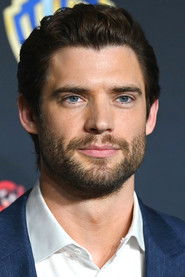
David Corenswet
Superman

Kadiff Kirwan
Bomar Vran
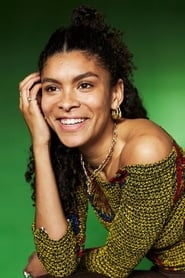
Thalissa Teixeira
Mareck Vran
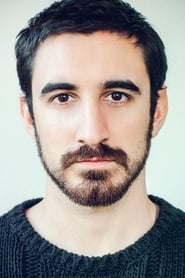
Ferdinand Kingsley
Elias Knoll

Emily Piggford
Delilah Knoll
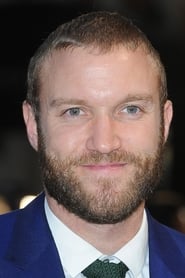
Diarmaid Murtagh
Drom Baxton
Crew
- DirectorCraig Gillespie
- WriterAna Nogueira
- Director of PhotographyRob Hardy
- EditorTatiana S. Riegel
- Original Music ComposerClaudia Sarne
Trailer
Plays on YouTube, in a new tab.
 Tickets on Sale Now · 2026Watch on YouTube
 Reader response
About the Editor
Derik Silva
Editor-in-Chief
Derik founded The Skry to do for film and television what aggregator culture stopped doing — read closely, score honestly, and defend the score in writing. He believes the long arc is the only arc that matters: the films that earn their reputation by holding up over years, and the ones whose reputations have grown larger than the films can carry. Previously, he founded Travault.
The Skry Dispatch
Read closely, weekly. Reviews and dispatches from The Skry.