Film Review
The Shining
Jack Nicholson · Shelley Duvall · Danny Lloyd
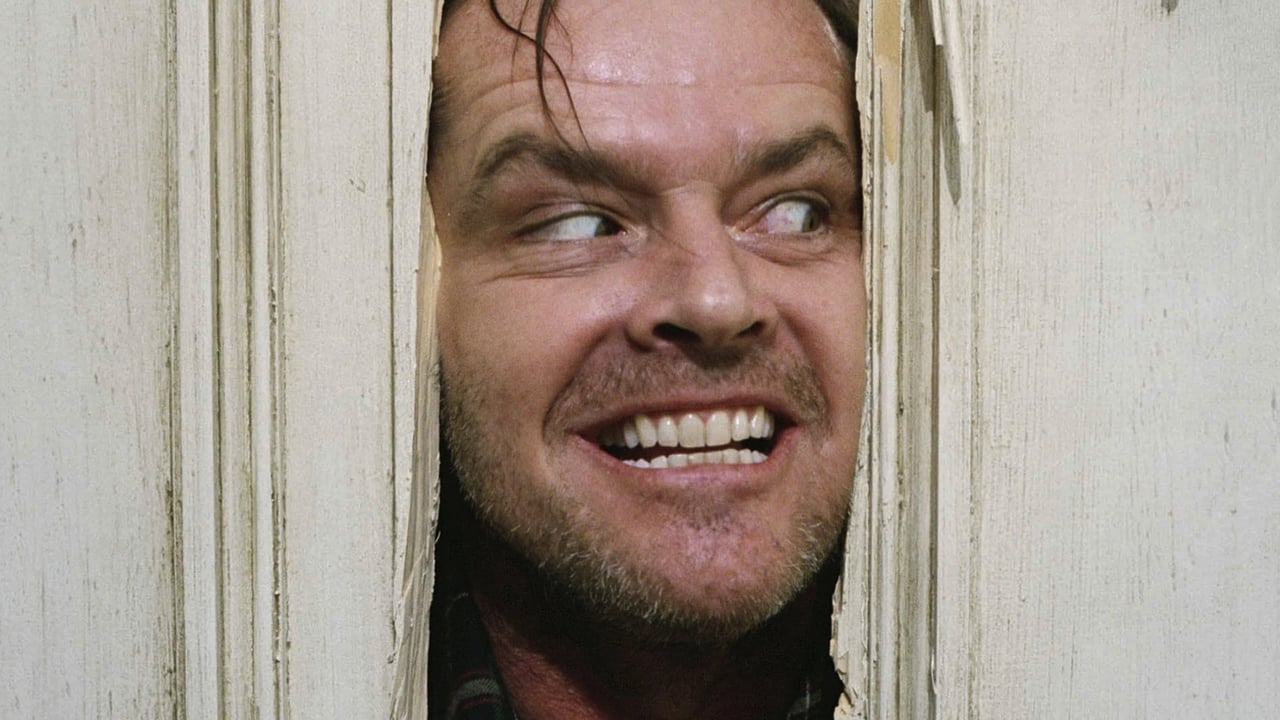
Stanley Kubrick's 1980 horror film opens by refusing the genre's usual furniture. There are no cobwebs, no gathering shadows, no candelabra guttering in a draft. Instead the Overlook Hotel greets its winter caretakers in high, even light, its corridors laid out with a draftsman's symmetry. The horror here does not hide in the dark. It stands in the middle of a perfectly lit room, framed dead center, and dares you to explain it.
Editorial Deep
Score breakdown, defended
Each dimension scores what it scores. The number is the claim; the prose is the defense.
Editorial Layer
Flat mean of the five dimensions below. Contributes 71% to the Skry Score.
The screenplay strips a bestseller to a basic narrative line and trusts archetype over backstory, a deliberate strategy rather than a shortfall. Its structural spine is sound: the manuscript discovery and pantry sequence stage a genuine midpoint reversal that shifts the film's center of gravity from Jack to Wendy and Danny, and the maze resolves on the child's agency rather than escape. The honest limitation is that the writing declines an internal arc of deterioration for its central figure, which leaves the front half doing less character work than its runtime implies. That is a defensible choice with a real cost, and it keeps the script accomplished rather than exceptional.
The image is the film's command performance. Strict on-axis symmetry turns architectural order into dread, placing horror inside a geometry that connotes control and generating unease with nothing overt on screen. The Steadicam locked to a child's height converts corridors into a sustained predator-prey mechanism, and the hotel's deliberately impossible layout makes the space itself a source of instability. The blood elevator and the Arbus-derived twins are indelible because they are built practically and composed exactly. This is visual authorship at the level where every frame is legible as a decision, and it earns unhedged praise.
The ensemble delivers on distinct registers that the film needs held apart. Duvall plays the horror straight and carries the audience's recognition, a naturalistic performance the whole structure depends on. Nicholson modulates through rationed blinking, restless hands, and a smile reserved for imagined violence, scaling a face to the hotel's vast rooms. The persistent objection that he begins too far gone is a real and unresolved one, and it keeps the performance short of unanimous. Lloyd sustains long sequences on watchfulness. The work is confident and precisely differentiated across the cast.
The film moves at a deliberate, considered pace and builds through accumulation rather than the schedule of shocks its genre usually runs on. The tricycle passages weaponize repetition, teaching safety and then collecting on it, and the music-as-fate scoring keeps a room humming under scenes that would otherwise sit still. The limitation is real: at 144 minutes the slow burn asks patience the second act does not always repay, and the insistence of the score can announce dread the image had already produced. Within its own tempo the film is controlled and cumulative.
Few films reward return like this one. The impossible geometry, the symmetrical framing, the withheld adjudication between haunting and breakdown, and the density of composed detail mean a second pass is a different film from the first. The refusal to name its monster is precisely what generates the enormous interpretive volume around it, and the architecture holds up to that scrutiny rather than dissolving under it. The reappraisal history is itself evidence: the film keeps yielding to closer looking. This is a work built to be watched again.
Kubrick puts the horror in the middle of a perfectly lit, perfectly symmetrical room and dares you to explain it.
That symmetry is the film's governing formal idea. Kubrick places the camera on axis and holds it there, so that geometry meant to signal order instead produces a low, persistent unease. When the frame is that composed and the space still feels wrong, the wrongness has nowhere to go but into the viewer. The Overlook's floor plan compounds the effect. Windows sit where no exterior could hold them; corridors turn back on rooms that cannot occupy the same building. The impossibility is precise rather than sloppy, and once you notice it you cannot stop measuring the walls.
The Steadicam is the other engine. In the film's most studied passage, the camera locks to the height of a small boy on a Big Wheel and follows him through the hotel's corridors, the rubber-and-carpet rhythm of the wheels rising and falling as he rounds each corner. Nothing waits on the first pass. Nothing waits on the second. The film teaches you that corners are safe, and then it collects on the lesson. That is the whole method in miniature: build false security through repetition, then break it once, hard.
The sound works the same territory. Kubrick and his musical editor cut scenes against avant-garde concert music, Bartók among them, under a concept of music as fate rather than as accompaniment. The score does not comfort. It arrives like weather. Whether that insistence tips into telegraphing is a fair objection; there are moments when the music announces dread the image had already earned. More often the effect is of a room that has begun to hum on its own.
Jack Nicholson's caretaker is the film's most contested instrument, and the debate is worth taking seriously rather than settling. One reading holds that he plays the man as unstable from the first frame, so that the promised descent has no distance to fall. Another holds that the deterioration is there in the smaller register: the rationed blinks, the hands that never rest, a smile held back for the wrong occasions. Both readings describe real things the performance does. Where you land depends on how much slow-burn you are willing to read into a face that is, admittedly, always turned slightly toward menace.
Shelley Duvall's work as the wife is the quieter achievement and, to my mind, the load-bearing one. While the men around her lean theatrical, she plays the terror straight, and the film's dread routes through her recognition long before it routes through anyone's violence. Danny Lloyd, as the child, carries whole sequences on watchfulness alone. Scatman Crothers rounds out the household of the hotel with a warmth the building has no use for.
The film runs a long 144 minutes and moves at a considered pace; this is not a picture built for jolts on a schedule. Its reputation was not immediate. Contemporary reception ran mixed to cold, and the reappraisal took years. What survives that history is not any single scare but the accumulation: a hotel that watches, a family shrinking inside it, and a set of images that lodge and will not leave. Whether it frightens you may be the wrong question. It gets into the architecture of the memory, which is harder to shake.
Beyond this line, spoilers
The Conversation
First-person welcome. Pushing back on consensus is a tool, not a formula.
Full spoilers here.
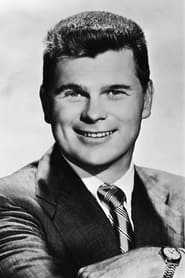
The fault line that has never closed is Nicholson, and I want to sit in it rather than pick a side. Bill Newcott's 1980 objection is not stupid: if Jack is visibly deranged in the interview with Barry Nelson's manager, there is no arc, only escalation, and escalation is not the same as suspense. Jakob Barnes's counter is that the calibration lives in the tics, the dry-drunk stillness, the vacant stares accruing into something legible only in retrospect. My honest read is that both are describing the same footage and disagreeing about what a horror arc owes us. Kubrick may simply not be interested in deterioration as a graph. He is interested in a man who was always this, being given a building that agrees with him.
Which is why the midpoint reversal matters so much. When Wendy finds the manuscript, all those pages of 'all work and no play,' and then puts Jack down the stairs and into the pantry, the film performs a symbolic death of its protagonist. From there Jack is powerless and lame, dependent on the hotel to let him out. If you read the film as Jack's story, the second half is a problem. If you read it as Wendy's and Danny's, it snaps into focus, and the hedge maze becomes the point rather than the coda. Danny erasing his own footprints to double back and trap his father is the resolution turning on a child's agency, not on brute escape. Jack freezes because he cannot think like the boy he wanted to destroy.
Stephen King's grievance runs alongside all of this and deserves a straight answer. He is right that the film discards his Jack, the recovering man the hotel corrupts, in favor of a man already lost. He is right that Wendy is written thinner than the novel's. But Steve Biodrowski's frame seems to me the more useful one: treat the film as an autonomous work that strips the source to a basic narrative line, the way Kubrick strips most of his sources, and the question of fidelity stops being the interesting one. The film is not a poor imitation of the book. It is a different animal that happens to share a hotel.
What fascinates me is how the withholding became the legacy. The Exorcist and Halloween name their monsters. Kubrick refuses to adjudicate between haunting and breakdown, and hands the audience the job of deciding what the blood in the elevator means, what the twins mean, whether Room 237 is the hotel or Jack's mind. That refusal is why Room 237 exists at all, that documentary of readers finding genocide and moon landings in the carpet. I find the theories less interesting than the fact that the film generates them. A movie that answered its own questions would not.
The casting of the Grady twins out of the Diane Arbus photograph is the cleanest example of Kubrick's method. He takes an already uncanny art-world image and drops it into the corridor at Danny's eye level, and it works because it is borrowed from a register that was never meant to reassure. It is a horror image with no gothic in it, which is the whole project.
One thing I keep circling: Ebert's reversal, from dismissal to a Great Movies induction in 2006. He credited the passage of time, and I think that is exactly right and slightly evasive. What changed was not the film. What changed was our tolerance for a horror movie that declines to resolve, that runs cold and slow and symmetrical and lets the atmosphere do what a jump scare usually does. The film was waiting for the audience to catch up to it. That is a rare thing to be able to say about a picture that opened to a C-plus and a Razzie nomination for its leading actress, which now reads less as a verdict on Duvall than as a snapshot of how thoroughly the room misread her.
Cast & Crew
Who made it, and who’s in it.
Cast
Jack Nicholson
Jack Torrance

Shelley Duvall
Wendy Torrance

Danny Lloyd
Danny
Scatman Crothers
Hallorann
Barry Nelson
Ullman
Philip Stone
Grady
Joe Turkel
Lloyd
Anne Jackson
Doctor
Tony Burton
Durkin

Lia Beldam
Young Woman in Bath
Billie Gibson
Old Woman in Bath

Barry Dennen
Watson
Crew
- DirectorStanley Kubrick
- Director of PhotographyJohn Alcott
- EditorRay Lovejoy
- Original Music ComposerWendy Carlos
Trailer
Plays on YouTube, in a new tab.
 Official Trailer · 2012Watch on YouTube
 Reader response
About the Editor
Derik Silva
Editor-in-Chief
Derik founded The Skry to do for film and television what aggregator culture stopped doing — read closely, score honestly, and defend the score in writing. He believes the long arc is the only arc that matters: the films that earn their reputation by holding up over years, and the ones whose reputations have grown larger than the films can carry. Previously, he founded Travault.
The Skry Dispatch
Read closely, weekly. Reviews and dispatches from The Skry.