TV Review
Lanterns
Kyle Chandler · Aaron Pierre · Kelly Macdonald
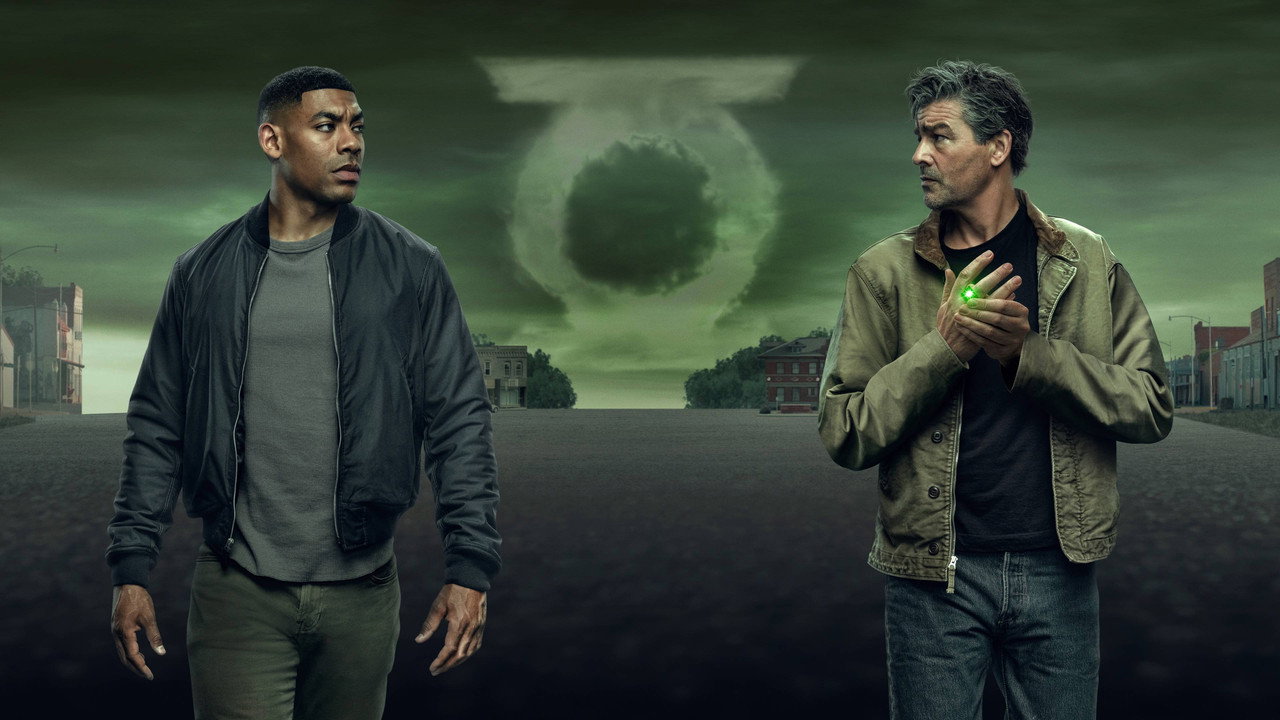
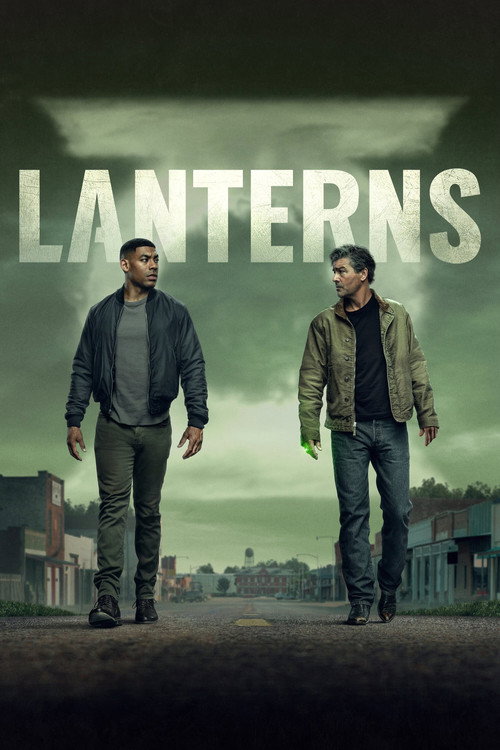
Lanterns opens on a logline that promises the cosmos and then keeps its eyes on the dirt: a dual-timeline murder investigation, a 2016 case in rural Nebraska rhyming against a 2026 story, with the two men working it kept firmly ahead of the whodunit. Chris Mundy, running the show he built with Tom King and Damon Lindelof, has openly borrowed the emotional-mystery architecture of a certain first-season anthology, and the borrowing is visible in the bones. The mood is earthy and textured, the town is football-mad, and the power ring gets treated less like cosmic wonder than like a service weapon a cop would rather not draw.
Editorial Deep
Score breakdown, defended
Each dimension scores what it scores. The number is the claim; the prose is the defense.
Editorial Layer
Flat mean of the five dimensions below. Contributes 71% to the Skry Score.
The writing sets itself a hard synthesis: dual-timeline crime mystery, superhero mythology, and a racial-political argument, all inside one buddy-cop frame. It achieves the character work that is its stated priority, foregrounding the Jordan-Stewart relationship over the whodunit, and it finds a principled reason to keep the ring grounded. The limitation is coherence of register: the script never fully decides how goofy, grim, or political to be scene to scene, and the central mystery is slow to gather force. That is a real structural cost, not a small one, which holds it at competent rather than accomplished.
The image commits to an earthy, textured, natural palette suited to a rural-America crime frame, and the show's best formal choices come through composition and construction: the fourth-episode exposition routed entirely through a character sketching a portrait, the conjured-bird sequence that lets weirdness bleed into the naturalism. These are confident visual decisions that avoid the rote. The limitation is that the grounded aesthetic, by design, forgoes the memorable large-scale imagery the mythology could support; the look is assured but not distinctive enough to push higher.
This is the show's strongest domain and the reason it works. Chandler expands a familiar folksy register into a hungover, instinct-driven anti-hero without repeating himself, and the pilot interrogation demonstrates command. Pierre pays off his breakout promise once the writing allows it, and Macdonald arrives in full regional-noir mode. The ensemble is deep and the leads are genuinely well-matched. The one drag is external to the acting: early scripts underserve Pierre, so his ceiling arrives late. The performances themselves clear the accomplished line.
The momentum is the show's most uneven axis, but its best run genuinely lands. The mid-season reaches gripping heights where character and mystery finally pull together, and the odd-couple rhythm has real snap when it clicks. Against that, the first two hours are slow to catch, the mystery is deliberately unhurried to a fault, and the back third loses drive by the sixth and seventh episodes. This is a season that peaks hard in the middle and drains afterward: functional and often charged rather than failed, held at solid by a shape that spends its force unevenly.
There is architecture worth returning to: the dual-timeline construction rewards a second pass, the racial-political thread runs underneath the crime plot with more design than a first watch registers, and the editorial craft in the reaction-shot work is more visible once you know where it lands. The limitation is that the tonal irresolution and the sagging back third give some viewers less reason to re-enter. Solid density in the character layers, undercut by a season shape that does not fully reward the full rewatch.
Lanterns keeps its eyes on the dirt while the mythology waits overhead, and the season is stronger for the discipline than for any of the wonder it declines.
That grounding is the whole gambit. When Lanterns leans into its odd-couple dynamic, it moves with real confidence. Kyle Chandler plays Hal Jordan as rumpled, hungover, and instinct-led, and the pilot's interrogation of a suspect through pop-culture trivia lands as the sharpest thing in the first hour, built as much in the cutting and reaction shots as in the writing. Chandler is drawing on a familiar folksy register and expanding it rather than repeating himself. Aaron Pierre, opposite him as John Stewart, has the tougher assignment: the early episodes ask him to carry resolve more than charm, and how well that reads will depend on your patience for a slow build.
The series is at its most alive when it lets weirdness leak into the naturalism. A second-episode sequence involving conjured wildlife, a childhood-flashback hour, a fourth-episode exposition scene routed entirely through a character sketching a nude portrait: these are the moments where the show stops imitating prestige crime drama and finds a shape of its own. There is craft in the joinery. This is a series assembled by editors as much as directors, and the reaction-shot construction repeatedly does work the script alone would not.
The reservations are real and worth naming before you commit. The central mystery takes its time gathering momentum, and the show can feel constrained by the very grounding that gives it discipline. The tonal question never fully resolves: Lanterns is by turns political, grim, and goofy, and it does not always decide which it wants to be in a given scene. The strongest run sits in the middle of the season, where the character work and the mystery finally pull in the same direction. Whether the back stretch holds that tension is the open question the show leaves you with.
What carries it is the acting and the assembly. Kelly Macdonald turns up as a sheriff in full regional-noir mode; the ensemble is deep. If you come to Lanterns expecting cosmic spectacle, you will spend the season waiting for a register the show has deliberately refused. If you come for two well-matched leads working a case in a haunted small town, the trade is worth making more often than not. There is something here about superhero material still having room to move on a smaller screen, and this is the season making the case.
Beyond this line, spoilers
The Conversation
First-person welcome. Pushing back on consensus is a tool, not a formula.
I want to start with the thing the show is honestly split on, because the critics are split too, and I don't think the disagreement is fake. Kathryn VanArendonk reads the tonal instability as fatal: a Frankenstein assembly, unmoored, unable to commit to how political or goofy or grim it wants to be, so the buddy-cop tension never fully lands. Germain Lussier lands nearly opposite, calling it the best DCU project yet and among the strongest superhero shows in a while. I think both are describing the same object accurately. The show genuinely does not resolve its register, and whether that reads as ambition or incoherence depends almost entirely on how much you value the leads.
For me the leads carry it across the line, but barely, and I'd be lying if I called the tonal problem cosmetic. Grace Randolph's case is that this works as a character study of both men, not just an origin, and the mid-season episodes bear that out. The trouble is the machinery around them. When David Craig argues the Green Lantern mythos is too goofy to be grounded no matter how much swearing gets added, he's identifying something structural. The service-weapon conceit is a smart justification for keeping the ring small, but a justification is not the same as an emotional payoff, and the show sometimes mistakes the former for the latter.
The Pierre question is the one I'd flag hardest. Everyone agrees he can act; Rebel Ridge proved it. The disagreement is whether the early scripts let him. The negative read, that the show downplays his natural charm for long-suffering resolve, is correct about the first three hours. He gets stuck playing endurance. By the time the writing catches up to him, some viewers will already have decided. That's a structural cost of the slow build, not an acting problem, and I'd want the editor to keep that distinction clean.
Now the part the reviews mostly couldn't reach: the back third. The finale was widely withheld, and even a fan like Lussier concedes episodes six and seven feel like a disappointing stretch where narrative momentum drains. That matters for the verdict. The mid-season is the peak; the descent after it is documented; the landing is unknown. I've written the Review to promise the middle and not the ending, which is the honest shape of what's here.
On the Watchmen comparison, which several critics reach for: the show clearly wants John Stewart's arc to carry a real argument about who gets to live without fear, about which institutions decide who wields power. When it commits, that thread is the most interesting thing in the series. But it competes with the crime plot and the DCU world-building for oxygen, and it doesn't always win. Grant Morrison's public complaint, that the thing leans on exposition and starves the science fiction, is overstated but not baseless; the fourth-episode portrait scene is singled out precisely because it dodges the show's more rote habit of explaining itself out loud. That the inventive exposition scene is the exception tells you the rule.
What I'd cut, if this were mine to cut: some of the ground-level table-setting in the first two hours that keeps the mystery from catching. The show has a welcome weirdness streak and it deploys it too cautiously early. If Lanterns had trusted its stranger instincts sooner, the tonal charge that reads as instability might have read as range. The audience score sitting at 5.1 against a warm critical reception tells its own story: this is a show whose pleasures require patience the general viewer isn't always given a reason to extend. I land closer to the critics than the crowd, but I understand the crowd.
Cast & Crew
Who made it, and who’s in it.
Cast
Kyle Chandler
Hal Jordan

Aaron Pierre
John Stewart
Kelly Macdonald
Sheriff Kerry Kane
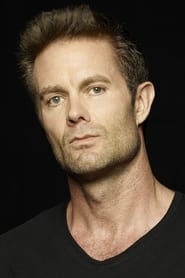
Garret Dillahunt
William 'Will' Macon
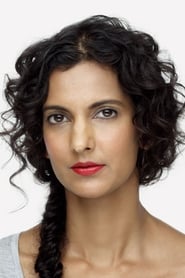
Poorna Jagannathan
Zoe Macon
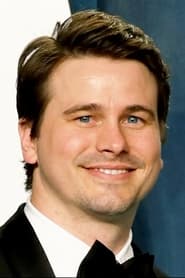
Jason Ritter
William 'Billy' Macon
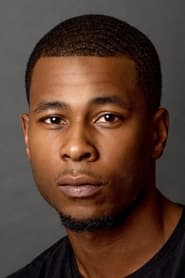
J. Alphonse Nicholson
John Stewart Sr.
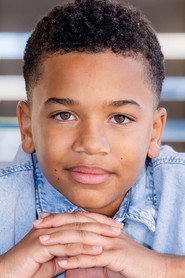
Cairo Cash Lee
Adolescent John

Noah Gibson Slates
Adolescent Marcus
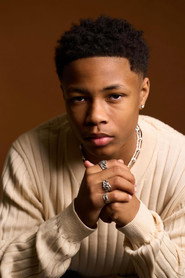
Jaylen Lyndon Hunter
Adolescent Aaron

Chris Coy
Waylon Sanders
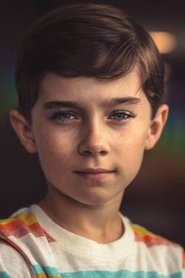
Cary Christopher
Young Noah Macon
Crew
Not listed.
Trailer
Plays on YouTube, in a new tab.
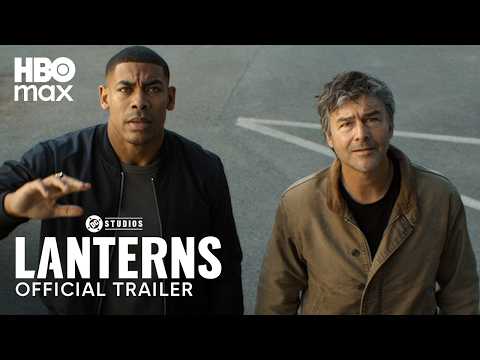 Official Trailer · 2026Watch on YouTube
 Reader response
About the Editor
Derik Silva
Editor-in-Chief
Derik founded The Skry to do for film and television what aggregator culture stopped doing — read closely, score honestly, and defend the score in writing. He believes the long arc is the only arc that matters: the films that earn their reputation by holding up over years, and the ones whose reputations have grown larger than the films can carry. Previously, he founded Travault.
The Skry Dispatch
Read closely, weekly. Reviews and dispatches from The Skry.