
TV Review
Lioness
Zoe Saldaña · Laysla De Oliveira · Dave Annable
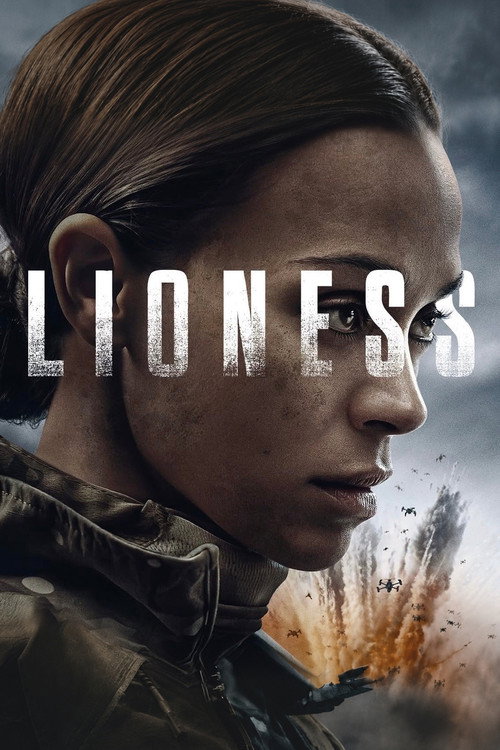
Lioness arrives as Taylor Sheridan's first sustained march into War on Terror territory, and it wears its lineage plainly. This is the maker of Sicario and Wind River applied to a female engagement team, the intelligence unit built to reach the people male operators cannot. Sheridan wrote every episode himself across three seasons, and that authorship shows in a tonal consistency that runs both ways: the show has a signature, and it also has recurring patterns that a viewer will learn to anticipate.
Editorial Deep
Score breakdown, defended
Each dimension scores what it scores. The number is the claim; the prose is the defense.
Editorial Layer
Flat mean of the five dimensions below. Contributes 71% to the Skry Score.
Sheridan's single-authorship gives the series tonal coherence and a clear moral frame, and the central conflict between Joe's duty and her family has genuine dramatic pull. The limitation is in construction: characters are assembled from recognizable types rather than built from the inside, and the season stakes its moral tension on clean success-or-failure binaries rather than lived contradiction. The writing supplies the leads a strong spine and starves parts of the ensemble. It falters at its core intent of grounding genre machinery in fully dimensional people, which places it below the competent floor without being a failure.
The visual language is the series' most distinctive achievement. Cameron builds a rule-breaking, kinetic camera style and stages fights from the stunt coordinator's vantage before cutting for maximum impact, so contact reads as contact. The grade is used as geography, sepia heat for one theatre and a cold blue for another, giving the show a legible spatial logic. Large-scale action is executed at a scale that competes with feature work inside an episodic budget. This is command, sustained and memorable across the run.
Saldaña plays Joe at full commitment and is the show's single strongest asset, sharpest when dramatizing conflicting loyalties. De Oliveira works a wide register with real control, moving between silence and jagged dialogue without visible effort. Kidman brings a crisp, precise presence that lifts her scenes. The ensemble is deep and the leads are formidable, and the performances routinely carry material that the writing leaves thin. The distinction here is earned by the top of the cast doing standout work.
The series moves with confidence. Cameron's kinetic grammar and the escalating set pieces give it velocity, and the dual-timeline construction of the later premiere generates real momentum from its opening shock. The rhythm accomplishes what genre television of this scale needs. The limitation is that the binary resolutions can flatten tension once a viewer learns the pattern, which keeps the momentum accomplished rather than exceptional.
There is real architecture to return to: the flashforward-and-payoff structure of the later season, Cameron's staging choices, and Saldaña's calibration of Joe's competing loyalties reward a second look. The action holds up on rewatch because it is built for impact rather than shock alone. The density is concentrated in craft and performance more than in script layering, which caps the reasons to return at solid rather than abundant.
A show that has been fighting its own first impression since the pilot, and on the evidence the fight was worth having.
The camera is the first thing that announces itself. Paul Cameron, who shot the opening episodes and directed a pair of them, builds a kinetic visual grammar that deliberately abandons conventional rules of coverage. Fights are staged from where the stunt coordinator actually stood to watch them, then cut for maximum contact, so a punch registers as a punch rather than a stitched-together suggestion of one. The grade shifts by geography. Middle Eastern and Mexican settings carry a sepia heat; when the series later moves east, the palette turns cold and blue, a different climate for a different theatre of operation. It is a large-screen sensibility squeezed into episodic television, and by the second season the action set pieces are staged at a scale that genuinely competes with feature work.
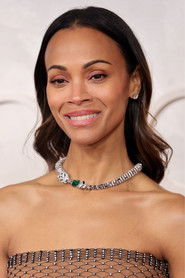
Zoe Saldaña anchors all of it as Joe. She plays the role at full commitment, and the show is at its sharpest when it stages the collision between her duty to the mission and her obligations at home. Opposite her, Laysla De Oliveira works a wide register, moving between quiet, layered silences and rougher, looser bursts of dialogue without seams. Nicole Kidman turns up crisp and precise in a supporting role, and her casting has the pleasing implausibility of a movie star dropping into genre machinery and treating it seriously. The ensemble around them is deep. Whether the writing gives everyone enough to do is a fair question, and one the series does not always answer well.
That is the honest fault line. The craft is confident and the leads are formidable, but the scripts lean on assembled types more than fully built people, and the structure resolves its moral tensions as clean binaries rather than lived complications. What you make of Lioness depends on whether Sheridan's genre instincts feel authentic to you or merely efficient. There is a real argument, which the show earns in its strongest stretches, that this sits closer to Sicario than to formula. There is an equally real argument that it is competent counterterrorism television with a superb cast doing the heavy lifting. Both cases are alive here.
Watch it for Saldaña, for Cameron's camera, for the pleasure of large-scale action that refuses to shrink to fit its medium. Set your expectations for character depth accordingly, and let the leads carry you past the seams.
Beyond this line, spoilers
The Conversation
First-person welcome. Pushing back on consensus is a tool, not a formula.
Now I can talk about the thing that makes Lioness genuinely interesting: its critical history is a story in itself. The pilot did not land well. One prominent critic, Mike Hale, scored it 40 out of 100 and said it looked like an awful lot of other counterterrorism thrillers, complete with a backlot feel to its Middle Eastern settings. Then he watched the whole season and published a reconsidered piece calling it high-quality genre TV that had hooked him. That about-face is worth sitting with. It suggests a show that screens badly in fragments and plays better as a sustained machine, which is exactly the kind of series that gets punished by episode-screener reviews.
The consensus never fully caught up. Season 1 settled at 56 with critics, a mixed-or-average verdict built on the idea that Saldaña brings the energy but the special ops material is derivative and unconvincing. Audiences were warmer at 6.1, and the launch set a record opening for its platform. That critic-audience gap is real, and I lean toward the audience read here, though not all the way. Kristen Baldwin's framing feels honest to me: the show escapes mediocrity thanks to its leads, a serviceable intelligence drama assembled from Strong Female Character parts.
The dissent has teeth, and I won't wave it off. The sharpest complaint is that Cruz reads as a jumble of focus-group-approved traits, introduced as a damsel fleeing a cartoonishly evil boyfriend, and that the show finds thin pretexts to strip her down. That is a specific, fair charge, and it points at the writing's real weakness. There's also the pattern accusation leveled at Sheridan generally: top-notch actors, questionable storytelling, and a female-marketed show that some viewers find surprisingly bro-centric underneath. Paul Dailly's narrower point lands too. Jill Wagner is treated as foundational and then given too little to do, which is symptomatic of an ensemble the scripts can't fully feed.
Against that, the acclaim case is not trivial. Taylor Antrim wrote that Saldaña acts her way through the show like she's in a knife fight and called these the most fearsome female characters on television. Matt Webb Mitovich went further on Season 2, giving it a perfect score and staging the Season 3 premiere as proof of the show's evolution: a flashforward ambush outside Joe's home, then a cold-blue Donetsk extraction with drones overhead and mortars erupting from the ground. The Season 2 finale set piece, by that account, rivals feature filmmaking. The trajectory matters. If Season 1 is the show finding its legs, the later work is where the ambition and the execution meet.
The Kidman question stays open. Antrim calls her arch, crisp, and impeccable, a highlight whose casting is wonderfully implausible. Others in the fan community find her divisive. I fall on Antrim's side, but I don't think the split is illegitimate; her register is pitched high enough that it either delights you or pulls you out, and reasonable viewers land in both camps.
One last wrinkle worth naming: the UK release appended a 'Special Ops' subtitle, and there's an argument that the tag primed critics to expect a jingoistic shooter and then judge it against that expectation. I don't know how much weight to put on it, but it's a tidy illustration of how framing shapes reception. Lioness is a show that has been fighting its own first impression since the pilot. On the evidence, the fight was worth having.
Cast & Crew
Who made it, and who’s in it.
Cast
Zoe Saldaña
Joe McNamara

Laysla De Oliveira
Cruz Manuelos
Dave Annable
Neal McNamara

Jill Wagner
Bobby

LaMonica Garrett
Tucker

James Jordan
Two Cups
Austin Hébert
Randy
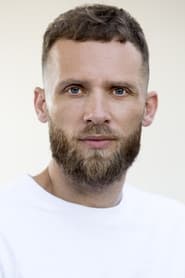
Jonah Wharton
Tex

Hannah Love Lanier
Kate McNamara
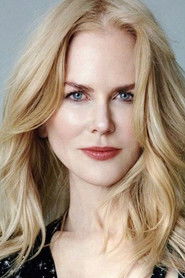
Nicole Kidman
Kaitlyn Meade
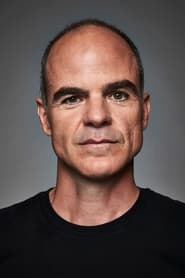
Michael Kelly
Byron Westfield

Thad Luckinbill
Kyle McManus
Crew
- CreatorTaylor Sheridan
- DirectorMichael Friedman
- DirectorStephen Kay
- DirectorJohn Hillcoat
- DirectorAnthony Byrne
- DirectorPaul Cameron
- Director of PhotographyStuart Campbell
- EditorIshai Setton
- Original Music ComposerAndrew Lockington
Trailer
Plays on YouTube, in a new tab.
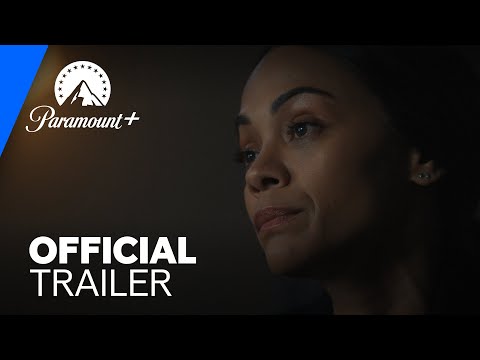 Official Trailer · 2023Watch on YouTube
 Reader response
About the Editor
Derik Silva
Editor-in-Chief
Derik founded The Skry to do for film and television what aggregator culture stopped doing — read closely, score honestly, and defend the score in writing. He believes the long arc is the only arc that matters: the films that earn their reputation by holding up over years, and the ones whose reputations have grown larger than the films can carry. Previously, he founded Travault.
The Skry Dispatch
Read closely, weekly. Reviews and dispatches from The Skry.