TV Review
The Sopranos
James Gandolfini · Edie Falco · Jamie-Lynn Sigler
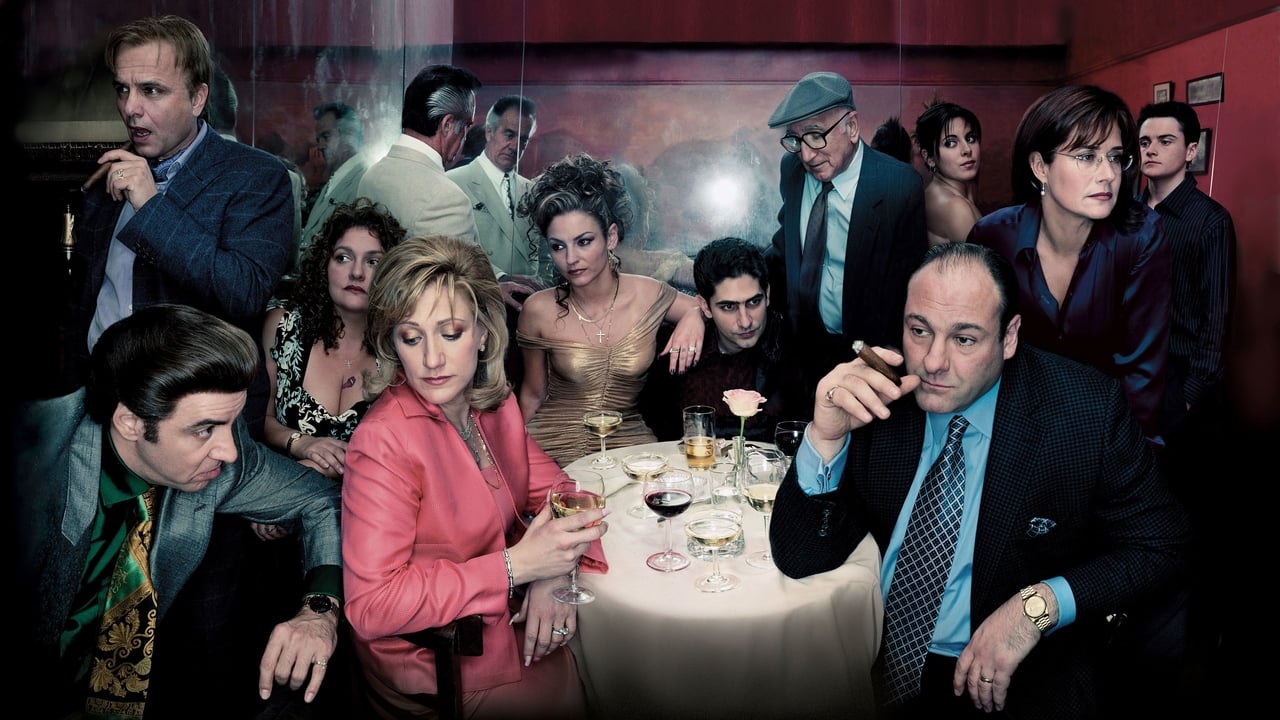
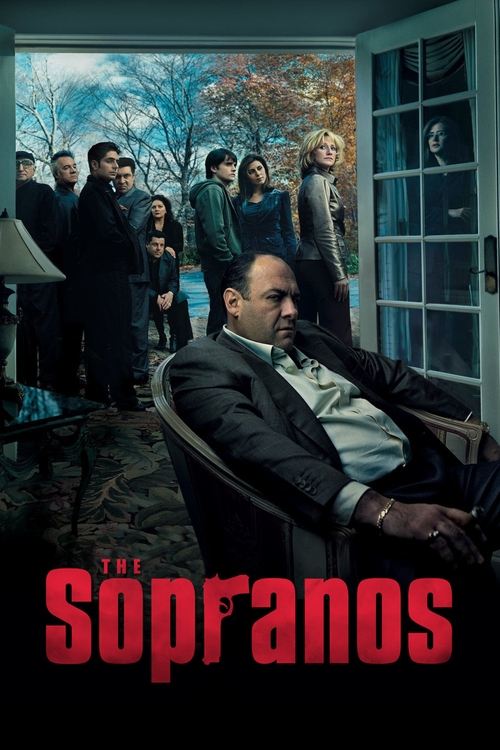
The Sopranos begins with a man in a doctor's office, telling a therapist about a family of wild ducks that landed in his backyard pool and then flew away. The man is a New Jersey crime boss. That framing device, Tony's story routed through therapy sessions, his life recounted and second guessed under professional questioning. This is the engine David Chase builds the pilot around, and it does something the crime genre had mostly refused to do. It makes the domestic and the criminal share a single nervous system.
Editorial Deep
Score breakdown, defended
Each dimension scores what it scores. The number is the claim; the prose is the defense.
Editorial Layer
Flat mean of the five dimensions below. Contributes 71% to the Skry Score.
The writing organizes each season around thematic touchstones from which multiple story strands branch, and it sustains a register where comedy and genuine danger occupy the same scene without either collapsing. The therapy frame gives Chase a structural engine that lets the criminal and domestic lives interrogate each other continuously. The achievement critics return to on rewatch is the emotional depth extracted from characters who are sociopaths, which is a writing feat, not a performance accident. The honest limitation, and the one the dissent names accurately, is that across a serialized run of this length threads drop and some turns lean on exposition; the seams are real. They do not undermine the core because the accumulation is the design, not the flaw.
The image is treated as a storytelling tool rather than a decorative layer, a partnership Sakharov describes explicitly, and the results show in how varied shot lengths and sizes break from the flat coverage of network procedurals. The editing is exacting and music driven, giving sequences a lyrical rhythm that a template show could not reach. The camera grants the same watchful patience to a kitchen as to a back room execution. The limitation is one of unevenness across a very large body of directors: the visual command is real and consistent in its principles, but a series this size varies episode to episode in how fully those principles get realized.
Gandolfini constructs Tony from granular physical specificity, using eye movement in reaction shots to keep the character from reading as performed, and the result is an Everyman built on the hard foundation of a man capable of murder. Falco's Carmela is a performance of continuous moral bookkeeping that functions as the structural counterweight the whole show requires. Van Zandt plays Silvio with deadpan control against the volatility around him. The ensemble runs deep enough that the show can abandon its lead for stretches without losing charge. This is performance work operating at the top of the medium, and the depth is not confined to the leads.
The show moves by accumulation rather than propulsion, and its best sequences let tension stay unresolved on purpose: the Pine Barrens chase gets funnier the longer it refuses to conclude. The music driven editing gives episodes a distinct internal rhythm. The honest cost of the design is that sustained viewing is heavy going by intent; the dissent that it is depressing in bulk is describing a real property of the pacing, and the deliberate withholding of resolution asks patience that not every viewer will extend. Within its aim, the momentum is controlled and purposeful rather than slack.
The series was made by people watching closely and it rewards the same. The finale in particular is built to be assembled by the viewer across dozens of editorial choices, and episode by episode rewatches by critics confirm the density holds up rather than thinning. Motifs planted in the pilot, the ducks among them, pay dividends across seasons. The architecture supports return because meaning is embedded in image and cut rather than stated. The one caveat is that some dropped threads read as loose on a compressed rewatch, but the reservoir of emotion and structural detail gives far more reason to return than to leave.
Chase built a death you have to assemble yourself, then left you sitting in the confusion of the assembly.
What holds it together at the level of craft is a refusal of the network template. The editing is exacting and music driven, shot lengths and sizes vary where a procedural would flatten them into coverage. Cinematographer Alik Sakharov has described Chase's approach to the pilot as a strong skeleton and a poetic scenario rather than a script directed on the page, and you can see the result in how the image is asked to carry meaning rather than decorate it. The camera treats a suburban kitchen and a strip club back office with the same watchful patience.
The show's method, as Chase describes his own writers' room, starts from season wide touchstones, thematic focuses from which the episode strands branch. That produces a series that can hold an unresolved comic bottle episode and a genuinely dangerous act of violence within the same register without either curdling into camp. The tension in its best sequences is allowed to stay unresolved. It does not always pay off, it accumulates.
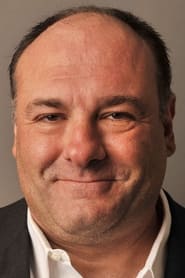
At the center is James Gandolfini, whose Tony is built out of granular physical specificity. The eyes do an unusual amount of the work in reaction shots, and they are what keep the character from reading as performed. Around him, Chase and his directors assemble a supporting bench deep enough that the show can leave Tony entirely for stretches and lose no charge. Edie Falco's Carmela is the counterweight the whole structure needs, a performance of moral bookkeeping done in real time. Steven Van Zandt's Silvio plays deadpan against the volatility everywhere else.
The original case for the show was that it had to convince you a crime boss's home life was relatable, and that without meeting that challenge it would be little more than a gangster picture crossed with a sitcom. It meets it. Tony reads as an Everyman, which is the hard part and the reason the whole thing works. The duck metaphor of the pilot is the tenderest thing in the first season, and arguably nothing later matches it for directness. The show spends six seasons complicating rather than repeating that opening tenderness.
You do not need me to tell you this changed television. What is worth saying is that the reasons it changed television are legible in the craft from the first hour: the therapy frame, the editing rhythm, the willingness to be funny and frightening in the same breath. It rewards close watching because it was made by people watching closely.
Beyond this line, spoilers
The Conversation
First-person welcome. Pushing back on consensus is a tool, not a formula.
Here is where I want to argue with the show, because it deserves the argument.
The most useful dissent I have encountered comes from critic Edwin Turner, who reads the series as ultimately an exercise in style and tone rather than plot and character development. His charge is specific: the themes swell to obvious, concrete conclusions rather than deepening, thickening like plaster. Watched in a compressed run, he says, the seams show. Characters appear from nowhere. Storylines vanish. Key turns get explicated through clunky exposition. And he names something the finale's celebration papers over: these people spend most of their time fighting, bullying, and doing violence, and sustained exposure to that is depressing in a way the show rarely admits about itself.
I think that critique is half right and worth holding onto. The seams are real, a decades-long serialized structure built from season touchstones will drop threads. But I would push back on the idea that this is style over character. The thing that survives rewatch, according to the critics who have gone through it episode by episode, is precisely the reservoir of emotion Chase's team tapped despite writing about reprehensible sociopaths. That is a character achievement, not a stylistic one. Turner reads accumulation as failure to deepen. I read it as the design. The plaster thickening is the point.
And then there is the ending. 'Made in America,' Holsten's, the family in the booth, Journey on the jukebox, a man in a Members Only jacket walking toward the bathroom, Meadow fighting to parallel park, and then the cut to black mid-song. The most rigorous shot by shot reading treats that black screen as Tony's own final point of view: he is shot in the head and never hears it happen, which makes the ending not ambiguous but withheld. Turner puts it more bluntly, that Tony dies and any reading in which he lives is wish fulfillment. I find both persuasive and I want to note what neither quite reckons with. At air, the black screen was widely experienced as a cable malfunction. Millions sat in genuine uncertainty. The finale is unambiguous in its construction and ambiguous in its reception, and both facts are true at once. Chase built a death you have to assemble yourself, then let you sit in the confusion of the assembly. That is either the boldest thing on television or a trick, depending on the morning.
The episodes I would send anyone to first are the ones that establish the terms. Season one's 'College,' where Tony strangles a former informant during a campus tour with Meadow, is the corrective that kept the show from going soft, the moment it committed to Tony being genuinely dangerous rather than a cuddly antihero. Season three's 'Pine Barrens,' directed by Steve Buscemi, is the fan favorite for good reason: Christopher and Paulie chasing an unkillable Russian through the snow, tension that refuses to resolve and gets funnier the longer it doesn't. And late, the pool sequence in 'The Second Coming,' where A.J. ties a cinder block to himself and Tony has to dive in, is where, as critic Alan Sepinwall puts it, the misery Tony has visited on the world comes back at him with full force.
What Chase wanted, having spent decades on episodic work he loathed, was to be a cinematic auteur in the European mode. The Sopranos began life as a feature about a suburban gangster in therapy before a manager pointed him at HBO. You can feel the feature it might have been inside the series it became. That tension between the movie in his head and the television he actually made is, I think, the real subject underneath all the others.
Cast & Crew
Who made it, and who’s in it.
Cast
James Gandolfini
Tony Soprano

Edie Falco
Carmela Soprano

Jamie-Lynn Sigler
Meadow Soprano
Robert Iler
A.J. Soprano

Lorraine Bracco
Jennifer Melfi
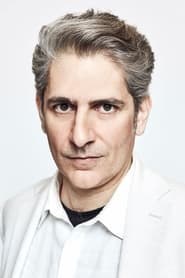
Michael Imperioli
Christopher Moltisanti

Steven Van Zandt
Silvio Dante
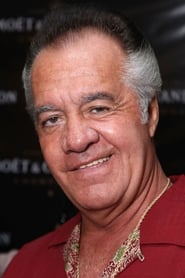
Tony Sirico
Paulie Gualtieri
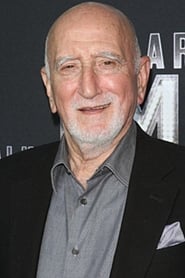
Dominic Chianese
Corrado 'Junior' Soprano

Aida Turturro
Janice Soprano
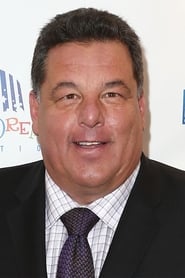
Steve Schirripa
Bobby 'Bacala' Baccalieri
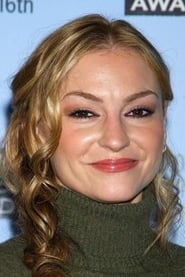
Drea de Matteo
Adriana La Cerva
Crew
- CreatorDavid Chase
- DirectorTim Van Patten
- DirectorJohn Patterson
- DirectorAllen Coulter
- DirectorAlan Taylor
- DirectorSteve Buscemi
- DirectorJack Bender
- DirectorHenry J. Bronchtein
- DirectorDan Attias
- DirectorMatthew Penn
- DirectorLee Tamahori
- DirectorAndy Wolk
- DirectorDanny Leiner
- DirectorRodrigo García
- DirectorDavid Nutter
- DirectorMike Figgis
- DirectorPhil Abraham
- DirectorNick Gomez
- DirectorSteve Shill
- DirectorPeter Bogdanovich
- DirectorLorraine Senna
- DirectorJames Hayman
- DirectorMartin Bruestle
- DirectorTerence Winter
- EditorSidney Wolinsky
Reader response
About the Editor
Derik Silva
Editor-in-Chief
Derik founded The Skry to do for film and television what aggregator culture stopped doing — read closely, score honestly, and defend the score in writing. He believes the long arc is the only arc that matters: the films that earn their reputation by holding up over years, and the ones whose reputations have grown larger than the films can carry. Previously, he founded Travault.
The Skry Dispatch
Read closely, weekly. Reviews and dispatches from The Skry.